




Clear Glass Champagne Coupes
Clear glass champagne coupes bring nineteenth and early twentieth-century elegance to any table, offering distinct period shapes that serious collectors prize.
What clear glass champagne coupes are
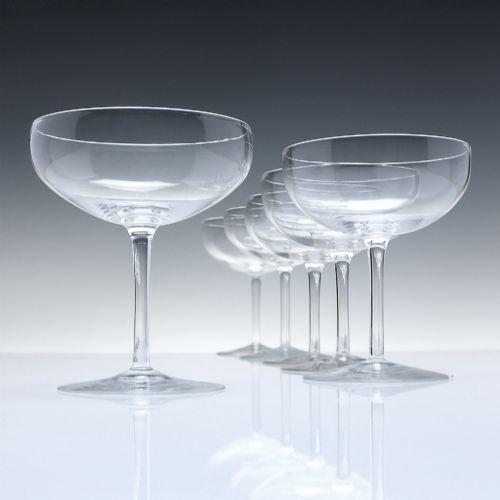
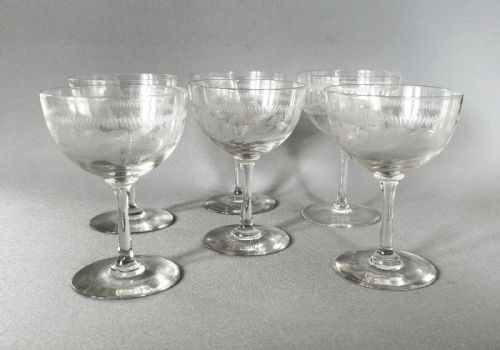
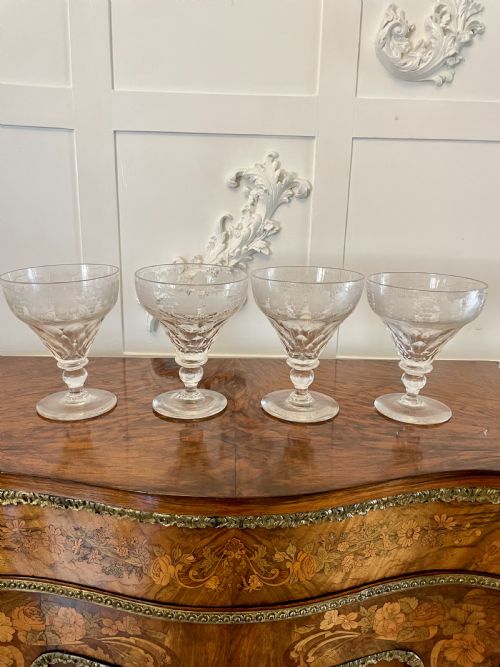
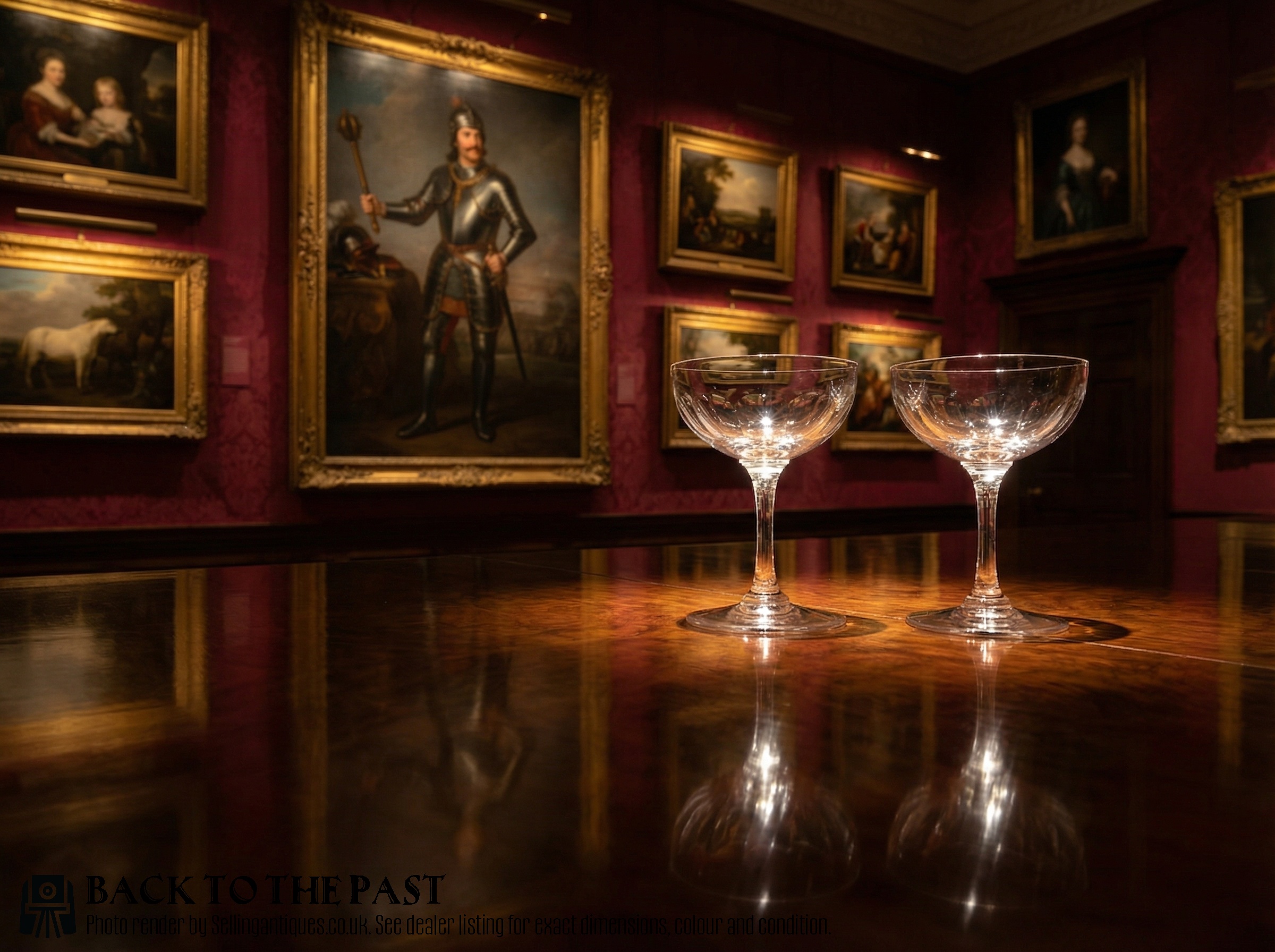
When searching for clear glass champagne coupes, buyers encounter genuine Victorian and Edwardian examples dating from the late nineteenth century up to nineteen-ten. These pieces typically take the form of champagne glasses, champagne coupes, or champagne bowls designed for sparkling wine.
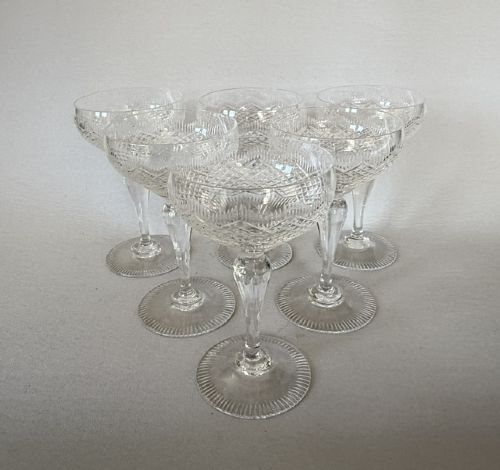
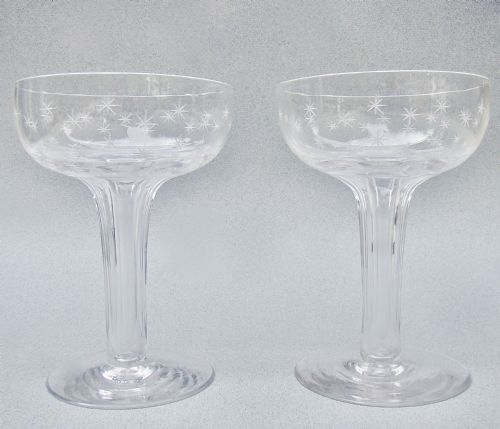
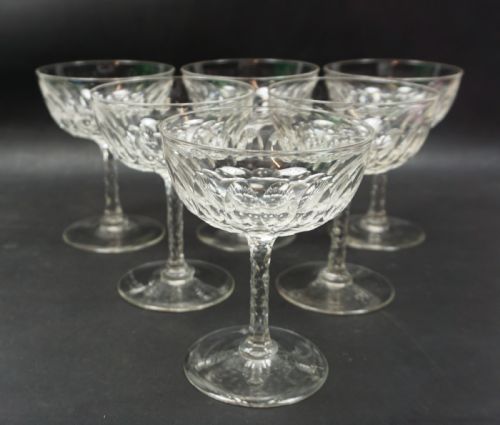
The selection includes pairs and larger sets, such as a set of six Edwardian glasses featuring classical decoration. Hollow stem variants also appear among the Victorian items, alongside traditional broad bowls.
Originating from British dining traditions, these items reflect the distinct aesthetic shifts between the Victorian era and the Edwardian period. Collectors find that these early glassware forms offer a tangible link to historical entertaining habits.
How they were made
Maker operations utilised high-quality glass and lead crystal to achieve the brilliant transparency and weight expected in fine tableware. Artisans shaped the bowls and stems by hand before applying decorative surface treatments.
Decoration relied on skilled hand-cutting and wheel-engraving techniques to produce crisp patterns. Workers executed intricate motifs such as star-etching and Greek key patterns directly onto the glass surface.
Current listings include pieces from the Victorian and Edwardian periods, utilising clear glass, lead crystal, etched glass, and cut glass.
What varies in quality
The distinction between standard domestic glassware and superior pieces rests entirely on the crispness and depth of the surface decoration. Deep wheel-cut facets and precisely executed star-etching demand high technical skill, elevating the visual weight of the bowl.
Balance and material purity also dictate the hierarchy among these pieces, particularly when comparing heavy lead crystal formations to lighter vessels. Examples featuring specialised elements like hollow stems demonstrate greater ambition from the glasshouse.
The Clear Glass Champagne Coupes Glossary
- Champagne coupe
- A shallow, broad-bowled glass traditionally used for sparkling wine. This form defines the primary silhouette found across Victorian and Edwardian glassware.
- Cut glass
- Glassware decorated by grinding facets and patterns into the surface using a rotating wheel. This technique creates sharp light reflections across the bowl.
- Star-etched
- A decorative surface treatment featuring small, multi-pointed stars engraved into the glass. It appears frequently on nineteenth-century drinking vessels.
- Lead crystal
- A high-clarity glass containing metal oxides that increase weight and refractive index. It provides the heavy, resonant quality found in better drinking vessels.
- Hollow stem
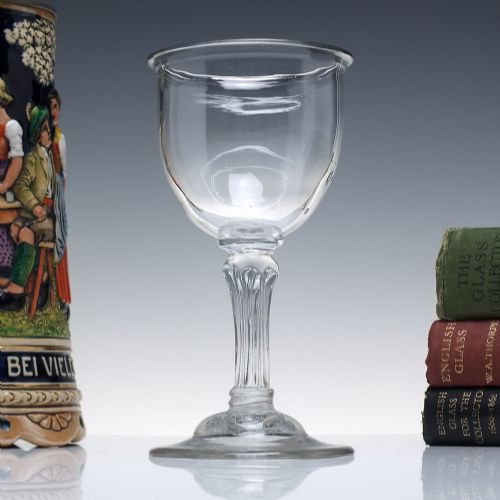
- A stem design featuring an open interior channel running from the base up into the bowl. This specialised construction requires advanced glassblowing skill.
Frequently Asked Questions
What periods do these glasses come from?
The pieces span the Victorian era and the Edwardian period, specifically covering dates from eighteen-eighty up to nineteen-ten. These eras encompass distinct decorative styles from the late nineteenth and early twentieth centuries.
Buyers will find that Victorian items often feature deep cutting or star-etching, while Edwardian pieces may display geometric motifs like Greek key patterns.
How do I identify cut glass champagne bowls?
Cut glass champagne bowls feature geometric facets and linear patterns ground directly into the material. These incisions create sharp edges and catch ambient light.
Running a finger gently across the surface reveals the precise depth of the wheel-cut depressions, separating true cut crystal from moulded imitations.
Can I use antique champagne coupes today?
These historical vessels suit modern dining and special occasions when handled with appropriate care. Hand washing helps preserve the delicate glass surfaces and intricate etchings.
Their shallow bowl design alters the release of effervescence compared to modern flutes, offering a traditional tasting experience.