





Victorian Etched Wine Glasses
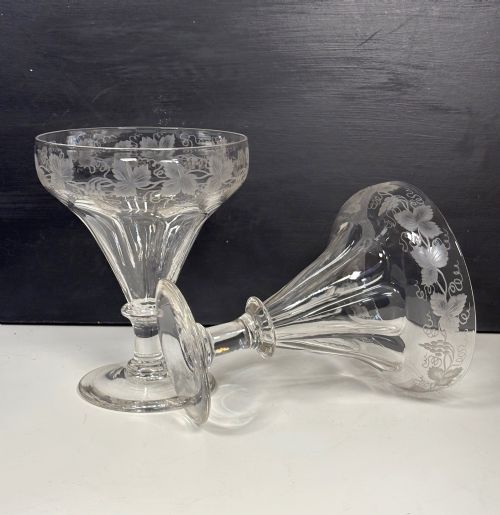
Victorian etched wine glasses bring nineteenth-century craftsmanship to the table, offering delicate floral and star motifs on clear or coloured lead crystal.
Victorian Etched Wine Glasses
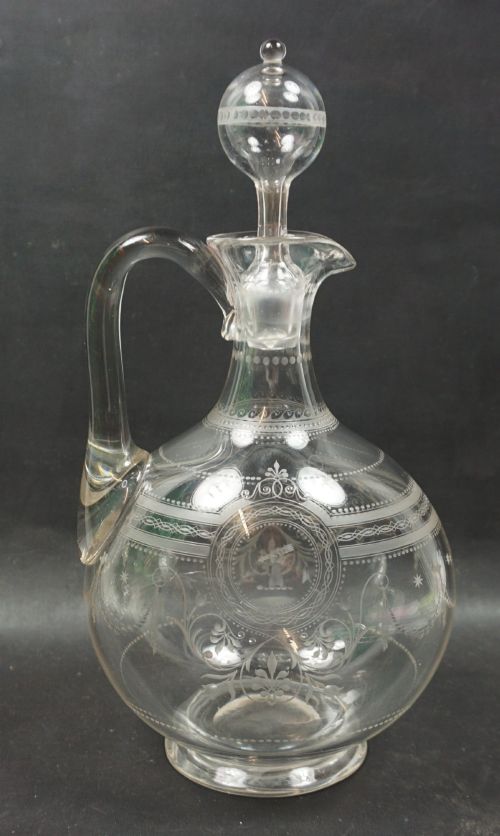
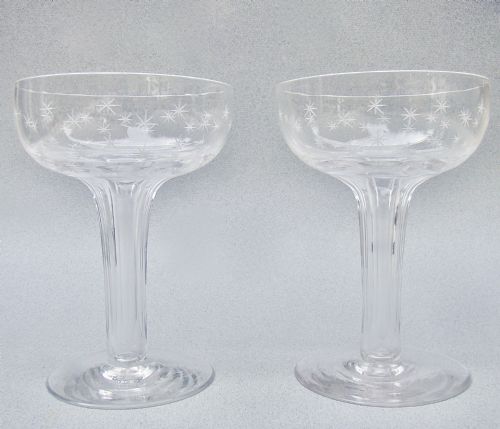
Victorian etched wine glasses represent the table glassware of the nineteenth century, encompassing stems, goblets, and dessert wine glasses decorated with surface patterns. Buyers seeking these items will frequently encounter matching sets or harlequin groupings originating from the decades between eighteen-fifty and nineteen-ten.
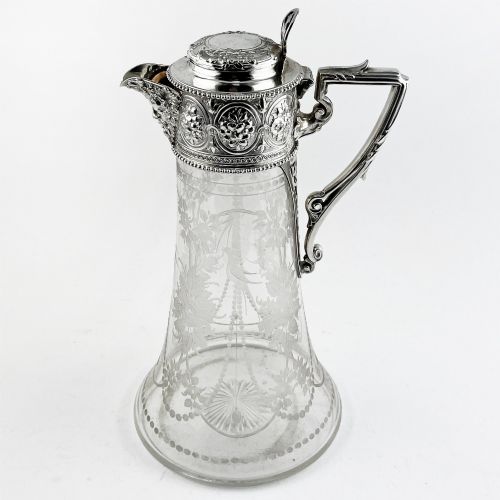
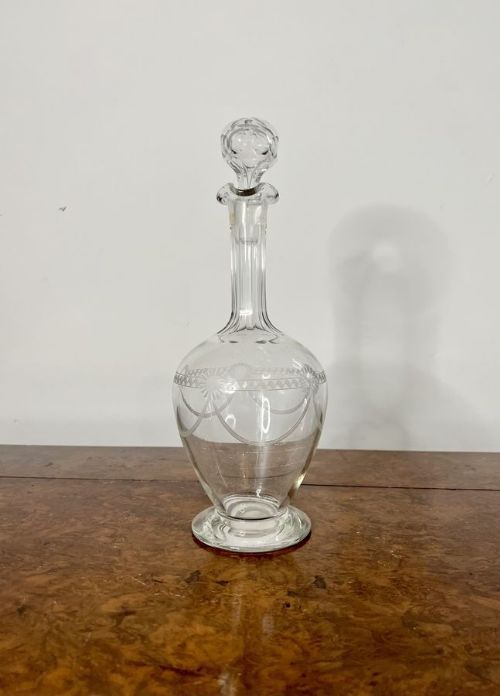
The evidence shows various forms including champagnes, rummers, and hock glasses, alongside related vessels like decanters and claret jugs. Most examples date from the core Victorian period, with particular concentrations around eighteen-seventy and eighteen-eighty, often featuring floral, star, or vine decorations.
Originating predominantly from English and Bohemian workshops, these glasses reflect diverse stylistic influences such as French Rococo Revival and Art Nouveau. Sets range from pairs to larger gatherings of sixteen, providing options for both casual display and formal dining.
Evaluating Quality
Quality rests upon the clarity of the metal, the crispness of the wheel-engraving or acid-etching, and the balance of the stem. Superior examples display precise depth in cut details and harmonious proportions between bowl and foot.
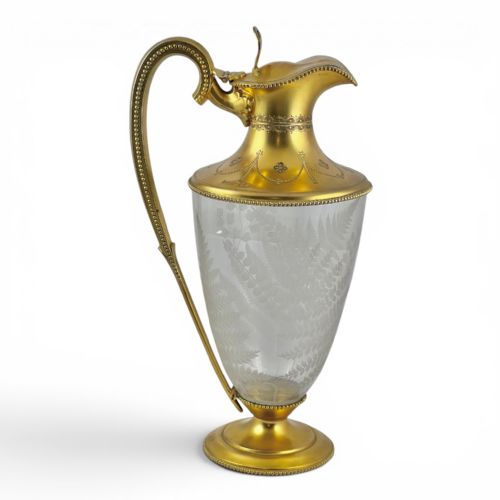
The integration of precious metal mounts, such as hallmarked sterling silver or substantial silver plating, elevates certain pieces. Consistency across a set, especially within harlequin groups or matched pairs, dictates the desirability of the glassware.
Victorian Etched Wine Glasses Retail Price Guide 2026
Typical asking prices for victorian etched wine glasses among the pieces listed under this phrase on Sellingantiques today, from the lower quarter to the upper quarter. They describe what is for sale here now, not the wider market.
The documented objects range from small dessert wine glasses and hock decanters to large ewers, rinsers, and champagne coupes.
Asprey and Co. Ltd·Stevens and Williams·Elkington
The Victorian Etched Wine Glasses Glossary
- Lead crystal
- Glass containing lead oxide, which increases brilliance, weight, and clarity while allowing deeper cutting and etching.
- Etched glass
- Glass decorated by the application of acid to eat away exposed areas, creating fine surface patterns.
- Roemer
- A traditional Germanic stemmed drinking vessel, often made of green or amber glass with a prunt-studded stem.
- Hock glass
- A tall-stemmed wine glass traditionally used for white wine, frequently produced in coloured or layered crystal.
- Claret jug
- A vessel designed for serving red wine, usually combining a glass body with a silver or silver-plated handle and mount.
Victorian Etched Wine Glasses: Frequently Asked Questions
Are these glasses safe for daily use?
These items can be used for special occasions, provided they are handled with care and washed gently by hand after use. Stems from the nineteenth century often feature thinner walls than modern equivalents.
Many collectors prefer to reserve them for occasional dining or display to protect the fine lead crystal and historical surface decoration from accidental chips.
What is a harlequin set?
A harlequin set consists of glasses that share similar periods, forms, or decorative motifs but differ in minor details or exact shades of colour. This approach reflects historical dining practices where matching large sets was less common.
Such groupings offer a characterful way to assemble a collection of Victorian stemware without requiring an identical matched service.
How can I tell a Victorian glass from a newer reproduction?
Examine the base for signs of wear, such as fine scratches known as shelf wear, and check for the pontil mark where the glassblower's iron was detached. Nineteenth-century pieces often display slight irregularities in weight, thickness, and bubble formation.
Familiarity with period styles like Bohemian overlaid crystal and Victorian floral engraving helps distinguish genuine antique production from twentieth-century decorative copies.