



Victorian Stemware Pair
A victorian stemware pair brings genuine nineteenth-century table craft into your home through paired glasses designed for wine and champagne.
Victorian Stemware Pair
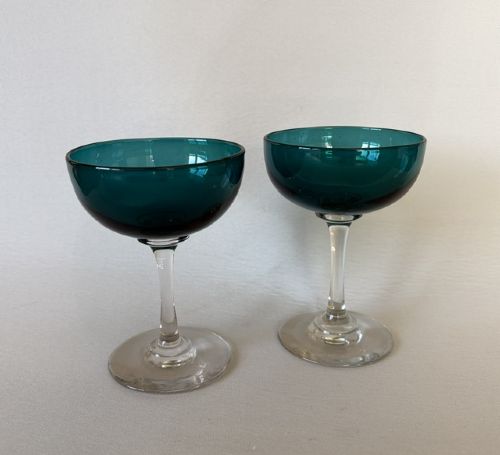
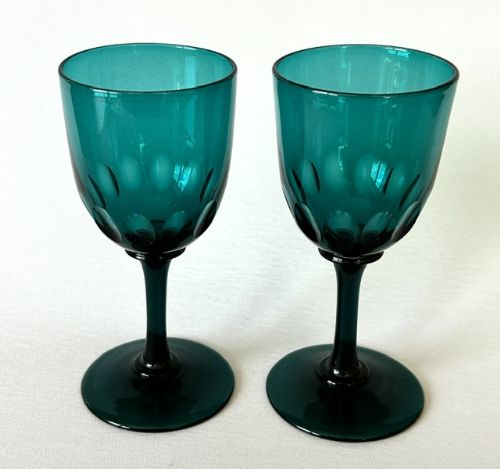
When you search for a victorian stemware pair, you are looking at matched sets of drinking vessels intended for formal dining and social occasions during the nineteenth century. These matching pairs typically comprise wine glasses or champagne coupes, shaped to enhance the drinking experience of the era.
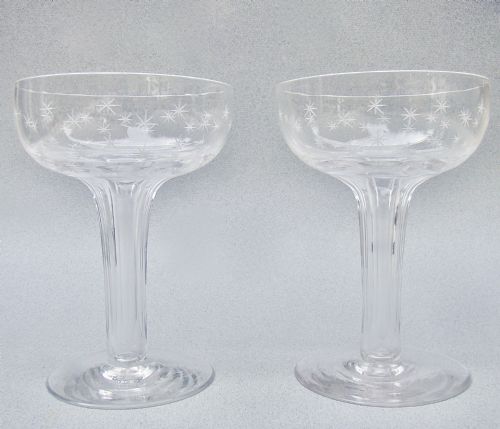
On this page, you are most likely to meet pieces originating from the Victorian period, spanning decades from eighteen-fifty to eighteen-ninety. They take the form of dessert wine glasses, champagne bowls, and hollow stem glasses, reflecting the diverse beverage habits of nineteenth-century households.
The aesthetic of these items often draws on traditional Victorian design or Venetian Revival influences. They frequently feature distinct colourations like green, aqua, blue, and cranberry, alongside clear lead crystal.
How they were made
The creation of these drinking vessels relies on hand-blown glass and lead glass techniques, shaping molten material into delicate bowls and stems. Artisans utilised lead crystal to achieve clarity and weight, allowing the pieces to catch the light during evening gatherings.
Surface decoration was achieved through various methods including cutting, star-etching, and acid cut cameo work. Overlay techniques, such as red or cranberry glass layered over clear crystal, required skilled manipulation to reveal contrasting colours beneath engraved patterns of fruiting vines and convolvulus.
Victorian Stemware Pair Retail Price Guide 2026
Typical asking prices for victorian stemware pair among the pieces listed under this phrase on Sellingantiques today, from the lower quarter to the upper quarter. They describe what is for sale here now, not the wider market.
What varies in quality
Quality in these drinking vessels rests upon the precision of the glassblower and the depth of the decorator's skill. Finer examples display crisp, well-defined cutting and etching that remain sharp to the touch, whereas simpler versions show softer surface details.
The consistency of the colour saturation and the symmetry of the paired items dictate the visual harmony of the set. Superior manufacturing results in balanced proportions between bowl, stem, and foot, ensuring that each vessel in the pair matches its counterpart in weight and form.
Stevens and Williams·Salviati
The Victorian Stemware Pair Glossary
- Lead Crystal
- Glass containing metallic oxide to increase brilliance and weight. This material allows for deeper and sharper cutting than standard glass.
- Champagne Coupe
- A shallow, broad-bowled glass designed for sparkling wine. These are frequently encountered in nineteenth-century dining settings.
- Cranberry Glass
- A pinkish-red glass coloured by the addition of gold chloride during melting. It is a defining hue of the Victorian period.
- Acid Cut Cameo
- A technique where layers of coloured glass are partially eaten away by acid to reveal a contrasting design. This creates a textured, two-tone surface relief.
Victorian Stemware Pair: Frequently Asked Questions
How were these glasses used?
Victorian stemware served functional roles during formal dinners, afternoon receptions, and evening gatherings. Specific shapes corresponded to particular beverages, separating wines from sparkling champagne.
Hosts used matched pairs to maintain a uniform table setting for guests. The coloured glass varieties often denoted specific courses or added visual splendour to dessert services.
Are they safe to use?
While these items are genuine nineteenth-century antiques, many people enjoy using them for special occasions rather than daily dining. Hand washing in lukewarm water is essential to preserve the historic glass.
Harsh detergents and automatic dishwashers should be avoided entirely to protect the surface etching and delicate lead crystal composition.
How do I identify the period?
Dating relies on observing manufacturing characteristics, such as pontil marks on the base and the weight of the lead glass. Stylistic motifs like acid cut cameo work or Venetian Revival shapes also point towards specific decades.
Proportions and cutting styles shifted across the nineteenth century, moving from simpler early forms to more elaborate layered and engraved treatments by eighteen-ninety.
Why do they come in pairs?
Dining traditions of the Victorian era emphasised symmetry and balance across the table layout. Sets of two allowed hosts to seat dining partners with matching glassware.
Survival rates also dictate why we find them this way today, as losing or breaking individual components over generations often left only two remaining from a larger set.