



Vintage Glass Champagne Saucers
These vintage glass champagne saucers bring architectural breadth and historical weight to a modern toast, offering a shallow bowl designed to hold the aromas of older vintages.
Vintage Glass Champagne Saucers
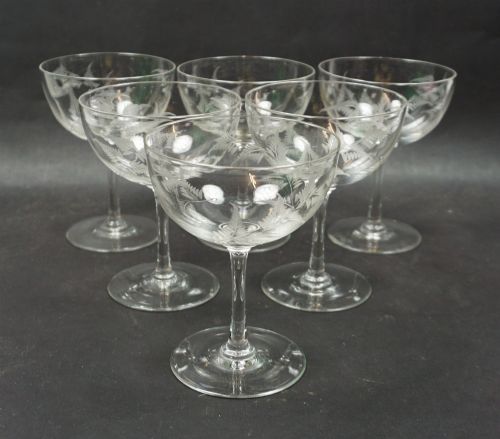
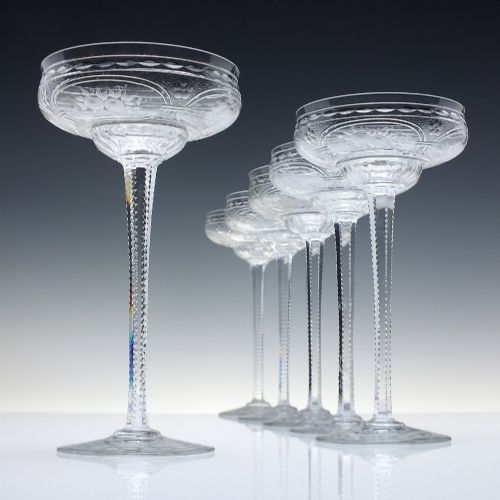
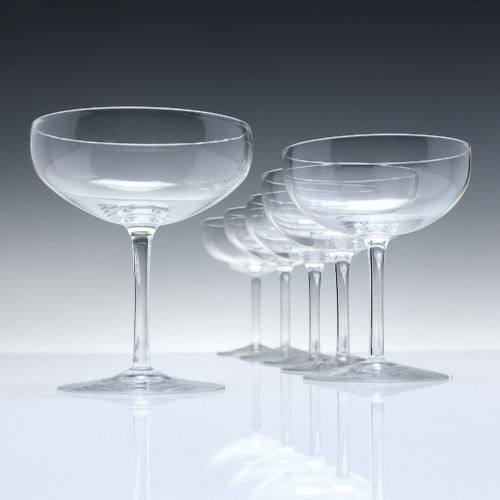
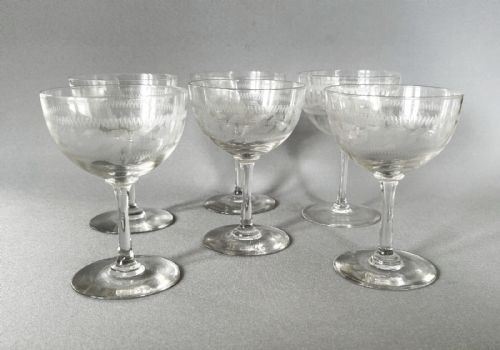
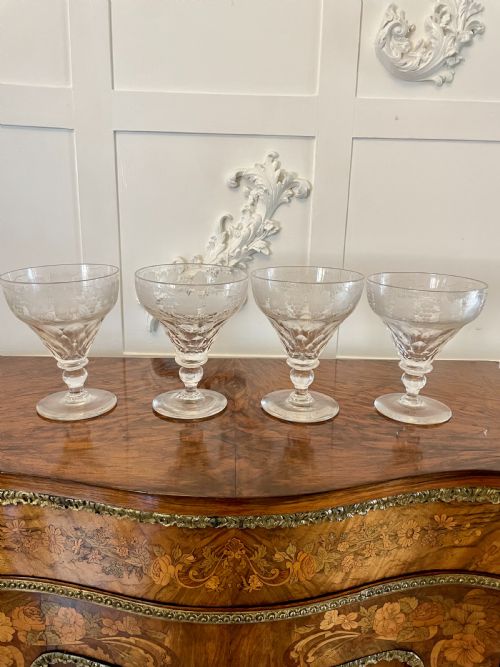
Vintage glass champagne saucers encompass shallow bowls, coupes, and glasses designed for sparkling wine, spanning eras from the mid-nineteenth century through the Edwardian period and the nineteen-twenties. Buyers searching this phrase encounter nineteenth-century cut and engraved examples alongside early twentieth-century sets.
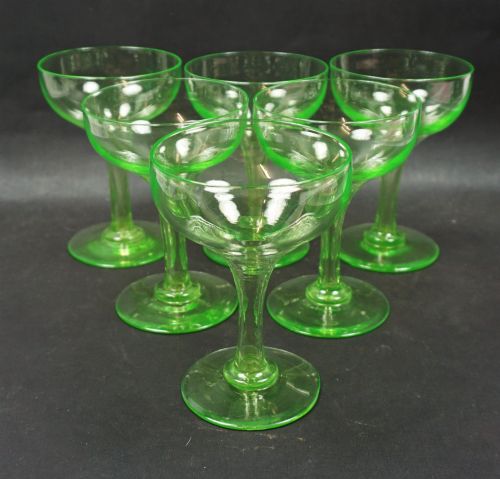
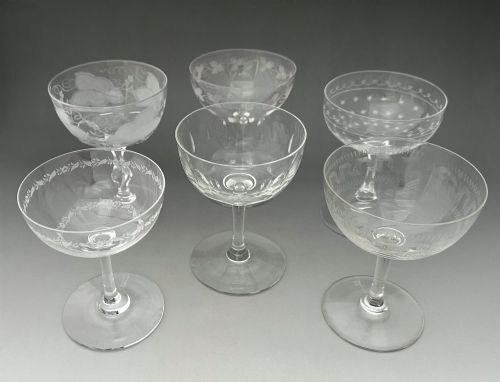
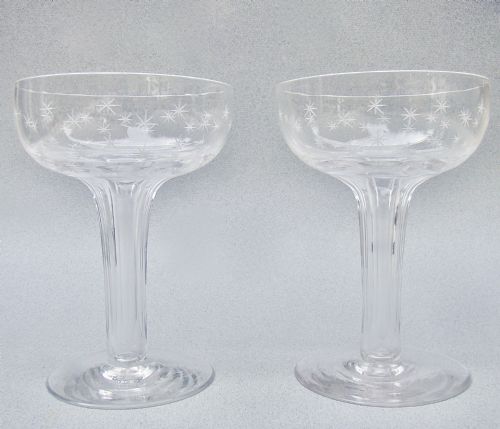
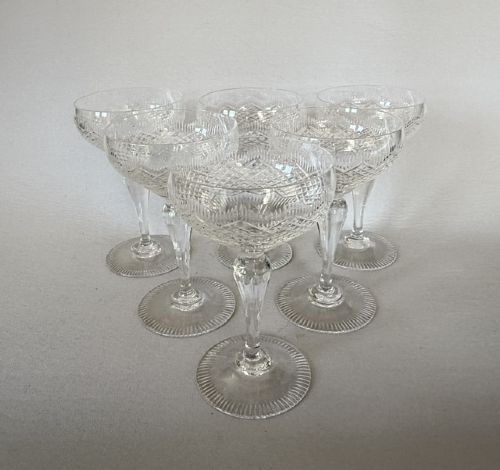
The forms range from hollow-stemmed Victorian vessels to large crystal coupes and smaller bowls featuring Greek key patterns or foliate motifs. Pieces frequently appear in sets of varying sizes, from pairs up to larger gatherings of sixteen.
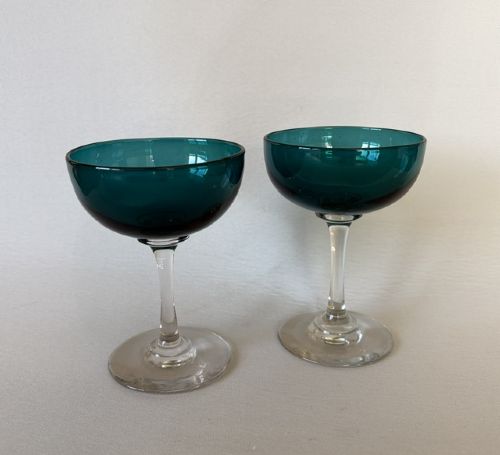
Origins include English workshops producing clear crystal and cased coloured glass in red, green, and cranberry. These vessels reflect the shifting tastes of Regency, Victorian, and Edwardian dining tables.
How they were made
Production relies on lead crystal and clear glass, shaped into bowls and stems that are subsequently finished by hand. Etching, star-cutting, and facet-cutting on the stems and bowls require precise wheel-engraving techniques.
Coloured glass production involves casing, where layers of cranberry, green, or red glass sit over clear crystal before the exterior layer is cut away to reveal the contrasting colour beneath.
Vintage Glass Champagne Saucers Retail Price Guide 2026
Typical asking prices for vintage glass champagne saucers among the pieces listed under this phrase on Sellingantiques today, from the lower quarter to the upper quarter. They describe what is for sale here now, not the wider market.
Victorian diners occasionally used hollow stems so they could watch the champagne bubble all the way down into the foot.
What varies in quality
Quality rests upon the depth and crispness of the wheel-cut facets and the fineness of the engraving depicting convolvulus or fruiting vines. Superior pieces exhibit precise symmetry in the cutting and clarity in the crystal.
The weight of the glass and the elegance of the hollow stems or facet-cut stems distinguish standard production from exceptional examples commissioned during the Victorian and Edwardian periods.
The Vintage Glass Champagne Saucers Glossary
- Champagne coupe
- A shallow-bowled glass designed for sparkling wine and champagne. Its wide aperture allows the bubbles to dissipate more quickly than in a modern flute.
- Cased glass
- Glass made from two or more distinct layers of different colours. The outer layer is often partially cut away to expose the contrasting colour underneath.
- Facet cut
- A decorative technique involving flat, polished planes ground into the surface of the glass. It enhances how the material catches and reflects light.
- Hollow stem
- A stem possessing an internal channel running from the bowl down to the foot. This traditional construction appears on various nineteenth-century drinking vessels.
- Star-cut
- A geometric engraving pattern resembling a multi-pointed star, commonly found on the flat bases or bowls of Victorian glassware.
Vintage Glass Champagne Saucers: Frequently Asked Questions
What is the difference between saucers and flutes?
Saucers feature a wide, shallow bowl that exposes a larger surface area to the air. This shape encourages the bubbles to settle faster and concentrates the aromatics of the wine.
Flutes restrain the release of carbonation, maintaining a narrower stream of bubbles for a longer duration. Historical preference favoured the coupe for social drinking.
How were these glasses used historically?
Victorian and Edwardian diners utilised these bowls for sparkling wines, champagne, and sometimes desserts at formal banquets. The shallow design suited the flowing styles of service common in the nineteenth century.
Hosts collected matched or complementary sets to display wealth and refinement across the dining table during large dinner parties.
How do I care for antique glass?
Wash these pieces by hand using warm water and a mild detergent, avoiding sudden shifts in temperature that can stress the material. A soft cloth prevents scratching the polished surfaces.
Store them upright on a stable shelf rather than resting them on their rims. Modern dishwashers subject fragile crystal to excessive heat and abrasive detergents.
Can I mix different sets together?
Mixing sets of varying periods creates a layered table setting that reflects historical dining practices. Subtle differences in cutting styles and glass tint add visual interest.
Matching heights and bowl dimensions helps maintain balance across the arrangement when gathering disparate pairs and sets.