




Bell Bowl Wine Glasses
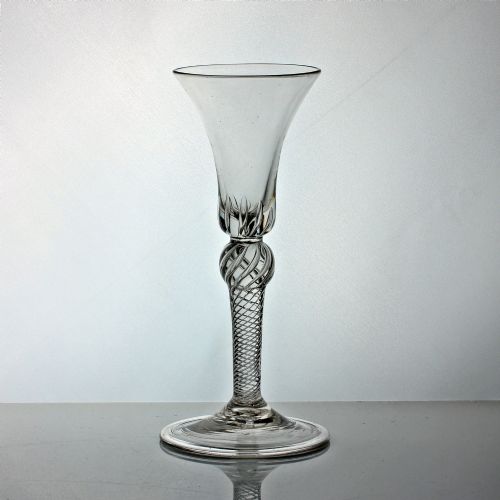
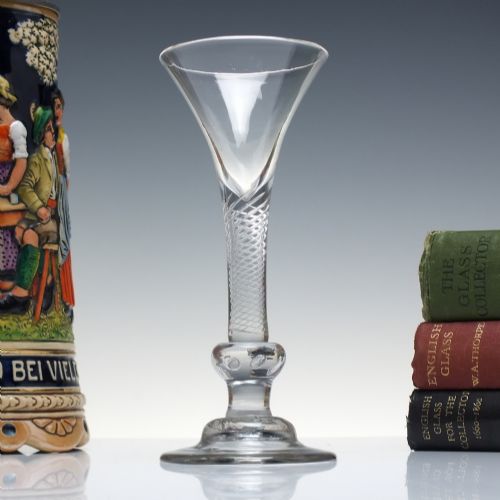
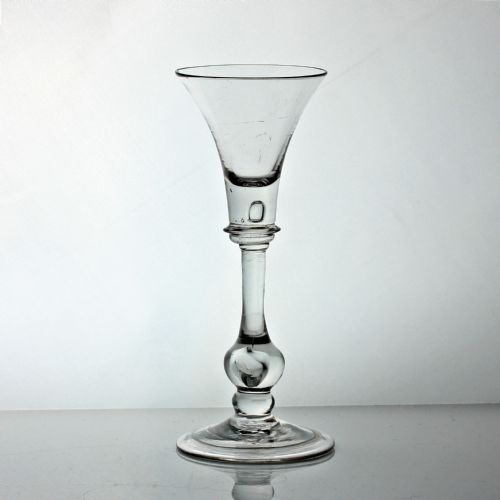
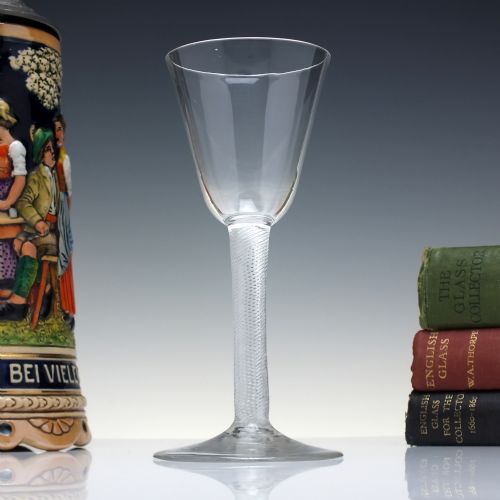
These bell bowl wine glasses are tactile drinking vessels defined by their flared profiles, emerging primarily from Georgian and Victorian workshops.
Bell Bowl Wine Glasses
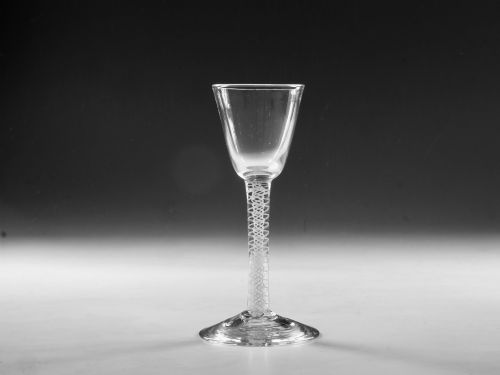
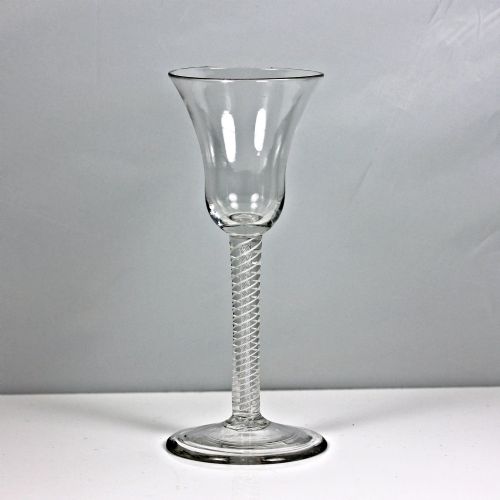
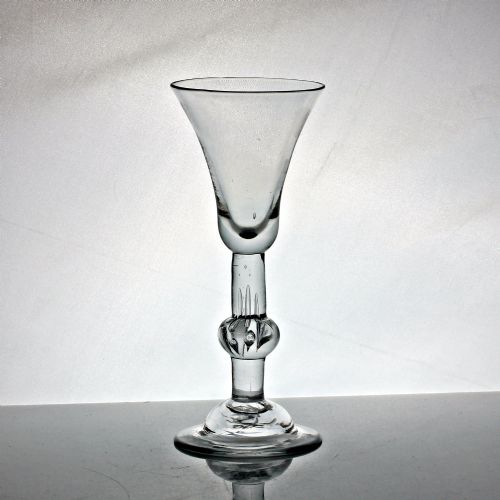
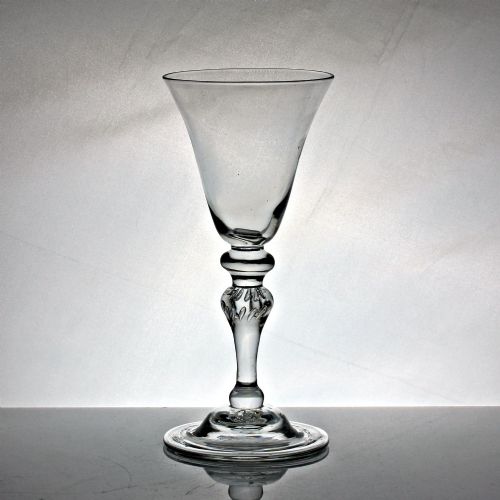
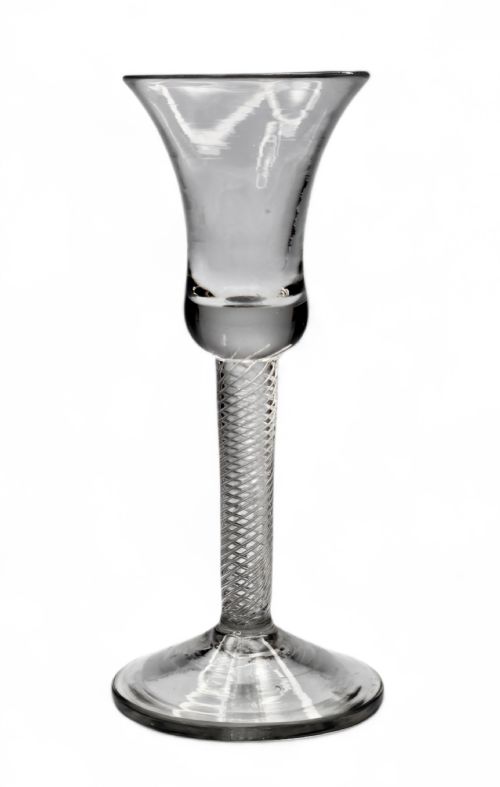
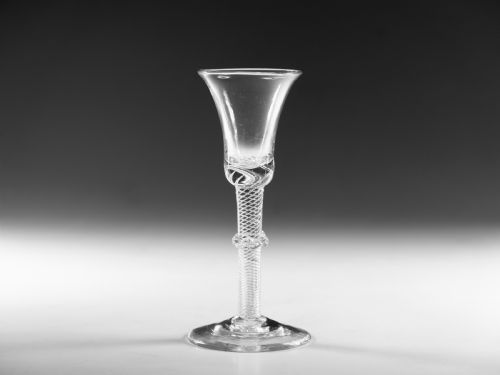
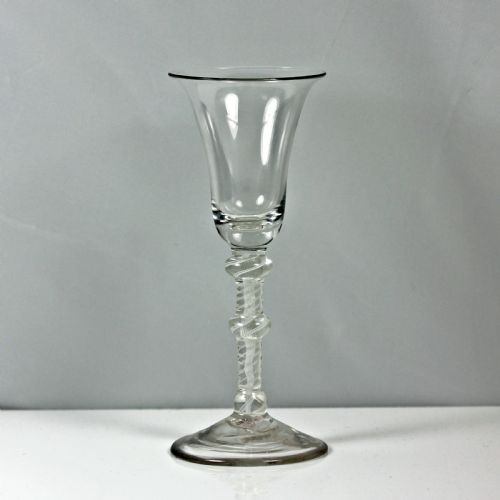
When you search for bell bowl wine glasses, you encounter drinking vessels characterised by their distinct trumpet-shaped bowls that flare outward toward the rim. The pieces listed here span the Georgian and Victorian eras, taking forms such as opaque twists, air twists, and plain stems.
The version you are most likely to meet on this page is the 18th-century English wine glass featuring a bell bowl supported by a twisted or baluster stem. These items originated as functional tavern and dining table glassware before evolving into collected antiques.
How they were made
Makers introduced decorative elements like air twists and white enamel opaque twists directly into the molten stem before drawing and twisting the glass. Final pieces often received hand-finished touches such as folded feet and applied knops.
Glassmakers occasionally trapped elongated air bubbles inside stems just to watch collectors puzzle over whether it was an accident or artistry.
What varies in quality
Quality in these drinking vessels rests upon the clarity of the metal and the precision of the stem formation. Heavy lead glass with exceptional brilliance separates finer examples from standard production work.
The dexterity required to execute multi-spiral air twists or intricate double series opaque twists dictates the visual success of the piece. Symmetry in the bell bowl and stability in the domed or folded foot complete the assessment.
The Bell Bowl Wine Glasses Glossary
- Bell bowl
- A drinking vessel bowl shaped like an inverted bell with sides that flare outward toward the rim. This form provides a traditional silhouette common in Georgian glassware.
- Lead glass
- A heavy glass composition containing lead oxide that increases brilliance and refractive index. This material allowed makers to achieve exceptional clarity in 18th-century drinking vessels.
- Air twist
- A stem decoration formed by elongating internal air bubbles into spiral threads within the glass. This technique creates delicate optical patterns inside the stem.
- Opaque twist
- A stem featuring internal threads of white enamel glass drawn into twisted configurations. These strands stand out clearly against the clear metal of the stem.
- Folded foot
- A glass foot constructed by folding the outer rim back underneath to create a thickened, rounded edge. This method adds structural strength to the base of the vessel.
Bell Bowl Wine Glasses: Frequently Asked Questions
What are bell bowl wine glasses?
These are drinking vessels featuring a distinctive flared bowl shape that tapers toward the base. They were primarily produced during the 18th and 19th centuries.
The form is closely associated with English lead glass tablewares, particularly those featuring decorative stems such as air twists and opaque twists.
How were these glasses used?
They served as functional dining and tavern glassware for consuming wine during formal meals and social gatherings. Their proportions were designed for moderate pours typical of the period.
Over time, these utilitarian drinking vessels transitioned from dining tables into collector cabinets and display collections.
How do I live with antique wine glasses?
Living with these glasses involves displaying them in stable cabinets away from direct vibration and handling them carefully by the stem rather than the bowl. Hand washing in lukewarm water with mild soap preserves the historical surface.
Avoid extreme temperature changes, as historic lead glass can crack under thermal shock.
How do I tell periods apart?
Georgian examples often display characteristics like pontil marks, lead weight, and specific stem configurations such as balusters or multi-spiral twists. Victorian pieces, such as mid-19th-century Scottish items, show different manufacturing tolerances and material handling.
Examining the metal composition and the method used to form the stem helps clarify the date of manufacture.