




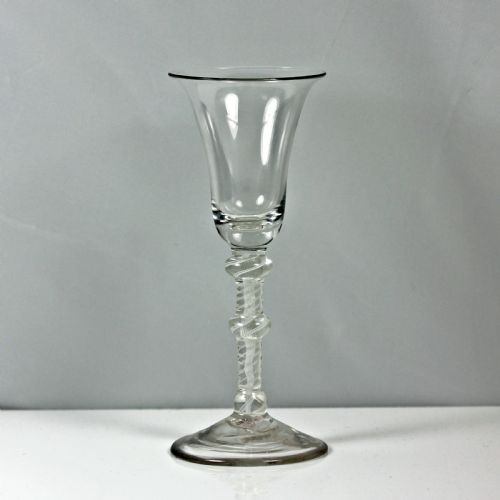

White Twist Glass Stemware
White twist glass stemware comprises drinking vessels featuring opaque white enamel threads drawn through the stem, desired for their intricate optical patterns.
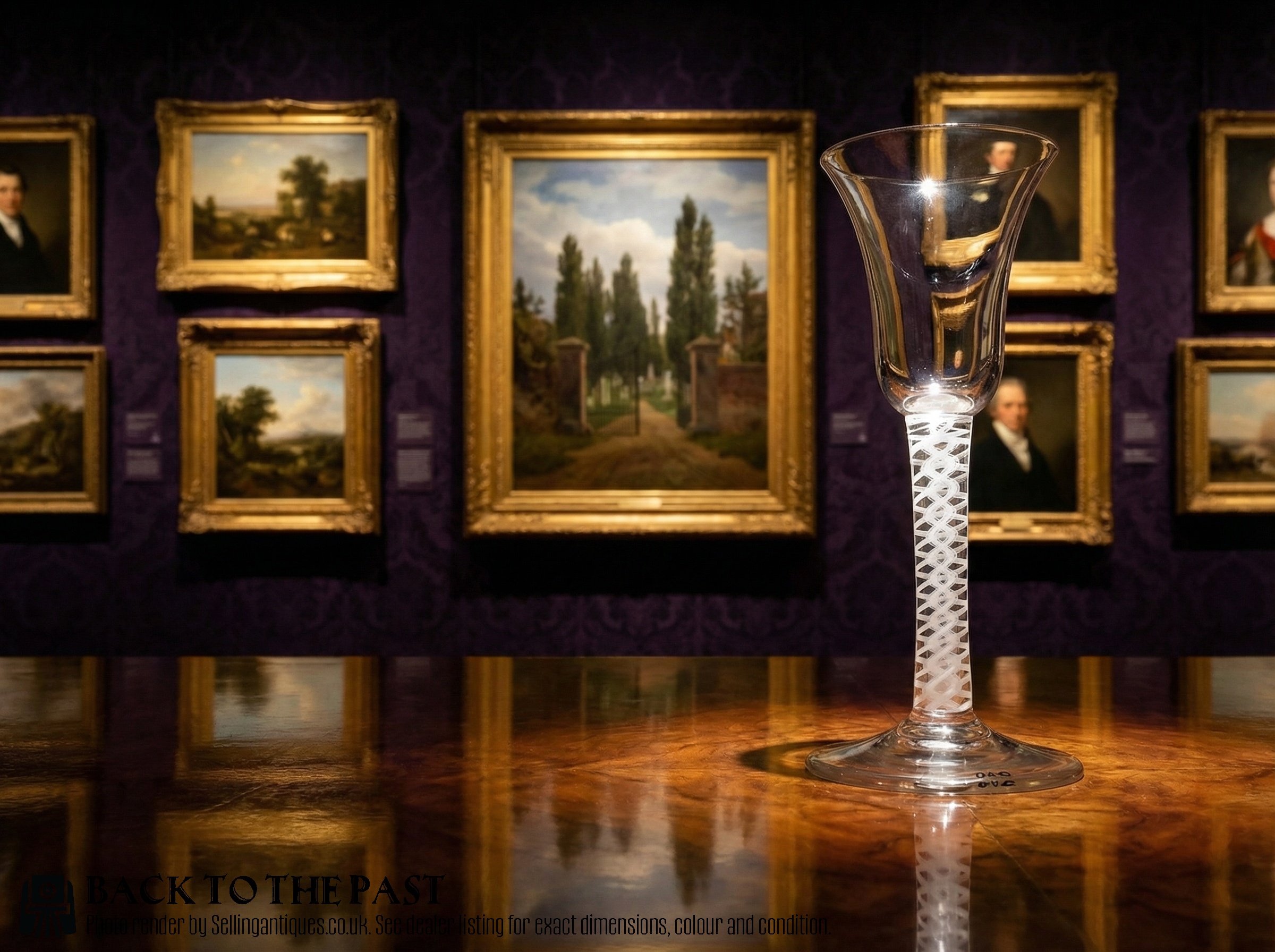
White Twist Glass Stemware
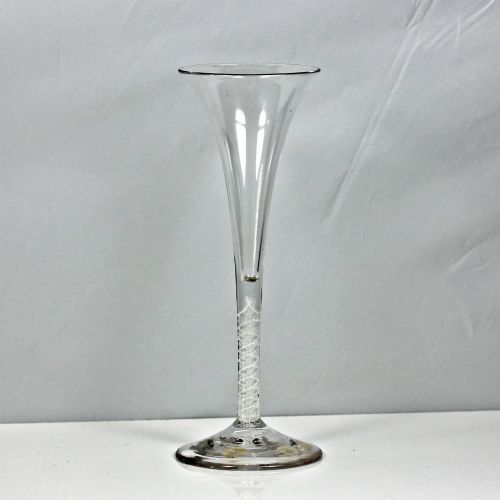
When searching for white twist glass stemware, buyers encounter drinking vessels predominantly from the Georgian period, alongside occasional Victorian examples. These pieces span forms such as wine glasses, ale glasses, cordial glasses, and champagne or sweetmeat glasses, originating mainly from English workshops.
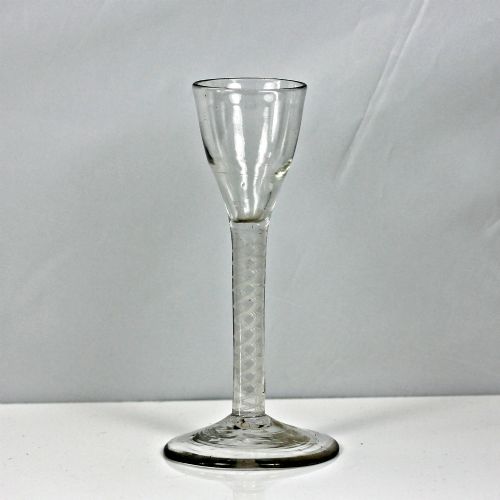
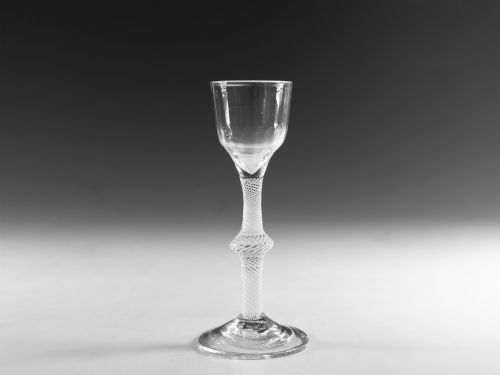
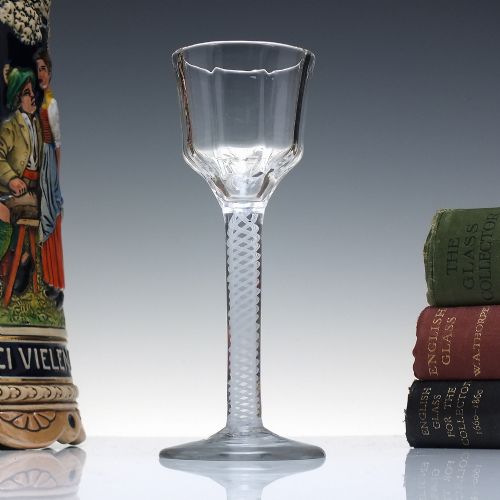
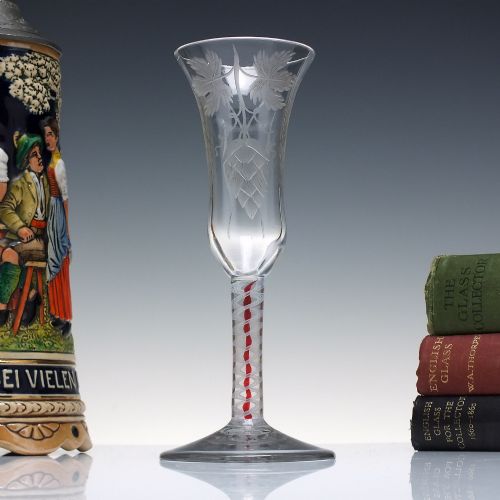
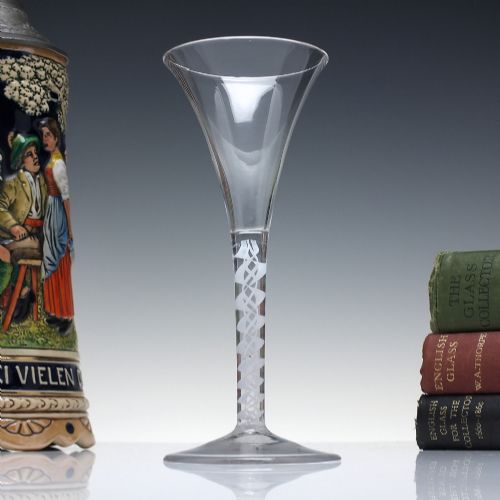
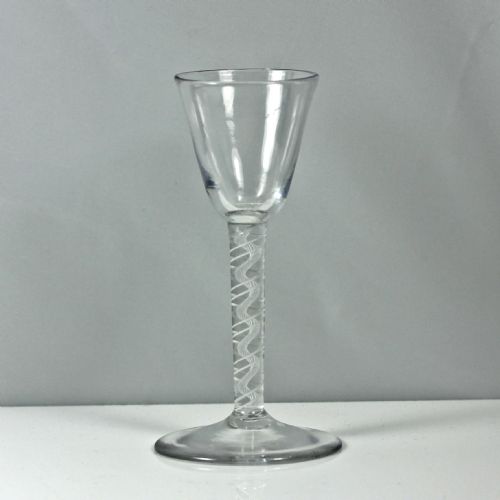
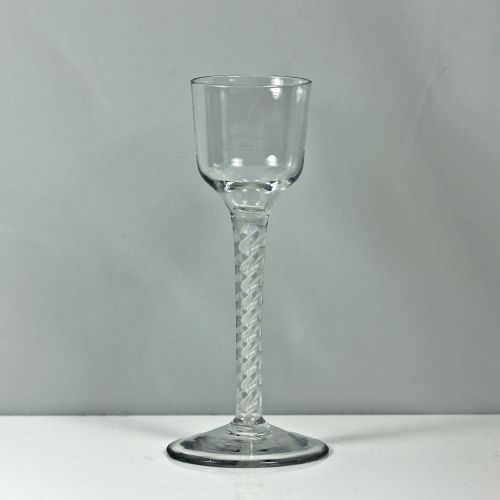
The most common form on this page is the wine glass featuring an opaque twist stem supporting bowls like the trumpet, ogee, or flute-moulded variants. These drinking vessels showcase varied bowl shapes paired with conical feet, occasionally incorporating knops along the stem.
Examples date primarily from the eighteenth century, specifically the seventeen-fifties and seventeen-sixties, with a smaller representation from the nineteenth century. The selection demonstrates the prevalence of lead glass and clear glass combined with white enamel elements.
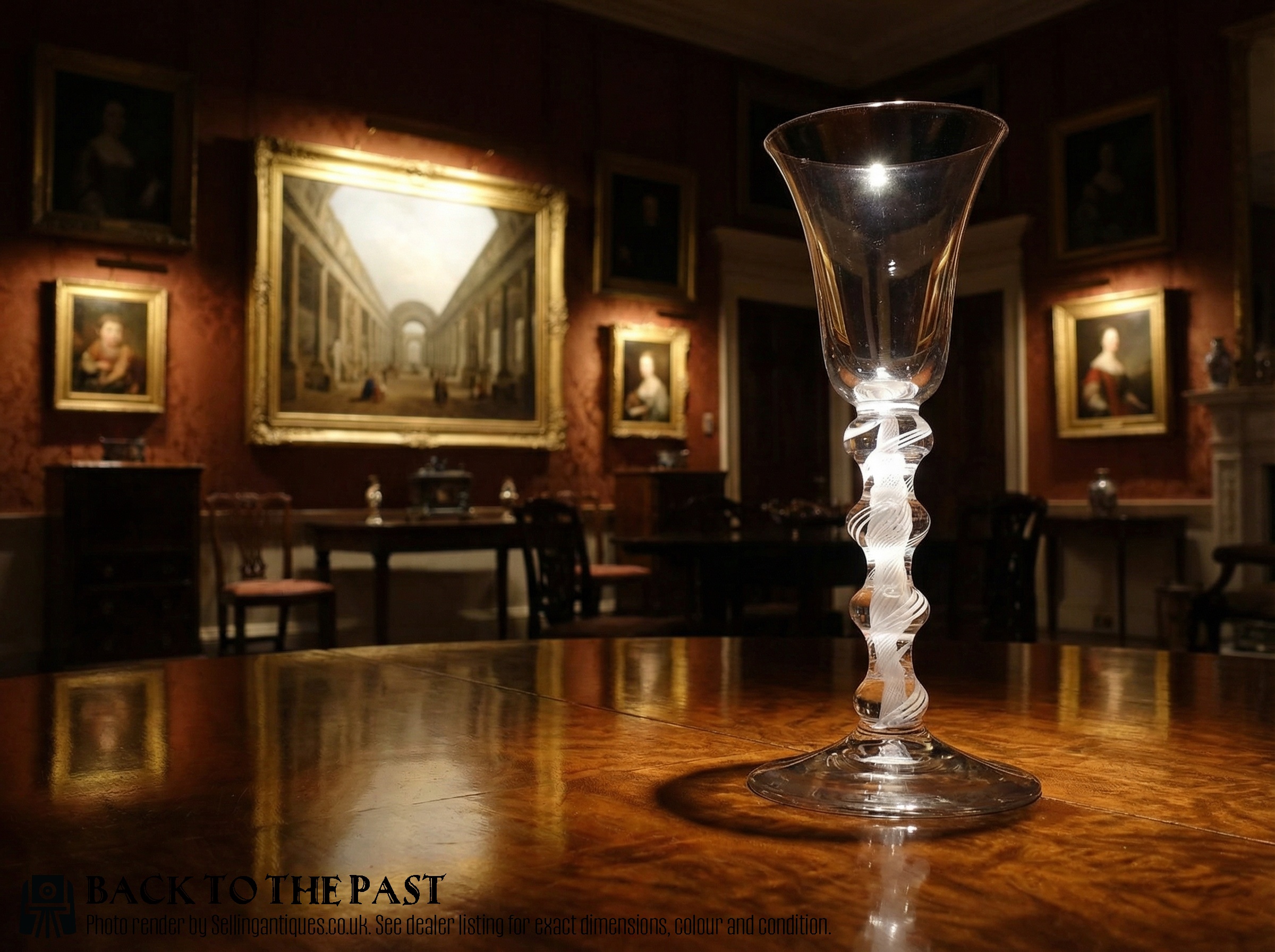
How they were made
These pieces are manufactured from lead glass, lead crystal, flint glass, and clear glass combined with white enamel to create the characteristic internal threads. Makers manipulated molten glass and enamel together to form single or multiple spiral patterns within the stem.
Techniques involve drawing and twisting the glass while hot to produce single series or double series opaque twists, sometimes incorporating multiple spirals or corkscrew formations. Bowls and feet were shaped separately and joined to the stem, with certain bowls receiving flute-moulding or engraving.
White Twist Glass Stemware Retail Price Guide 2026
Typical asking prices for white twist glass stemware among the pieces listed under this phrase on Sellingantiques today, from the lower quarter to the upper quarter. They describe what is for sale here now, not the wider market.
Some eighteenth-century drinkers used tall ale glasses with opaque twists specifically for foaming malt beverages.
What varies in quality
The sophistication of the twist formation separates finer examples from simpler ones, with multi-spiral and double series opaque twists requiring greater skill than single series designs. The complexity of the stem structure, such as the inclusion of multiple knops or triple twists, alters the visual weight.
Bowl ornamentation and form contribute to distinction, where flute-moulded ogee bowls or detailed engraving elevate the piece beyond a plain trumpet or conical shape. The clarity of the lead glass and the precision of the enclosed enamel threads define the standard of execution.
The White Twist Glass Stemware Glossary
- Opaque twist
- A stem containing white enamel glass threads drawn into spiral patterns. This technique defines the visual character of the stemware.
- Double series twist
- A stem featuring two sets of enamel twists, often an outer cable surrounding an inner core of threads. This method creates a denser optical effect inside the glass.
- Ogee bowl
- A bell-shaped drinking vessel with an 'S'-shaped profile curving out at the rim. This form appears frequently on eighteenth-century wine glasses.
- Knop
- A bulging node or knob formed on the stem of the glass. Knops provide decorative punctuation and a secure grip.
- Sweetmeat glass
- A wide, shallow vessel designed for serving confectionery or dried fruits. These pieces often share the same twist stem styles as drinking glasses.
White Twist Glass Stemware: Frequently Asked Questions
What is white twist glass stemware?
White twist glass stemware consists of drinking vessels featuring stems containing opaque white enamel threads. These pieces date largely from the Georgian era.
The category includes wine glasses, ale glasses, and cordial glasses produced in England using lead glass and enamel.
How do I identify Georgian white twist glasses?
Georgian examples typically feature hand-formed lead glass bodies with internal white enamel twists rather than moulded patterns. Look for eighteenth-century stylistic markers such as trumpet or ogee bowls.
stems often incorporate single or double series twists, sometimes with knops or conical feet, characteristic of the seventeen-fifties and seventeen-sixties.
What is the difference between single and double series twists?
A single series twist contains one set of enamel threads spirysing through the clear glass stem. These offer a simpler internal pattern.
Double series twists incorporate two distinct sets of threads, such as an outer spiral enclosing a central gauze or pair of threads, creating a denser visual appearance.
How should I care for antique twist stemware?
Antique glass requires gentle handling and should be washed by hand in lukewarm water using mild detergent. Avoid sudden temperature changes to protect the material.
Store the pieces securely on a stable surface where the delicate stems and thin feet will not suffer accidental knocks.