


White Porcelain Candle Holders
White porcelain candle holders bring bright ceramic polish and sculptural form to a room, spanning delicate Georgian figures to ornate Victorian candelabra.
White Porcelain Candle Holders
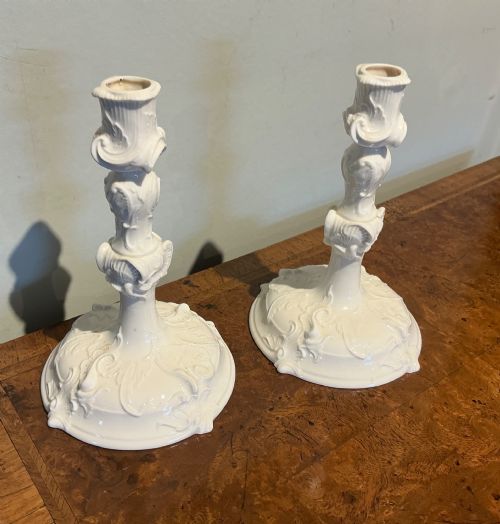
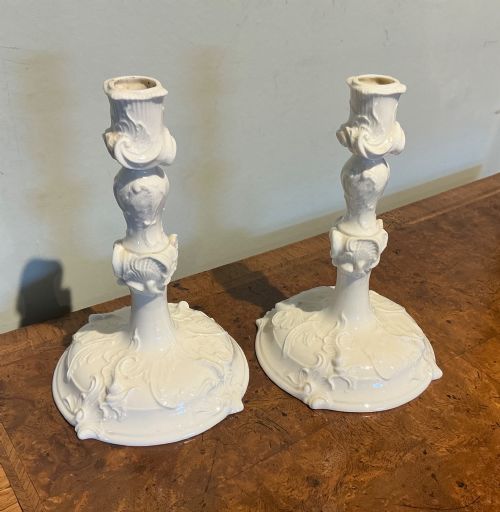
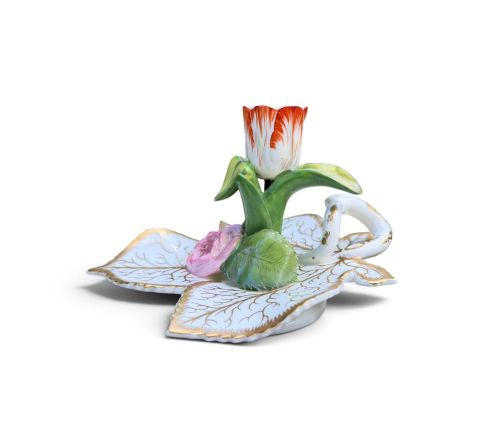
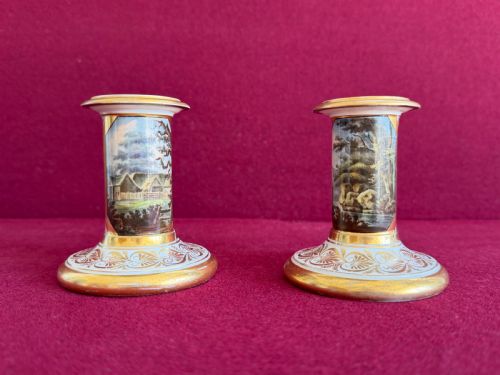
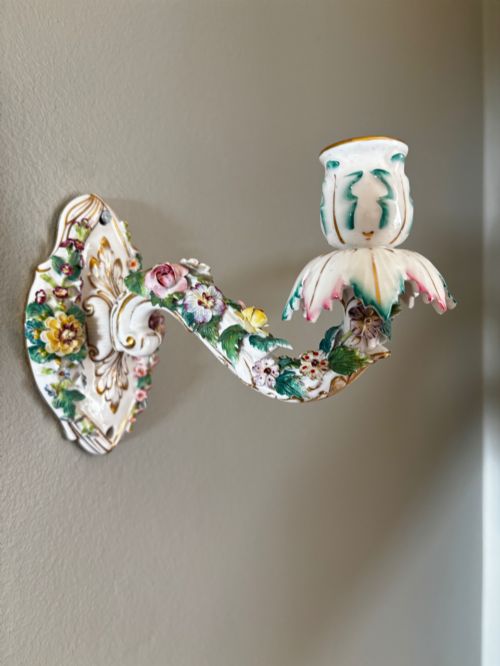
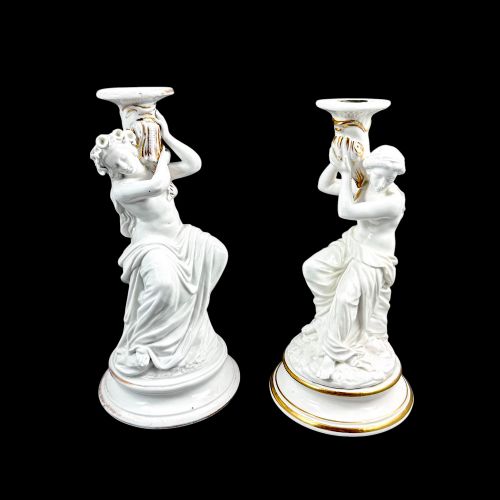
White porcelain candle holders encompass candlesticks, chambersticks, wall sconces and candelabra formed from hard-paste porcelain, blanc de chine and glazed ceramic bodies. When you search for white porcelain candle holders, you meet examples ranging from simple English tulip chambersticks to elaborate German figural groups and Chinese export elephant designs.
The selection on this page stretches from the mid eighteenth century through the Georgian and Victorian eras up to the early twentieth century. Common stylistic expressions include Rococo Revival, Regency, Neoclassical and the Aesthetic Movement, reflecting shifts in European and export ceramic design.
How they were made
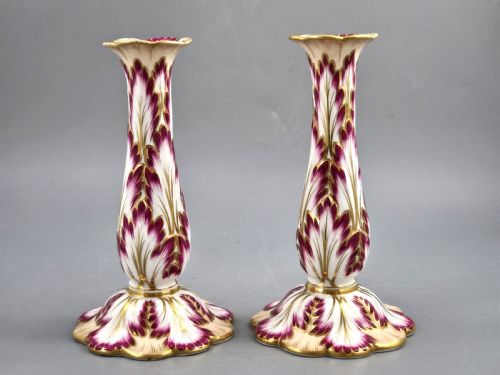
Potters shaped these pieces using hard-paste porcelain and blanc de chine bodies, often applying smooth transparent glaze to seal the ceramic surface. Many items incorporate painted enamel details, delicate gilding, and gold leaf highlights applied over the fired white body.
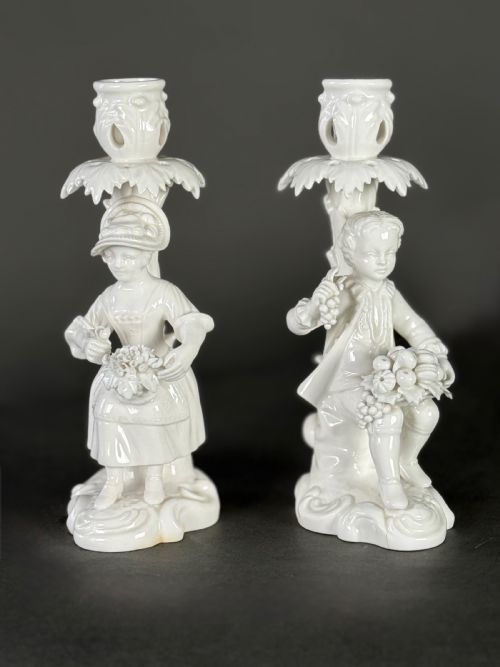
Figural examples combine slip-cast or hand-modelled sculptural components with fitted brass or gilt bronze mounts, particularly in candelabra and wall sconce forms where structural support is required.
White Porcelain Candle Holders Retail Price Guide 2026
Typical asking prices for white porcelain candle holders among the pieces listed under this phrase on Sellingantiques today, from the lower quarter to the upper quarter. They describe what is for sale here now, not the wider market.
Listings feature hard-paste porcelain, enamel, gilding, and gold leaf across Georgian, Victorian, and early twentieth-century periods.
What varies in quality
The reputation of the manufactory and the complexity of the surviving form, such as multi-branch candelabra or elaborate rococo scrollwork, influence the standing of an individual pair within the wider range of period ceramics.
Nymphenburg·Ridgway·Barr Flight and Barr·Meissen·Derby·Chelsea·Minton·Sutherland and Sons·Sitzendorf·Royal Worcester Hadley·Dresden
The White Porcelain Candle Holders Glossary
- Blanc de chine
- A pure white porcelain originating in China, prized for its smooth unpainted glaze and widely imitated by European factories.
- Chamberstick
- A low candlestick fitted with a pan to catch dripping wax and a handle for carrying through a house at night.
- Hard-paste porcelain
- A durable ceramic composition fired at high temperatures using kaolin and petuntse, yielding a dense white body.
- Candelabra
- A branched candlestick designed to hold multiple candles simultaneously on a single central shaft.
- Gilt bronze
- Metal mounts or bases treated with gold or a gold-coloured alloy to accent the porcelain body.
White Porcelain Candle Holders: Frequently Asked Questions
What are white porcelain candle holders?
These pieces are ceramic lighting devices designed to support candles safely, produced in forms ranging from single candlesticks to multi-branch candelabra and handled chambersticks.
They utilise white ceramic bodies such as hard-paste porcelain and blanc de chine, frequently enhanced with enamel painting, gilding, and figural modelling.
How were chambersticks used?
Chambersticks served as portable lighting for navigating dark hallways and bedrooms before the arrival of household electricity.
The shallow pan beneath the nozzle caught melting wax, while the loop handle allowed safe carriage by hand.
How do you date antique porcelain?
Dating relies on factory marks, style periods such as Georgian or Victorian, and the specific modelling characteristics of the ceramic body.
Material composition and decorative motifs like Rococo scrollwork or Neoclassical symmetry help narrow the decade of production.
Are these pieces functional?
Most antique candle holders remain fully functional for holding standard tapers, provided they are handled with care.
Many collectors choose to display them as sculptural ceramic art rather than exposing fragile antique glazes and gilding to burning wax.