


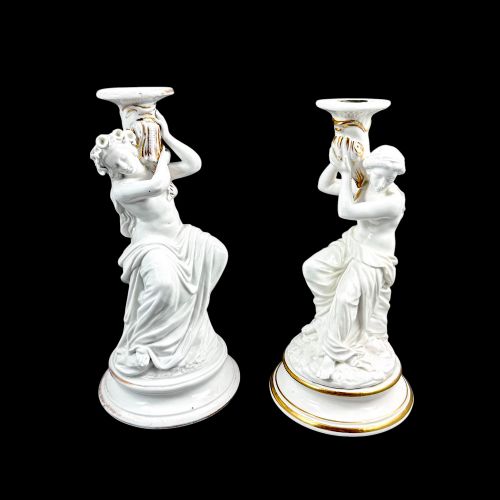


White Glazed Ceramic Figure
A white glazed ceramic figure captures the quiet charm of past centuries through modelled clay and smooth surface.
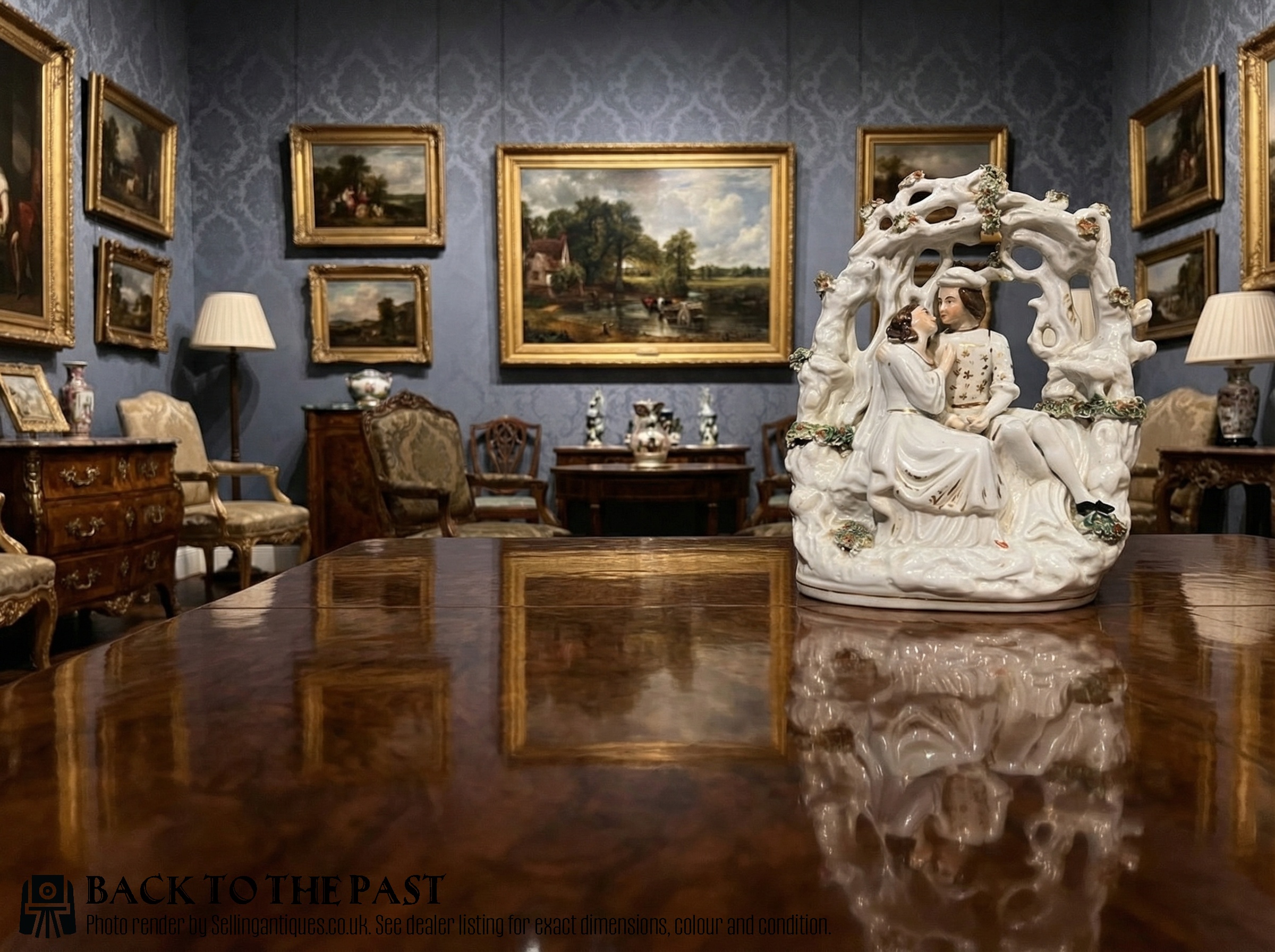
White Glazed Ceramic Figure
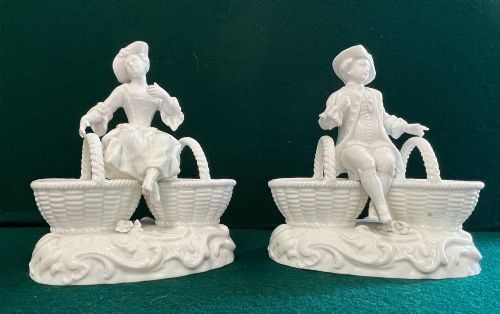
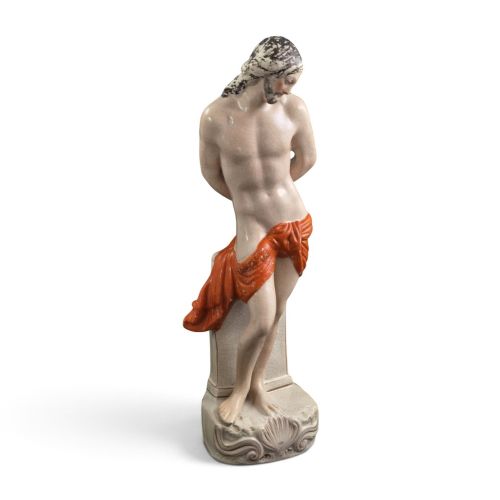
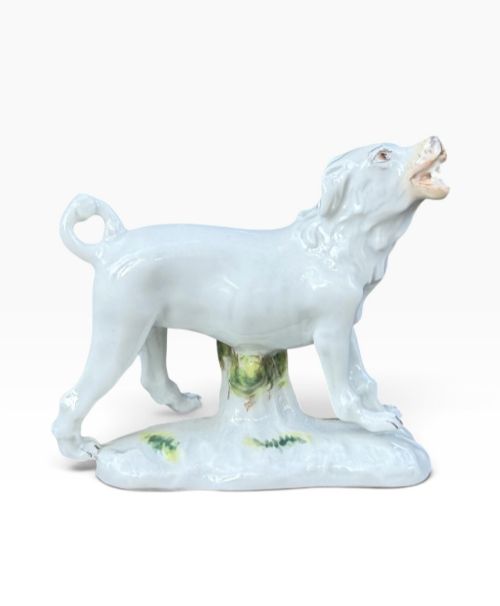
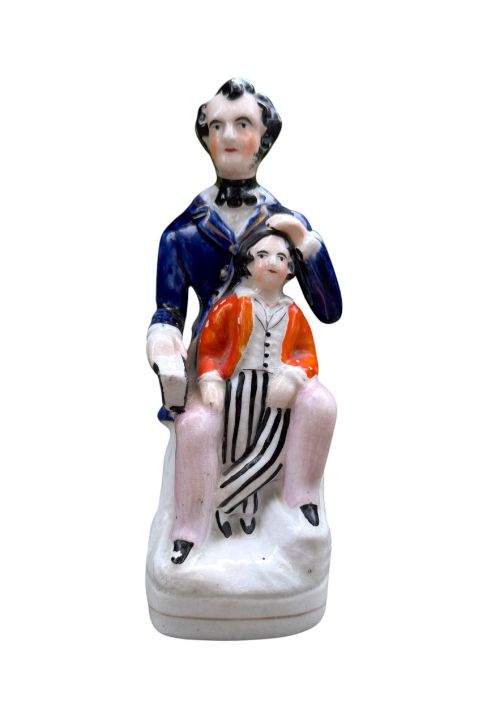
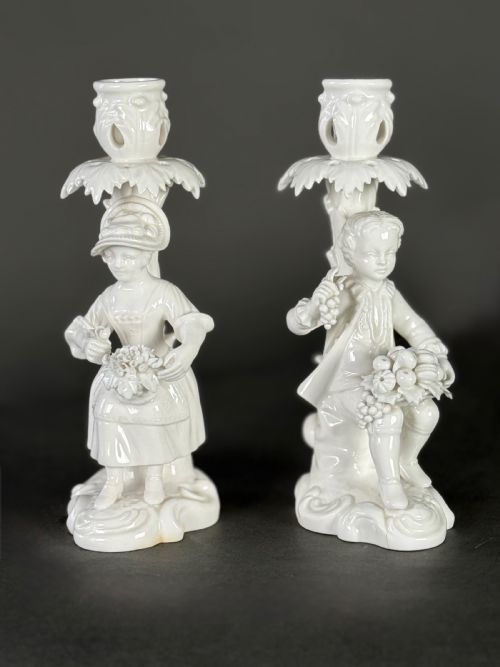
A white glazed ceramic figure encompasses modelled porcelain, earthenware, and pottery forms originating from Victorian Britain, Georgian Europe, and continental kilns. These objects take the shape of portrait groups, animals, dogs, and allegorical subjects created for display.
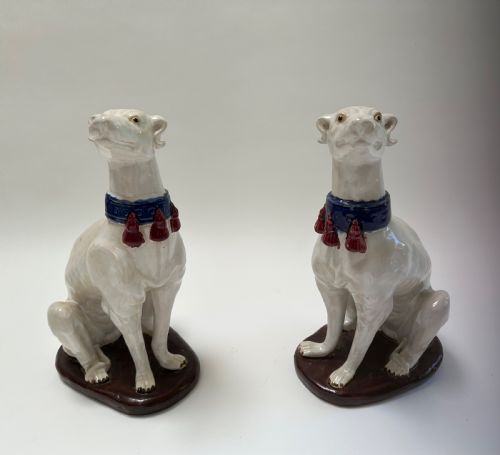
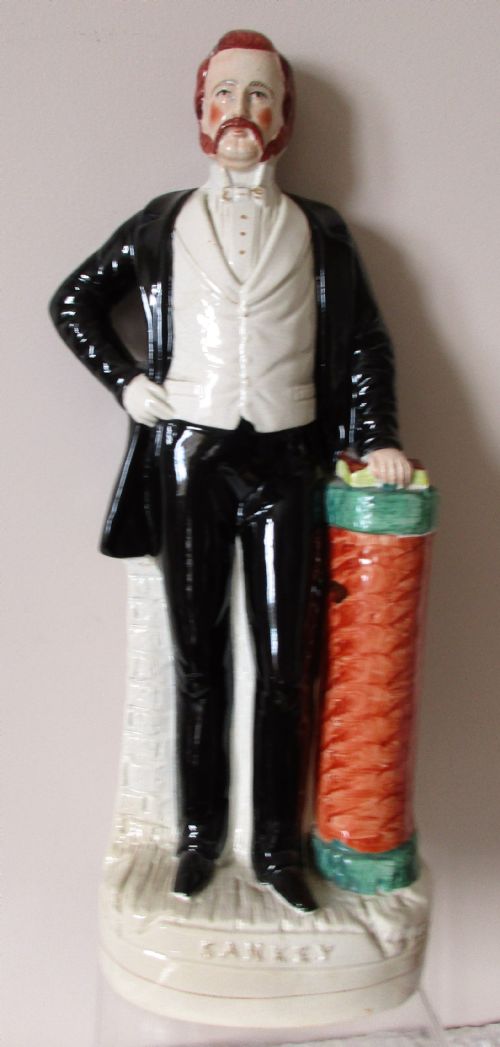
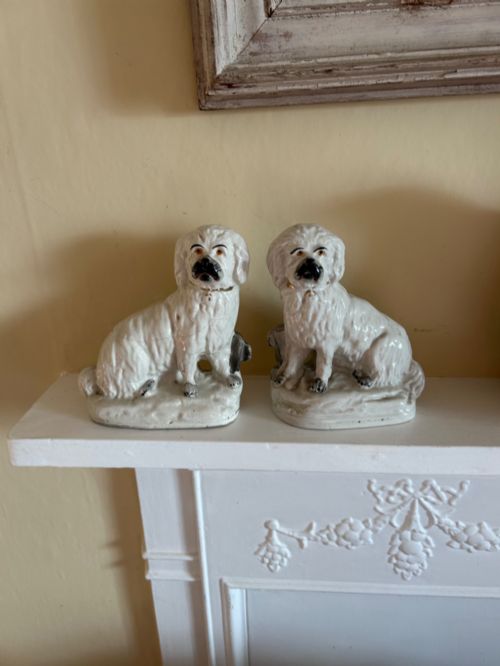
The version most commonly met on this page is the Victorian Staffordshire earthenware figure, often modelled as spaniels, greyhounds, or historical personages with lead glaze finishes. Alongside these sit continental porcelain figures from German and French factories, rendered in hard-paste or soft-paste ceramic.
The category extends to practical decorative items such as figural candlesticks, inkwells, and lamp bases shaped as animals or human figures. Such pieces bridge the gap between pure sculpture and functional household objects of the eighteenth and nineteenth centuries.
Materials and methods
Potters shaped these figures using earthenware, hard-paste porcelain, or soft-paste ceramic, often pouring slip into moulds before firing. Details were then refined by hand before applying enamel paint or liquid glaze to the surface.
The distinctive finish relies upon lead glaze, tin glaze, or glossy enamel coatings fused to the body during kiln firing. These treatments provided a smooth, impermeable surface that preserved the modelled details across generations.
Ceramic pigs from Normandy and attentive porcelain poodles stand ready to guard nineteenth-century mantelpieces.
Assessing quality and execution
Quality rests upon the crispness of the modelling and the sensitivity of the hand-painted details upon the glazed surface. Finer examples display subtle facial expressions and carefully defined anatomy rather than heavy, uniform casting.
The uniformity of the glaze application and the stability of the ceramic body during high-temperature firing distinguish superior studio output from standard commercial production. Earlier eighteenth-century and mid-nineteenth-century pieces often reveal greater individuality in their final presentation.
Meissen·Royal Worcester·Minton·Vion and Baury
The White Glazed Ceramic Figure Glossary
- Blanc de Chine
- A French term for white Chinese porcelain, widely emulated by European factories to describe uncoloured glazed figures. It produces a smooth, milky appearance across the ceramic surface.
- Earthenware
- A porous pottery body fired at lower temperatures, requiring a protective glaze to hold liquids and create a smooth finish. It serves as the primary material for nineteenth-century Staffordshire portrait figures.
- Hard-paste porcelain
- A dense ceramic composition fired at high temperatures using kaolin and petuntse. This material yields a durable, vitrified body that resists scratching and carries a bright white tone.
- Flatback
- A Staffordshire figure style designed to be placed against a wall or mantelpiece, leaving the reverse unmodelled and unglazed. This technique saved time and material during the production process.
- Lead glaze
- A shiny coating applied to pottery before firing, containing lead oxide to lower the melting point. It creates a lustrous, transparent surface over earthenware bodies.
White Glazed Ceramic Figure: Frequently Asked Questions
What is a white glazed ceramic figure?
A white glazed ceramic figure is a modelled sculptural piece made from pottery, earthenware, or porcelain, finished with a smooth white or clear protective coating.
These objects include animal sculptures, human portraits, and allegorical groups produced across European and Asian kilns during the eighteenth and nineteenth centuries.
How were these figures displayed originally?
Owners typically placed these decorative items on mantelpieces, sideboards, or occasional tables within the principal rooms of the home.
Flatback Staffordshire pieces stood flush against walls, whilst fully modelled figurines and figural candlesticks occupied central viewing positions on furniture.
How do I care for antique ceramic figures?
Maintenance requires gentle dusting with a soft, dry brush to prevent the accumulation of dirt within the crevices of the modelled surface.
Harsh cleaning agents and immersion in water should be avoided, particularly on earthenware bodies and pieces with delicate overglaze enamel painting.
How do I distinguish earthenware from porcelain?
Earthenware possesses a heavier, more porous ceramic body that remains opaque even when viewed under bright light. Porcelain is denser, harder, and sometimes translucent where the walls are thinly potted.