



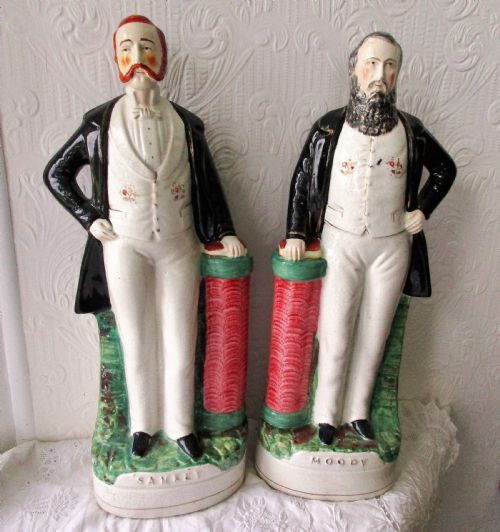
19th Century Pottery Ornament
These 19th century pottery ornament selections bring domestic animals, historical figures, and pastoral buildings right onto the mantelpiece.
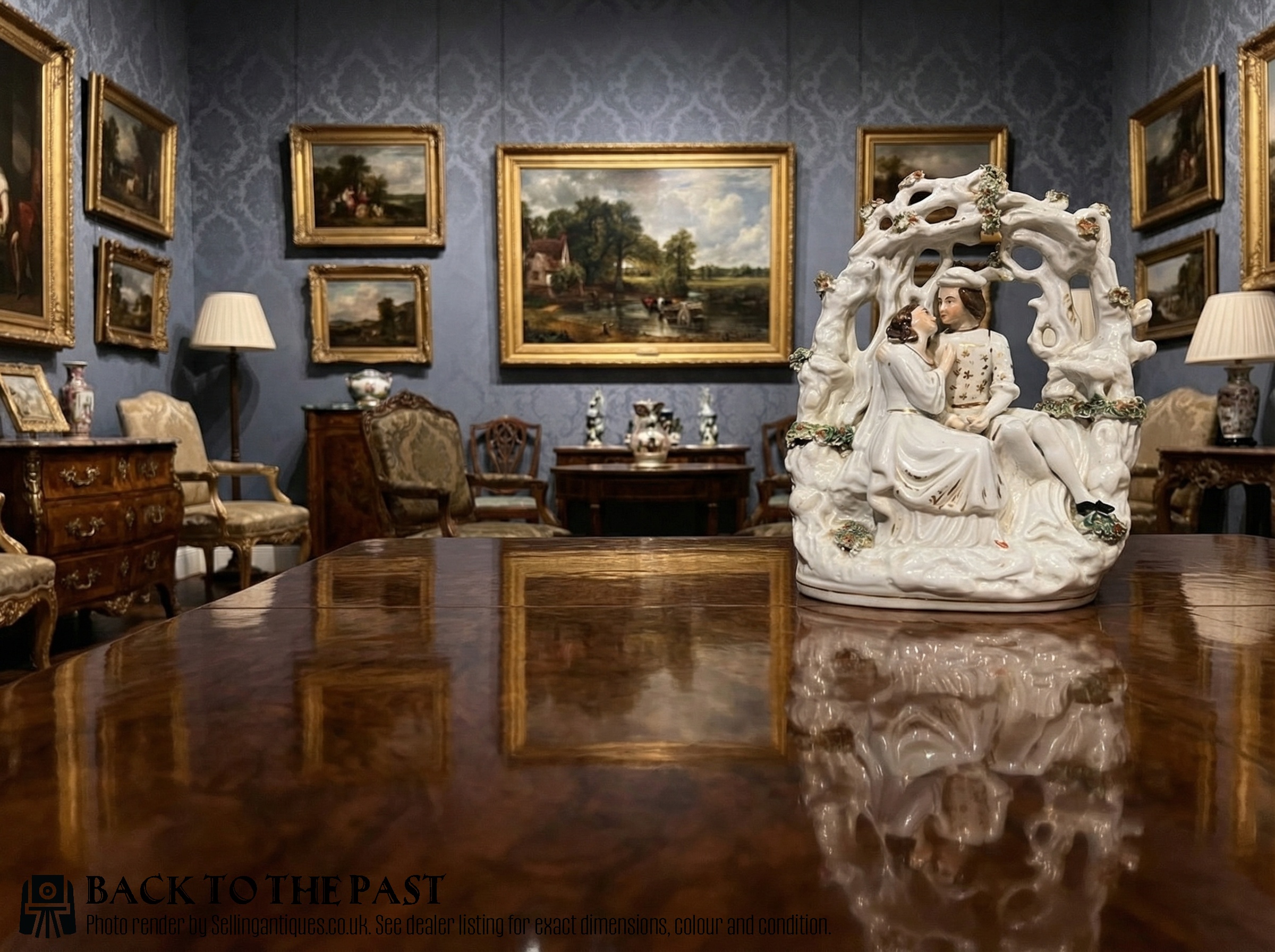
19th Century Pottery Ornament
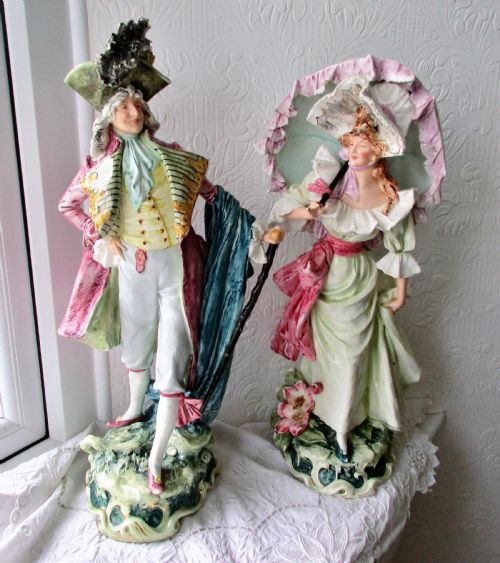
Makers produced these decorative objects in matched pairs as well as single figures, capturing popular tastes across the Victorian era. Buyers encounter subjects ranging from domestic pets and agricultural animals to figures commemorating events like the Crimean War.
The aesthetic leans heavily into Victorian folk art traditions, bringing brightly coloured earthenware and porcelain into nineteenth-century parlours. Alongside English works, pieces occasionally include Dutch Delft blue and white animals and French faience figures.
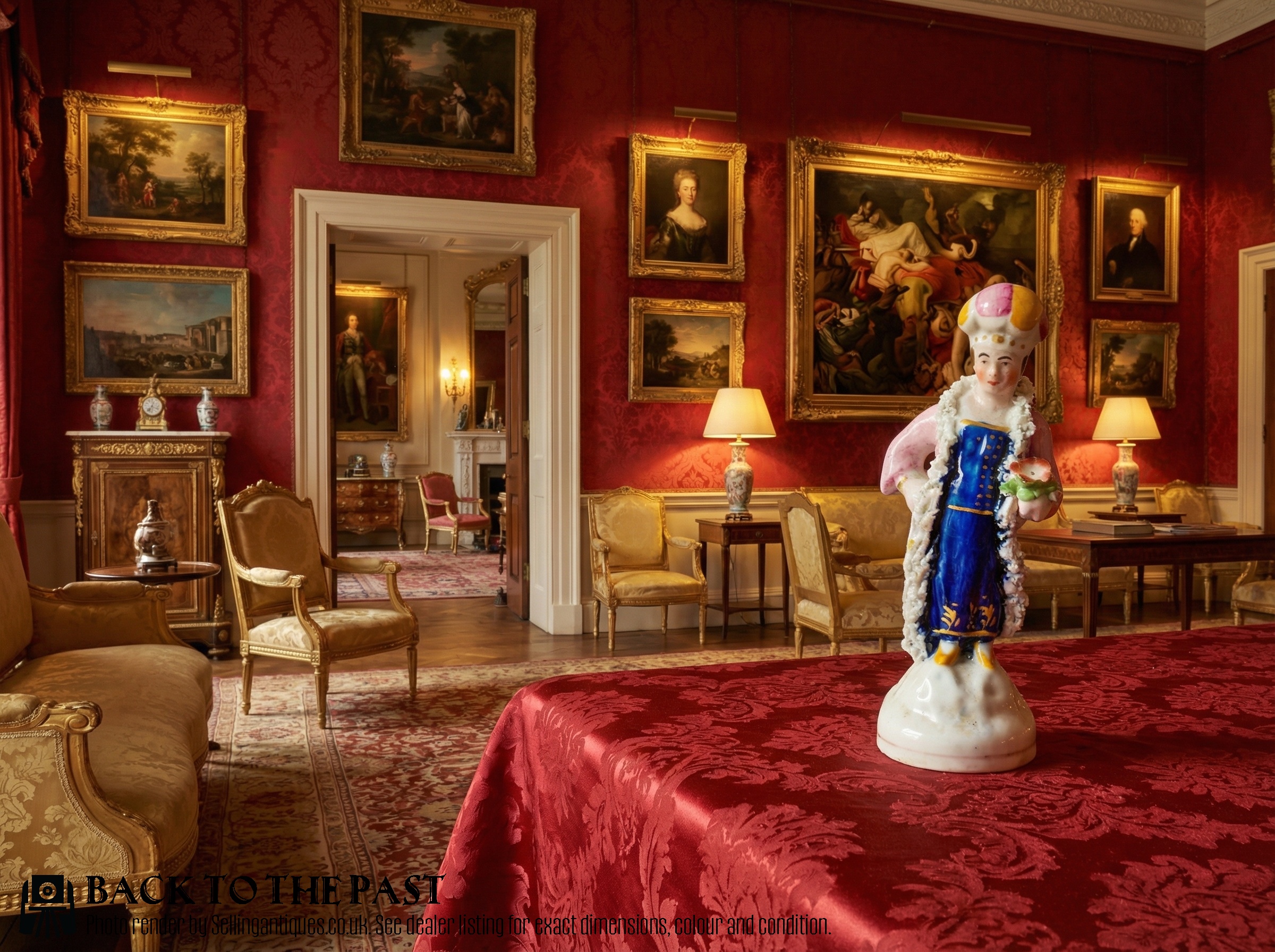
How they were made
Techniques varied from simple slip-casting and hand-painting to the application of treacle glaze and cobalt blue pigments under glaze. Firing methods determined the durability of the ceramic, while skilled brushwork brought expression to the eyes of dogs, lions, and human portraits.
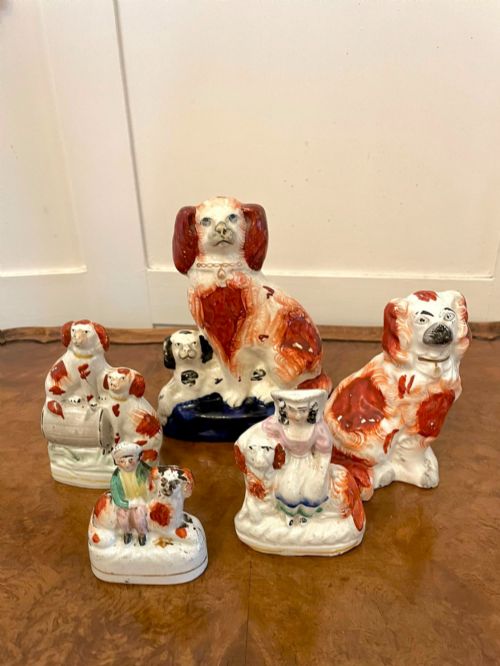
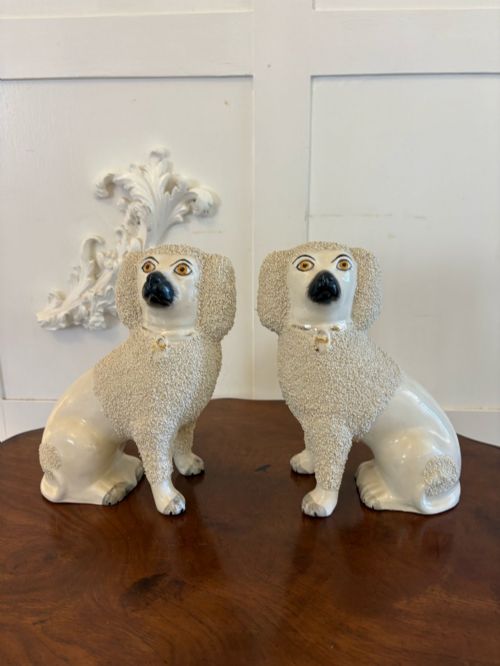
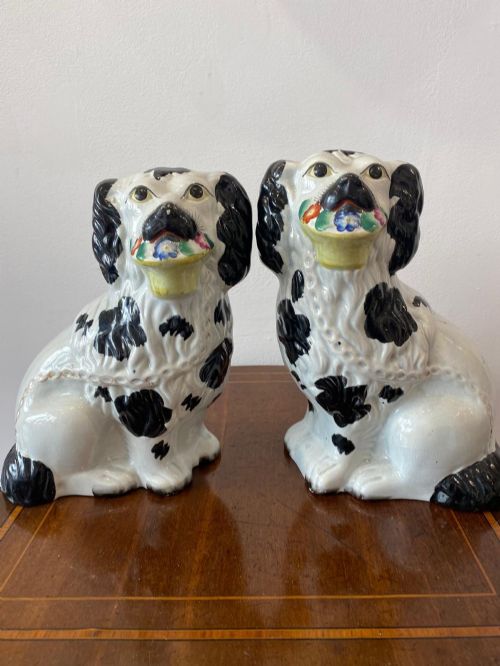
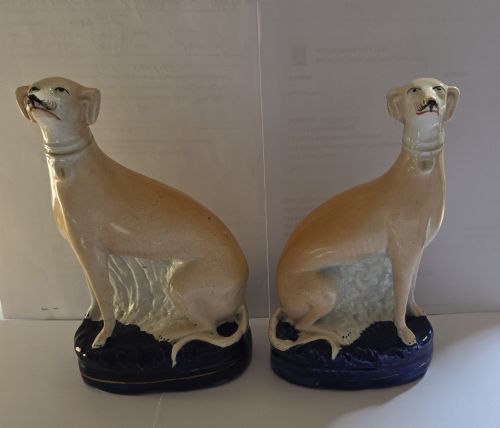
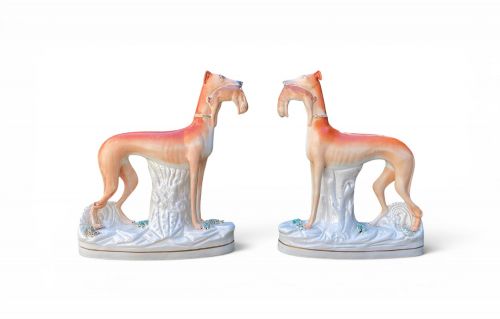
Victorian mantelpieces gained loyal canine sentinels when potters paired spaniels, pugs, and whippets to watch over the hearth.
What varies in quality
Articulation of the subject matter plays a major role, as seen in the alert posture of a whippet or the distinct architectural lines of a pottery castle. Firmer application of enamel paint and preserved gilt accents indicate a higher grade of production from the workshop.
John Bevington·Thomas Parr·Mexborough
The 19th Century Pottery Ornament Glossary
- Flatback
- A figurine moulded with a finished front and a plain, unpainted flat back designed to stand directly against a wall or mantelpiece. This construction saved time and materials during manufacture.
- Spill vase
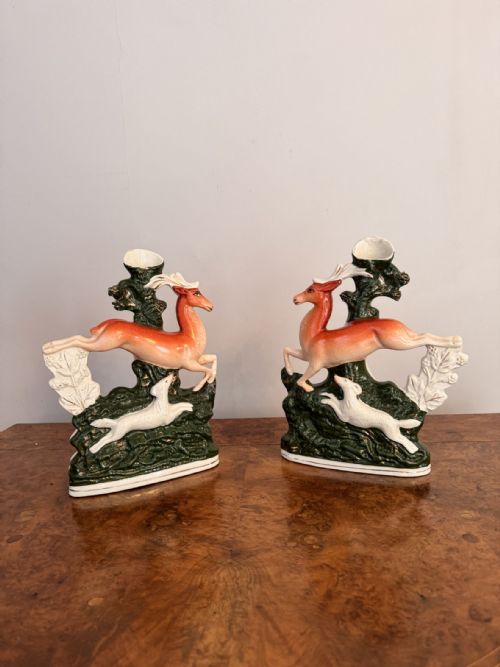
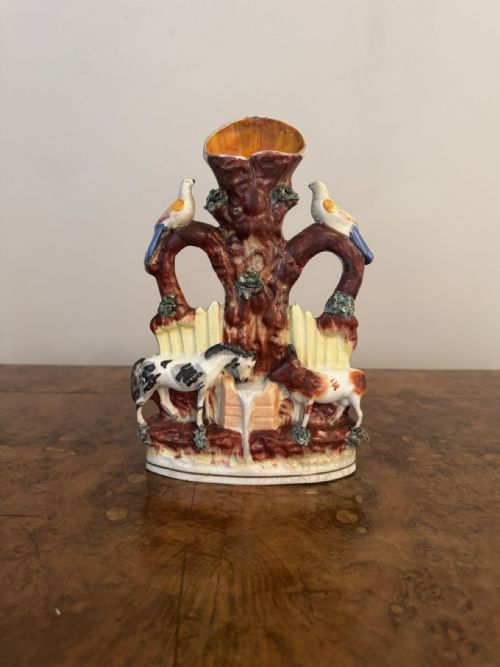
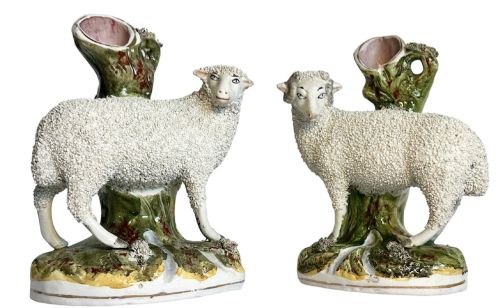
- A hollow cylindrical vase attached to a figure, intended to hold wooden spills used for lighting fires or pipes. They frequently depict animals such as deer, lions, or sheep standing beside the vertical tube.
- Pearlware
- A fine-grained earthenware developed in the late eighteenth century featuring a subtle bluish glaze that pooled in recesses to create a whiter appearance. It served as a popular base for figures and tableware.
- Treacle glaze
- A rich, dark brown translucent lead glaze applied over pottery to achieve a glossy, treacle-like finish. It was frequently utilised on sculptural animal figures like lions.
- Majolica
- A colourful lead-glazed earthenware characterised by vibrant opaque coloured enamels fired over a white slip. The technique produced highly decorative textured ornaments and paperweights.
19th Century Pottery Ornament: Frequently Asked Questions
What is a flatback figure?
A flatback figure is a ceramic ornament moulded specifically to stand flush against a wall or the back of a shelf. Artisans left the reverse side unadorned because observers would only see the painted front.
This style became standard for Victorian Staffordshire chimney pieces, allowing large groups of figures and animals to sit securely in narrow spaces.
How were spill vases used?
Spill vases combined a decorative pottery figure with a functional holder for wooden taper matches called spills. Users pulled a spill from the vase to transfer flames from the fireplace to candles or lamps.
These combination pieces frequently depicted wildlife, such as deer and lions, standing beside the vertical ceramic tube.
How do I care for pottery ornaments?
Pottery ornaments require gentle dusting with a soft dry cloth to protect the fragile enamel paint and gold leaf accents. Avoid using chemical cleaners or water, which can damage historic glazes and pigments.
Keep pieces away from direct sunlight and areas prone to heavy temperature fluctuations to preserve the ceramic body.
What subjects are most common?
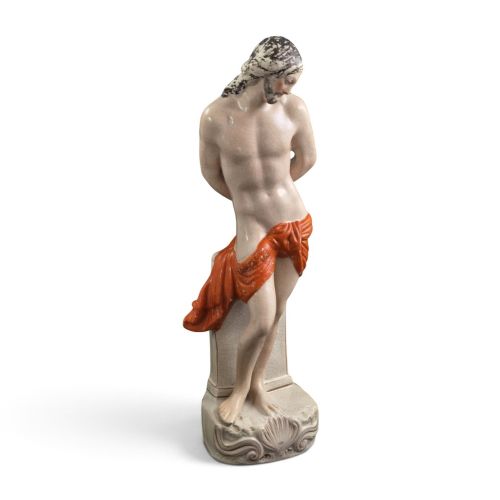
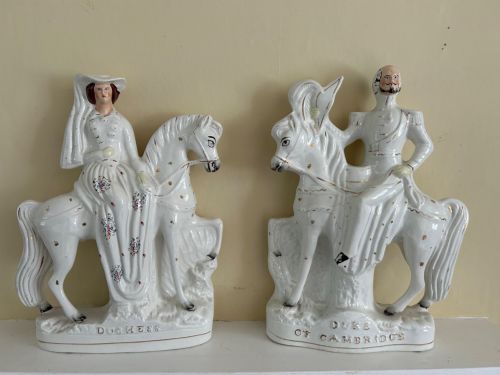
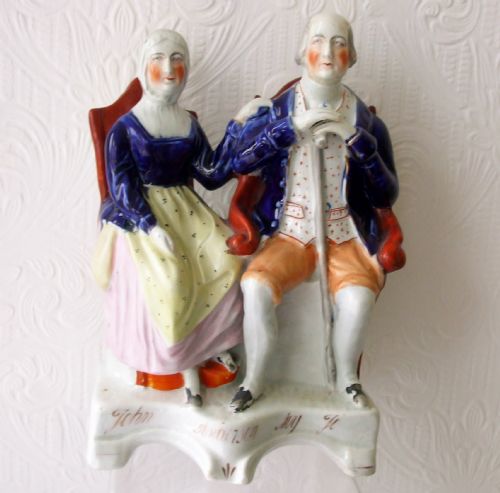
Domestic animals dominate the selections, with pairs of spaniels, greyhounds, pugs, and poodles appearing frequently alongside lions and deer. Human subjects range from literary figures and royalty to country couples and soldiers.
Architectural pieces like miniature pottery cottages and castles also form a distinct category within 19th-century production.