



Walnut Parquetry Box
A walnut parquetry box combines geometric timber work with practical storage, offering a tangible piece of nineteenth-century craft.
Walnut Parquetry Box
A walnut parquetry box is primarily a nineteenth-century container designed for personal valuables, correspondence, or tea, executed in rich woods with geometric surface patterns. These pieces appear most frequently as Victorian items, spanning writing slopes, sewing containers, tea caddies, and small keepsake chests.
The objects combine structural utility with decorative parquetry surfaces, utilising the contrasting tones of walnut and assorted timbers to form geometric arrangements. Many examples incorporate fitted interiors for writing implements, sewing tools, or compartments for tea storage.
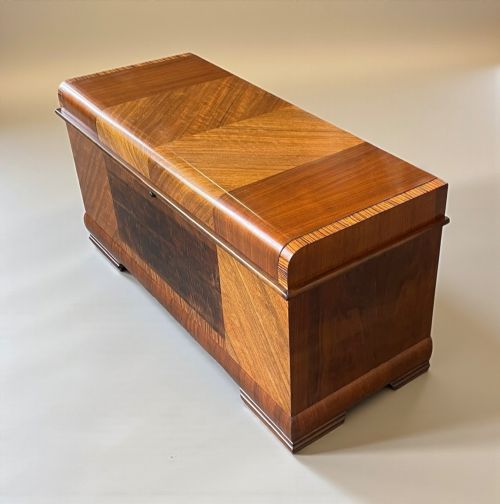
While earlier Georgian and Regency examples exist, alongside later Art Deco interpretations, the Victorian era supplies the core of these items. Buyers encounter diverse functional forms, from miniature desks and games boxes to dedicated jewellery and correspondence chests.
How they were made
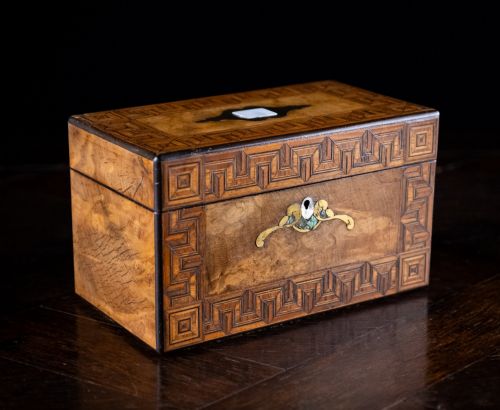
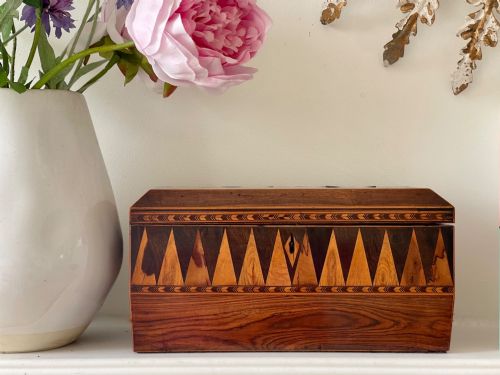
Cabinet makers constructed the foundational carcase from solid timber or pine before applying fine veneers of walnut, burr walnut, or rosewood. The distinctive geometric parquetry patterns were formed by meticulously cutting and fitting small mosaic tiles of contrasting woods such as boxwood.
Surface decoration frequently extended beyond simple parquetry to incorporate intricate Tunbridge Ware micro-mosaic panels, alongside inlaid accents of brass and mother-of-pearl. Interior compartments utilised secondary woods and velvet or silk linings, often accompanied by working brass locks and escutcheons.
Listings feature walnut parquetry boxes primarily from the Victorian era, alongside Georgian, Regency, and Art Deco examples.
What varies in quality
The standard of a walnut parquetry box rests on the precision of the geometric parquetry and the selection of the underlying veneer. Pieces featuring highly figured burr walnut alongside complex multi-wood Tunbridge Ware panels represent a superior class of execution compared to simpler linear arrangements.
Internal organisation also dictates distinction, with complete fitted interiors, original velvet linings, and working locks elevating a piece. The crispness of the inlay work and the harmonious grain matching across the lid and sides separate workshop production from ordinary output.
Henry Hollamby·Edmund Nye
The Walnut Parquetry Box Glossary
- Parquetry
- A geometric mosaic of wood pieces used for ornamentation on floors or furniture surfaces. In these boxes, it forms precise repeating patterns across the lid and sides.
- Burr walnut
- A prized timber harvested from the warted growth on walnut trees, yielding swirling, highly figured grain patterns. Makers selected it for prominent exterior panels.
- Tunbridge Ware
- A specialised form of woodworking originating in Kent, producing microscopic mosaic designs from naturally coloured woods. These depict intricate architectural or floral motifs.
- Tea caddy
- A container designed originally to store loose tea leaves securely, often featuring internal lidded compartments. Many surviving examples retain their original glass or wooden mixing bowls.
- Writing slope
- A portable desk featuring a hinged, slanted lid that opens to reveal a velvet-lined writing surface and compartments for ink and pens.
Walnut Parquetry Box: Frequently Asked Questions
What were walnut parquetry boxes used for?
These boxes served specific domestic functions within the nineteenth-century home, ranging from securing correspondence and writing materials to housing sewing equipment or valuable jewellery. Specific forms like tea caddies managed precious imported tea leaves under lock and key.
The compartmentalised interiors reflect the orderly domestic habits of the period, providing dedicated spaces for personal effects. Many boxes transitioned through generations as safe repositories for keepsakes and letters.
How do I identify a Victorian walnut box?
Victorian examples typically display characteristic construction methods, including dovetailed internal joints, secondary woods like pine or mahogany beneath the veneers, and brass hardware typical of the mid to late nineteenth century. The prevailing use of burr walnut and geometric parquetry aligns with the taste of this era.
Looking beneath the box and inspecting the interior fittings often reveals period-specific craftsmanship. The integration of Tunbridge Ware or mother-of-pearl inlay further points to nineteenth-century manufacture.
How should I care for a wooden box?
Keep the wood away from direct sunlight and steady heat sources to prevent the walnut veneer from drying out or lifting. Maintaining stable room humidity protects both the structural carcase and the delicate parquetry inlay.
Apply a minimal amount of appropriate microcrystalline wax occasionally to nourish the surface finish without building up residue. Avoid abrasive cleaners and excess moisture on the historic wood and interior fabric linings.
Are the keys usually original?
Original keys are uncommon because small security keys were easily misplaced over successive generations. Many boxes retain their original working locks even when the key has been lost.
Specialist antique locksmiths can sometimes provide replacement keys if the mechanism requires operation. The presence of an original key adds a desirable detail but does not alter the historical integrity of the box itself.