


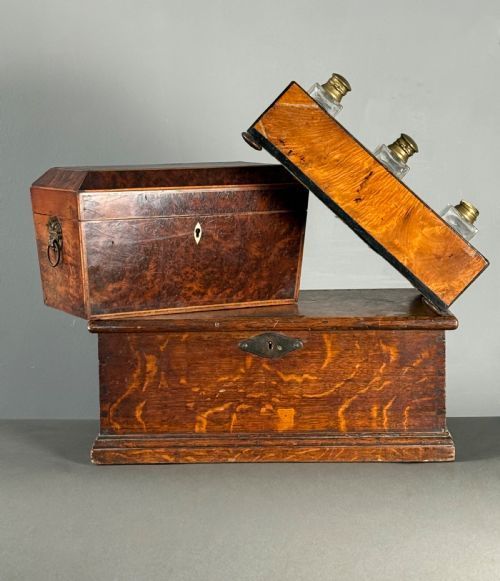
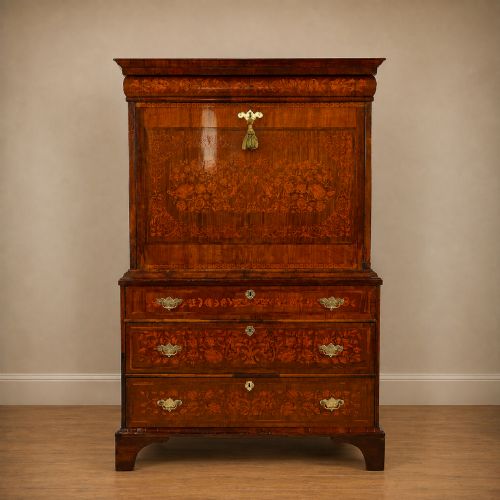
Walnut Marquetry Writing Desk
A walnut marquetry writing desk brings together patterned timber veneers and fitted writing surfaces, offering a working table shaped by centuries of cabinet-making.
Walnut Marquetry Writing Desk
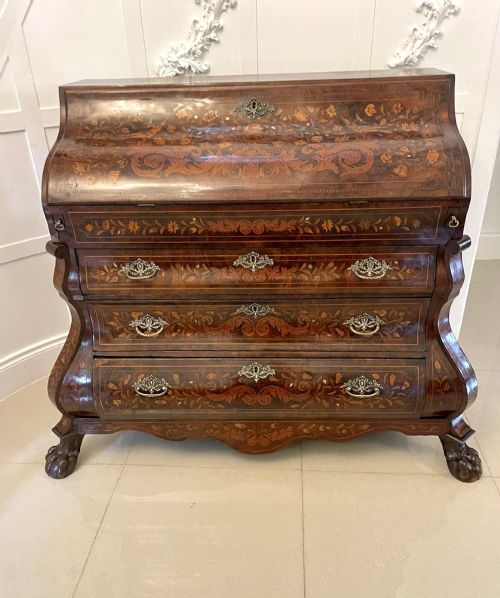
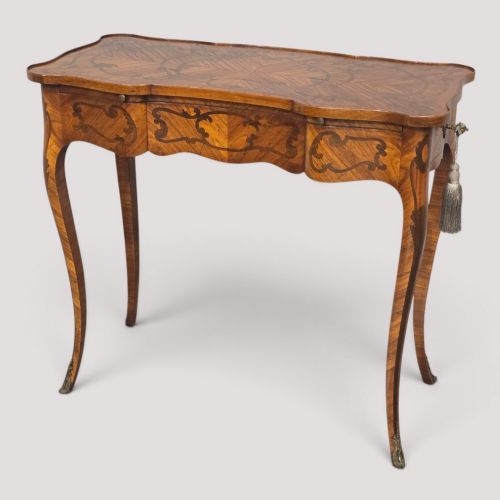
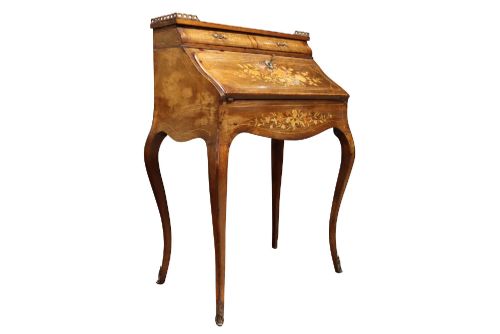
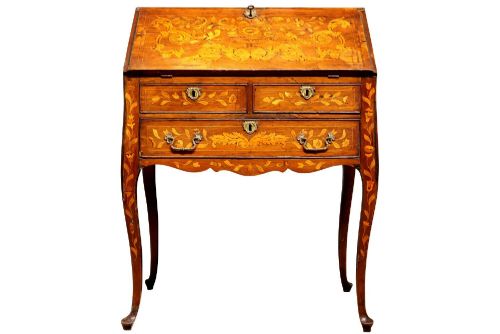
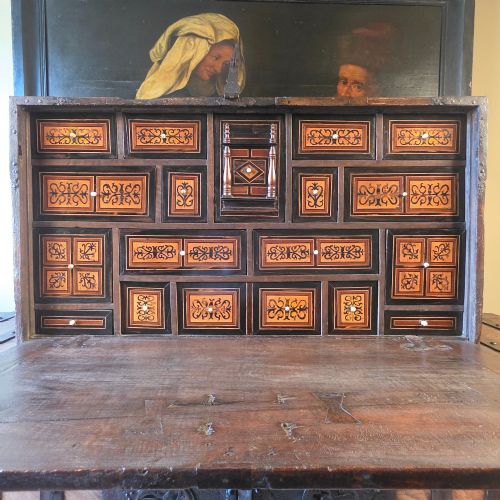
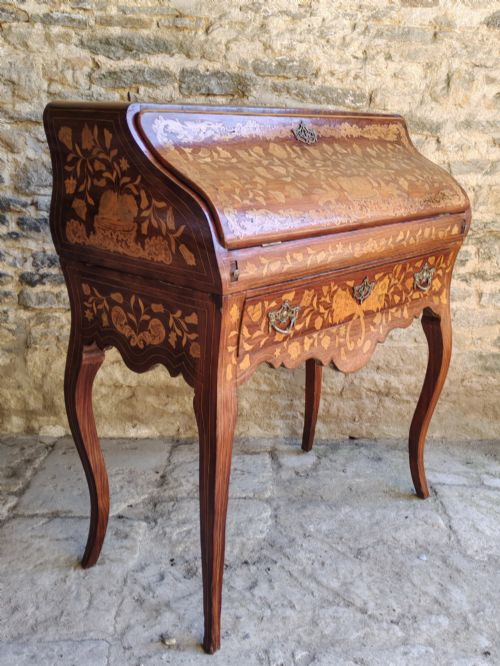
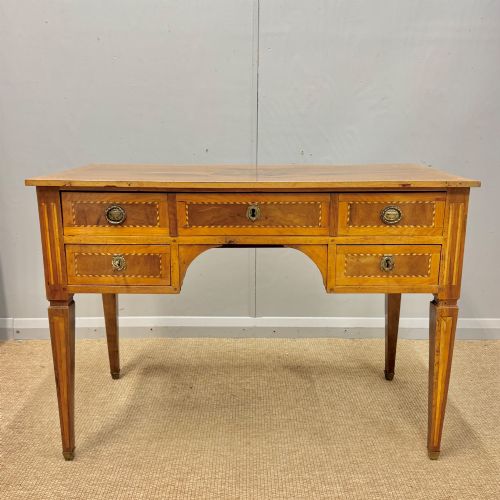
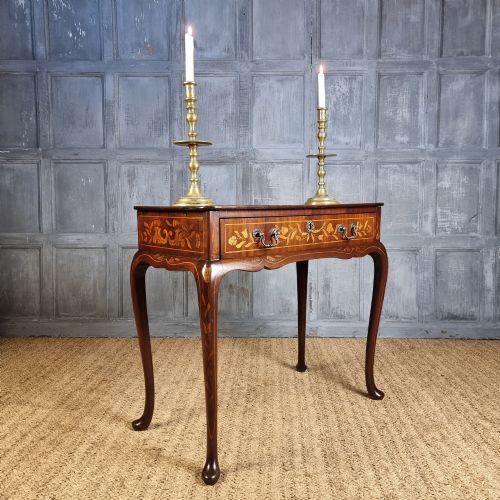
A walnut marquetry writing desk unites the working surface of a bureau, writing table, or bureau bookcase with detailed floral or geometric veneer work. The examples found here span from seventeenth-century Dutch and English pieces through eighteenth-century Georgian and Venetian works to Victorian and later revival creations.
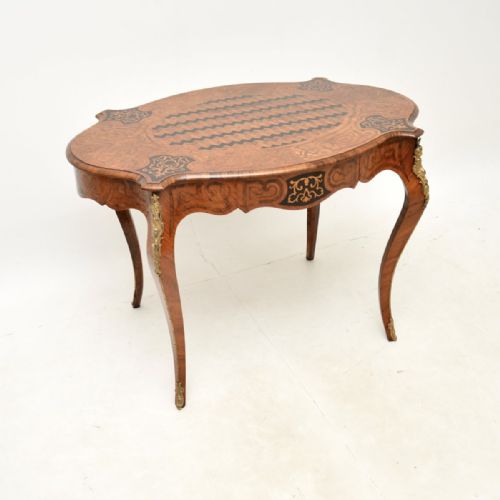
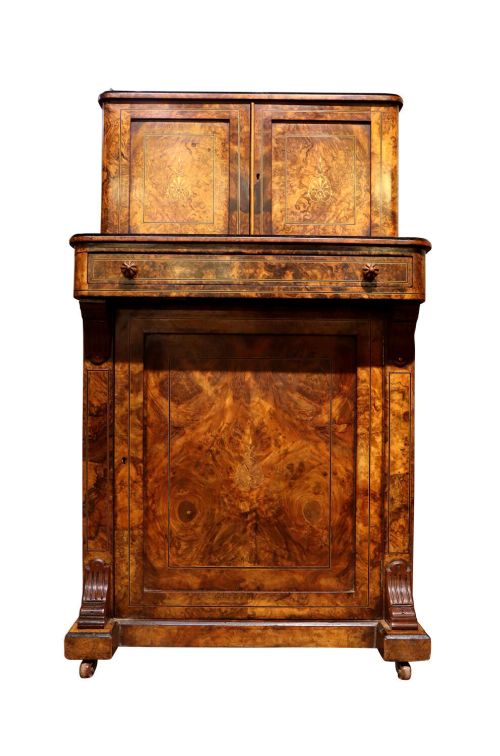
Buyers encounter multiple forms on this page, ranging from slope-front bureaux and bureau bookcases to freestanding bureau plat desks, centre tables, and Davenport desks. The seventeenth and eighteenth-century pieces often feature Dutch floral marquetry or bureau bookcase architecture, whilst the Victorian period introduces Davenport and piano-top writing forms with burr walnut surfaces.
How they were made
Cabinet-makers constructed these pieces using solid timbers and secondary woods as a carcase, overlaid with walnut and burr walnut veneers. Marquetry cutters then sliced intricate patterns from contrasting woods like fruitwood, tulipwood, and kingwood, inlaying them directly into the surface.
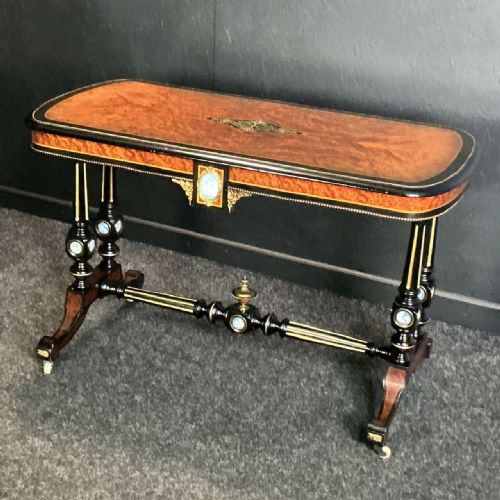
Many examples incorporate decorative mounts and structural details in brass, ormolu, gilt bronze, and glass, whilst others pair the marquetry lid with a leather-lined writing surface. Surface decoration often extends to geometric boxwood or bone stringing, and select pieces utilise ebonised frames.
Several Victorian desks hide stationery cabinets and cylinder music compartments beneath their folding piano tops.
What varies in quality
Quality rests primarily in the precision of the marquetry cutting and the choice of timber figures, where burr walnut and dense floral pictorial panels require exceptional joinery skill. The crispness of the brass or ormolu mounts and the integrity of the underlying carcase construction separate standard production from finer workshop output.
Proportion and internal arrangement also dictate distinction, seen in the fitted pigeonholes, secret compartments, and balanced drawer layouts of bureau bookcases and writing tables. Pieces retaining their original hardware, leather inserts, and stable timber ground exhibit the highest level of preservation.
Edwards And Roberts·Gill And Reigate
The Walnut Marquetry Writing Desk Glossary
- Marquetry
- A decorative technique where veneers of different woods are assembled to form pictorial or geometric patterns on a furniture surface.
- Bureau
- A sloping desk form that opens to reveal internal drawers and pigeonholes, often resting on a chest of drawers or a stand.
- Burr walnut
- Timber taken from a walnut tree growth showing swirling, knotty grain patterns prized for decorative veneer panels.
- Bureau plat
- A freestanding double-sided writing table, usually fitted with drawers and a leather writing surface, originating in France.
- Bonheur-du-jour
- A light ladies' writing desk featuring a small cabinet or set of shelves above the main writing surface.
- Escritoire
- A tall writing cabinet with a fall-front panel that conceals a fitted interior of small drawers and compartments.
Walnut Marquetry Writing Desk: Frequently Asked Questions
How do I clean the marquetry surface?
Dust the surface regularly with a soft, dry cloth to prevent dirt accumulation in the veneer joints. Avoid modern chemical sprays and apply a traditional beeswax polish sparingly to maintain the timber lustre.
Keep the desk away from direct sunlight and heat sources to prevent the veneers from drying out or lifting over time. Professional conservation is recommended if any small sections of inlay begin to loosen.
Can I use a antique desk every day?
Many writing desks remain structurally sound for daily writing and laptop use, provided the writing surface is treated with care. Leather inserts and hinged slopes should not be overloaded with heavy objects.
Take care when operating internal drawers and secret compartments to avoid straining historical mechanisms. Placing a protective blotter on the leather or wood helps prevent accidental scratching.
How do I tell Dutch from French desks?
Dutch examples from the seventeenth and eighteenth centuries typically feature dense, colourful floral marquetry across the entire exterior of bureaux and bookcases. The timber is often laid on heavy carcases with bold proportions.
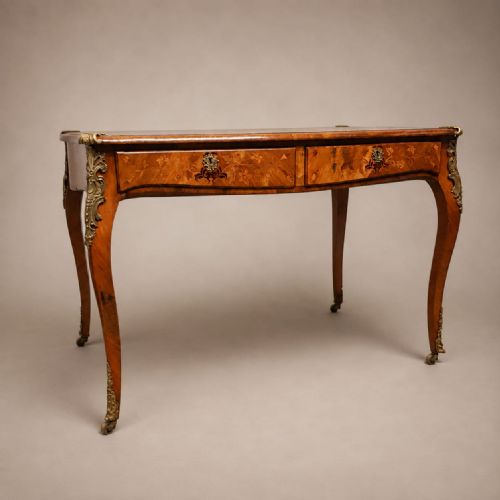
French desks, particularly nineteenth-century Louis XV and XVI revival pieces, often combine walnut with ormolu mounts, marble tops, and more restrained parquetry or serpentine forms. The legs are frequently slender and cabriole-shaped.
What is a Davenport desk?
A Davenport is a compact Victorian desk featuring a sloping, hinged writing lid lined with leather, sitting above a pedestal of side drawers. Early versions often incorporate a stationary box on top.
These pieces were designed for smaller drawing rooms where space was limited but a dedicated writing surface was required. The pedestal sides frequently conceal dummy drawers balancing the working side.