


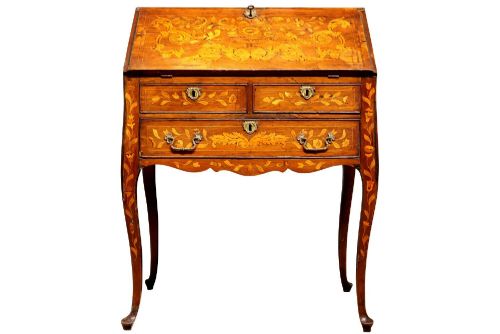
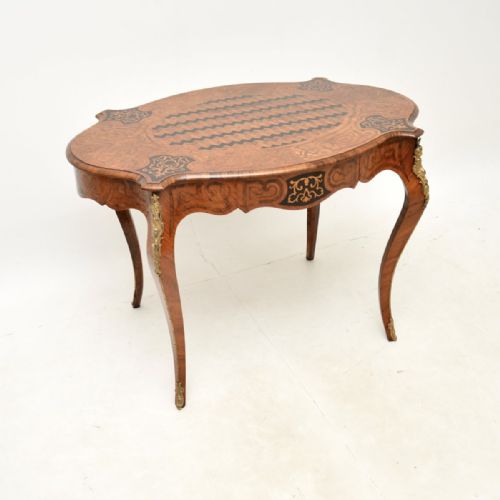
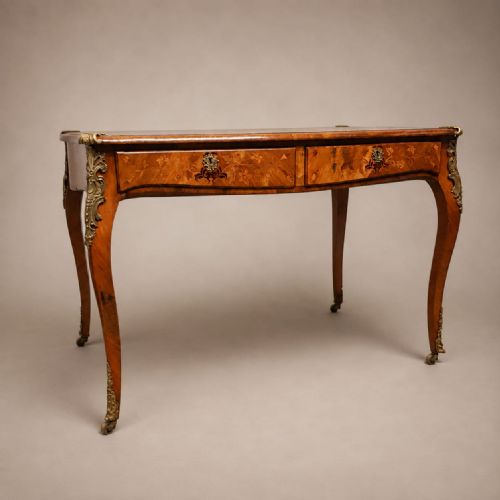
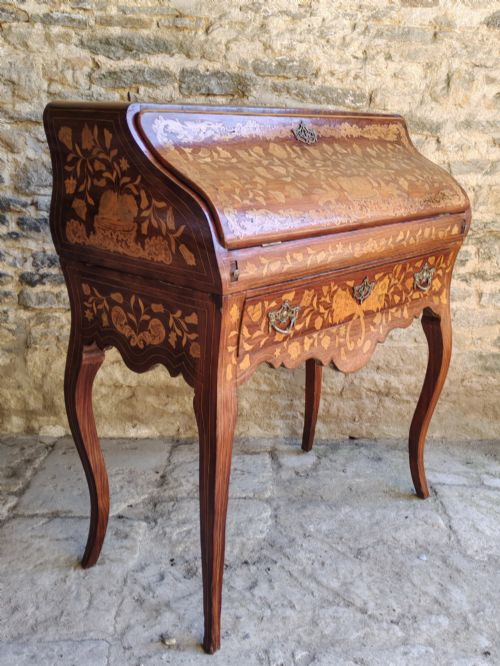

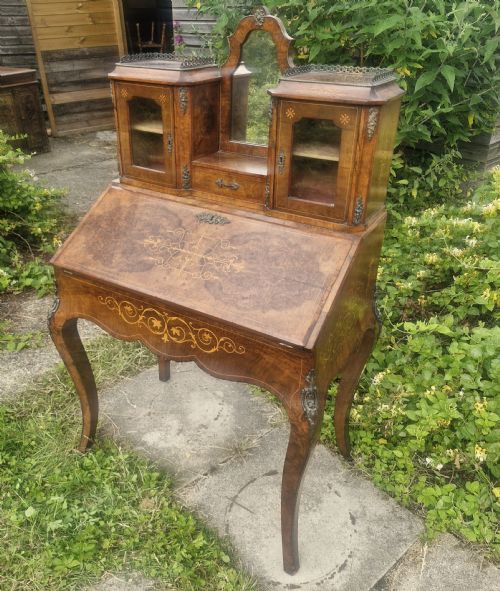
Walnut Marquetry Bureau
A walnut marquetry bureau brings together figured timber and intricate floral or pictorial inlays to create a functional writing place with deep historical presence.
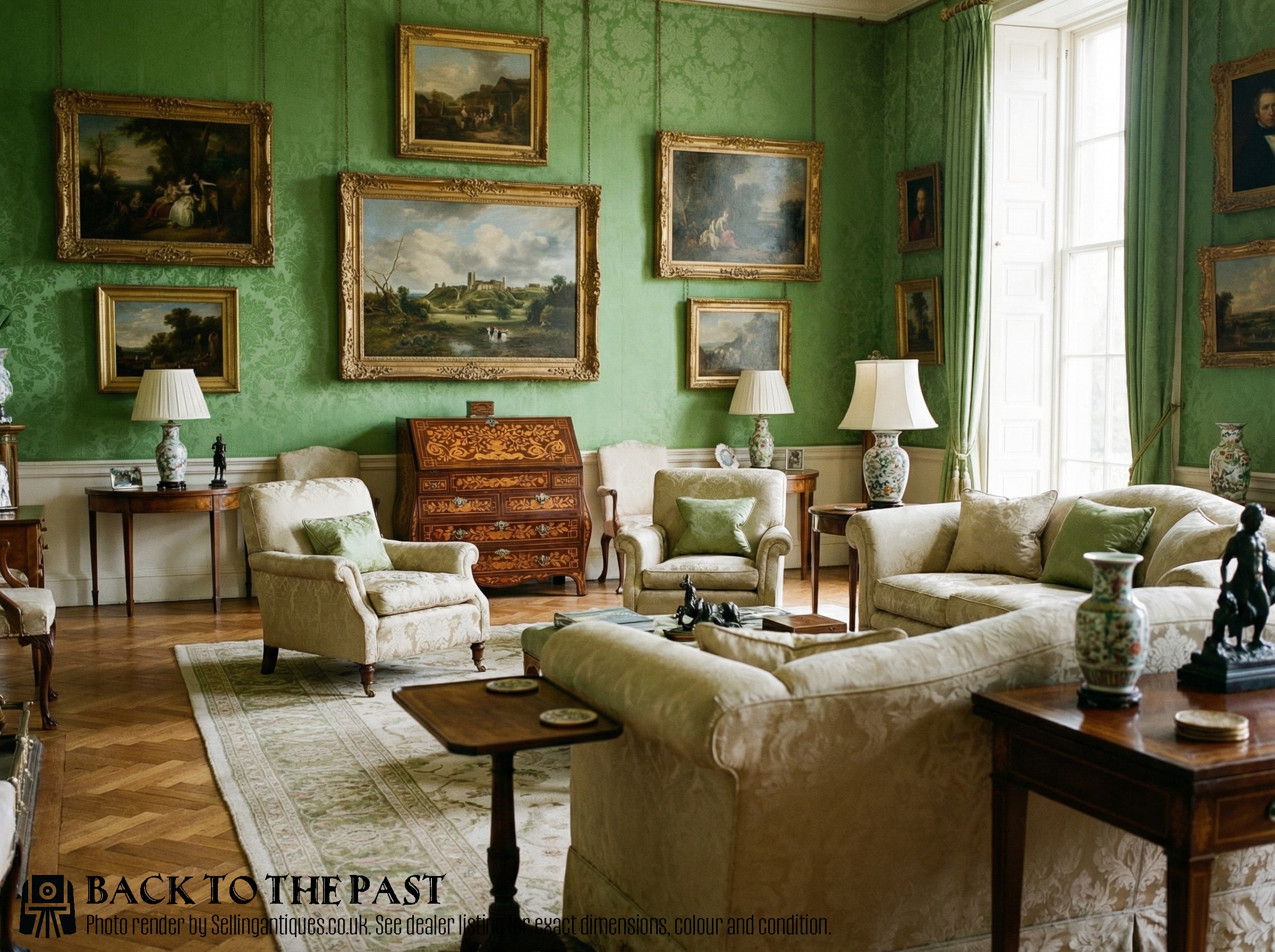
Walnut Marquetry Bureau
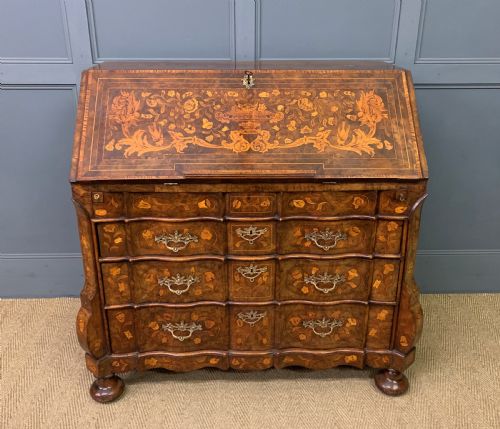
A walnut marquetry bureau is a fitted writing desk featuring a sloping fall-front that opens to reveal internal drawers and pigeonholes, often standing on bracket feet or cabriole supports. Many examples incorporate substantial bookcase superstructures or display cabinets above the writing surface.
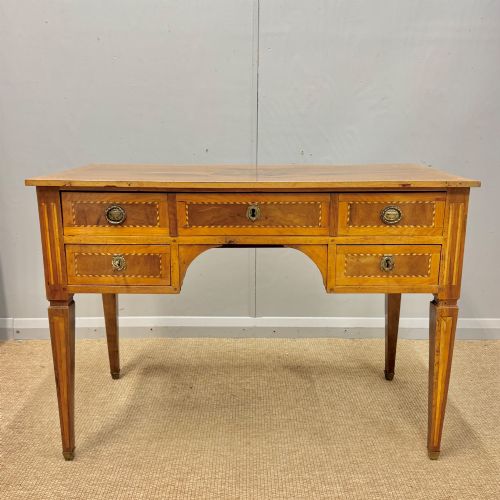
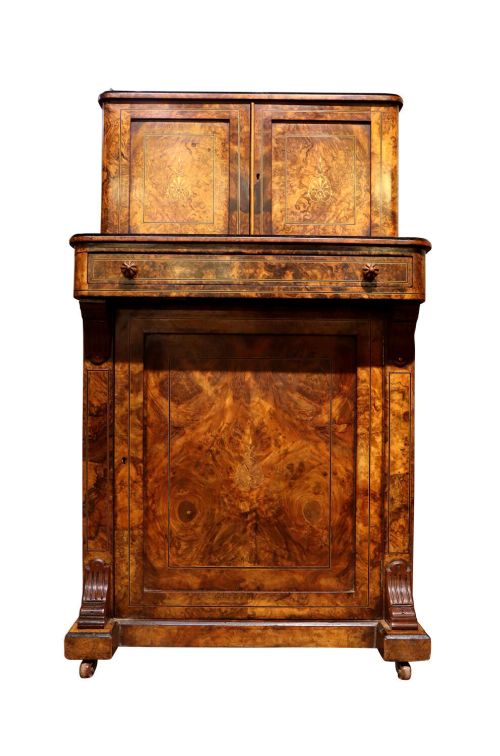
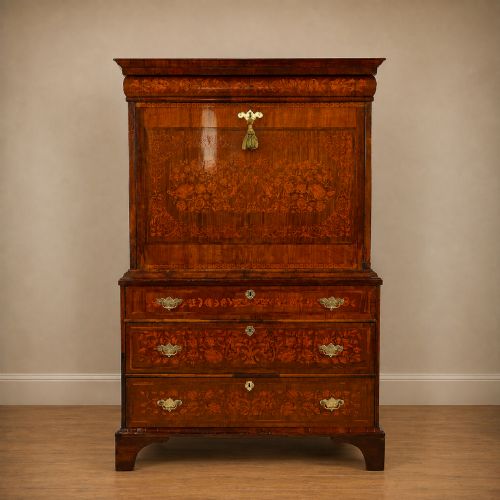
The pieces appearing here span the eighteenth and nineteenth centuries, with distinct regional interpretations emerging from English, Dutch, and Italian workshops. Alongside traditional slant-front desks, buyers frequently encounter bureau bookcases, bonheur-du-jour writing tables, and freestanding bureau plat designs.

How they were made
Cabinetmakers constructed the carcase using solid walnut or pine framing overlaid with figured walnut and burr walnut veneers, which provided lively grain patterns across large surfaces. Floral and pictorial marquetry designs were assembled from contrasting timbers such as fruitwood, tulipwood, and kingwood, then precision-cut and pressed into the ground veneer.
Metal mounts in brass and ormolu often reinforced corners, framing edges, and keyhole escutcheons, while leather inserts provided a durable writing surface on bureau plat and table variants.
Walnut Marquetry Bureau Retail Price Guide 2026
Typical asking prices for walnut marquetry bureau among the pieces listed under this phrase on Sellingantiques today, from the lower quarter to the upper quarter. They describe what is for sale here now, not the wider market.
Secret compartments hidden behind sliding pigeonhole partitions reward anyone willing to investigate the inner workings of an eighteenth-century writing slope.
What varies in quality
Quality rests primarily in the visual impact and depth of the timber selection, particularly where highly figured burr walnut meets dense, multi-tonal floral marquetry without lifting or excessive filler. The precision of the inlay work and the harmonious integration of secondary timbers distinguish ambitious cabinetmaking from simpler production.
Structural integrity through the fall-front hinges, drawer linings, and the retention of original brass hardware or ormolu mounts further define the standing of individual pieces.
The Walnut Marquetry Bureau Glossary
- Marquetry
- Decorative veneer work arranged in pictorial or floral patterns using various tinted woods. It differs from parquetry through its organic, curved designs rather than geometric tiling.
- Burr Walnut
- Timber taken from the gnarled growths of walnut trees, prized for its swirling, highly figured grain patterns. Makers used it on primary surfaces to create dramatic visual movement.
- Bureau Plat
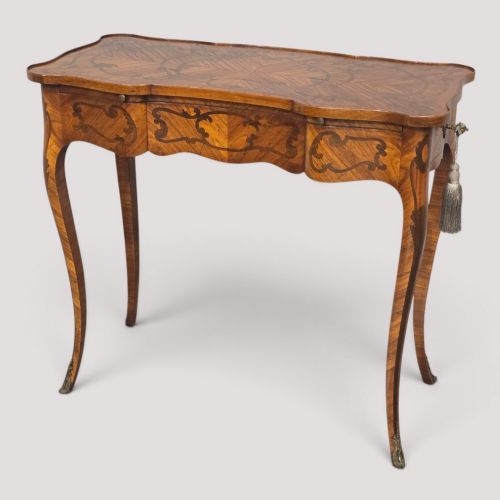
- A freestanding writing table fitted with drawers across the frieze, lacking the sloping fall-front of a traditional cabinet bureau. These tables usually feature finished backs for placement in the centre of a room.
- Bonheur-du-Jour
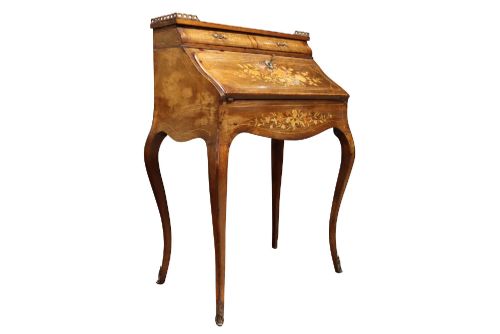
- A light ladies' writing desk featuring a small superstructure of shelves, drawers, or a cabinet above the main writing surface. The form developed in France during the eighteenth century.
- Escritoire
- A tall writing cabinet or desk containing a folding writing flap and internal compartments. The term often describes pieces influenced by seventeenth and eighteenth-century Continental designs.
Walnut Marquetry Bureau: Frequently Asked Questions
How do I use a bureau desk?
The hinged fall-front drops down to create a flat writing ledge, giving access to small drawers and letter compartments housed inside. When work concludes, the writing surface closes to conceal papers and stationery.
Lower drawers provide generous storage for books and household items, keeping the room tidy while maintaining the appearance of a decorative cabinet.
Where should I place a bureau?
These desks suit studies, living rooms, and large hallways where their figured veneers and marquetry panels can be viewed without obstruction. Freestanding bureau plat models work particularly well positioned away from walls in the centre of a room.
Position pieces away from direct sunlight and strong heat sources to protect the fragile walnut veneers and natural finishes from drying out over time.
How do I tell Dutch and English styles apart?
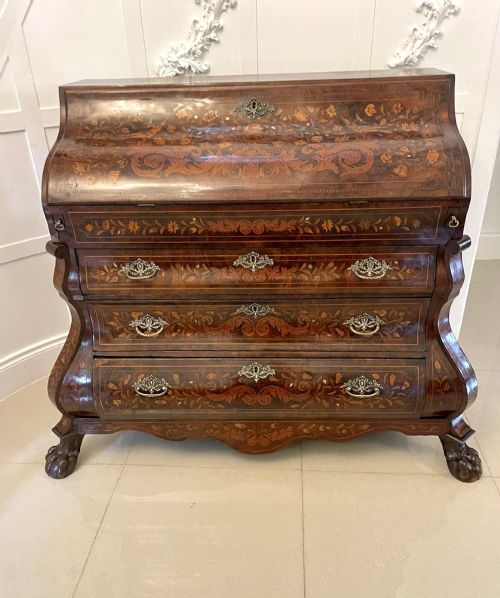
Dutch examples frequently display exuberant floral marquetry covering the entire exterior, sometimes including the sides and interior, paired with bombé curved fronts. English pieces often favour more restrained veneer panels with crossbanded borders and straighter architectural proportions.
Regional differences also appear in the leg forms, with Dutch items leaning towards ball-and-claw or bracket feet and English versions showing transitional bracket or cabriole supports.
What is the difference between a bureau and a bureau bookcase?
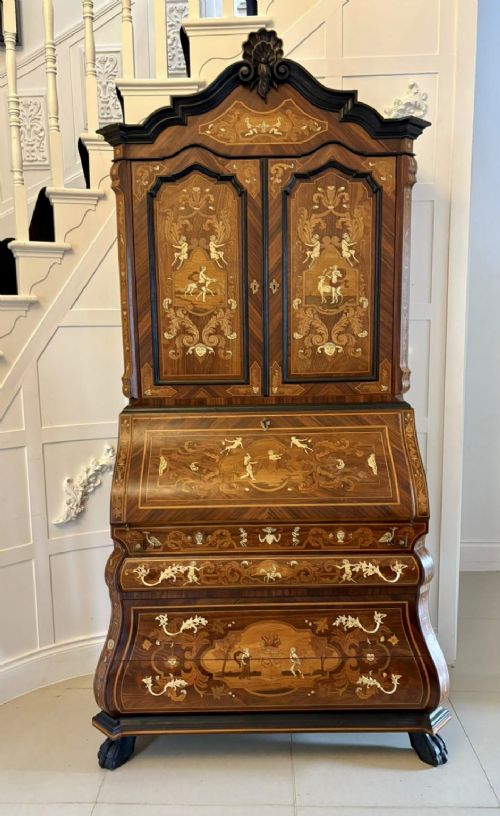
A standard bureau consists of a base cabinet with a sloping writing flap and lower drawers. A bureau bookcase adds an upper cabinet section enclosed by glazed or panelled doors for book storage.
The taller combination piece creates a commanding architectural presence and requires higher ceilings compared to the more compact desk format.