
Vintage School Wall Clock
When you search for a vintage school wall clock, you are looking at utilitarian timepieces built for readability in large rooms.
Vintage School Wall Clock
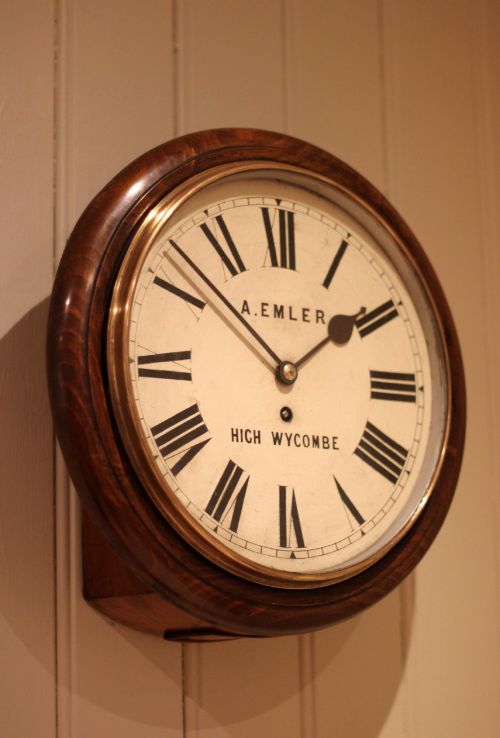
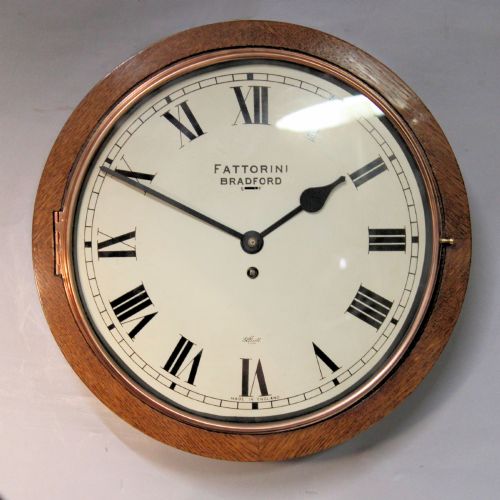
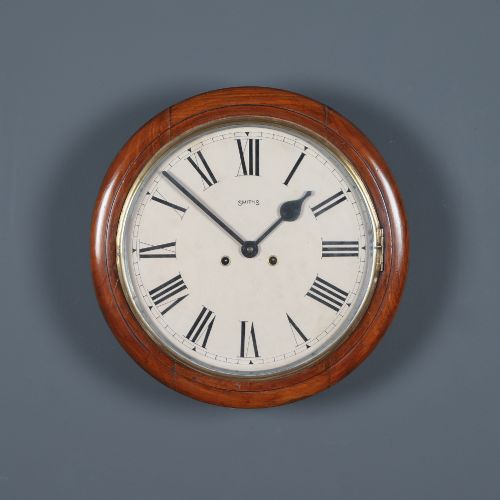
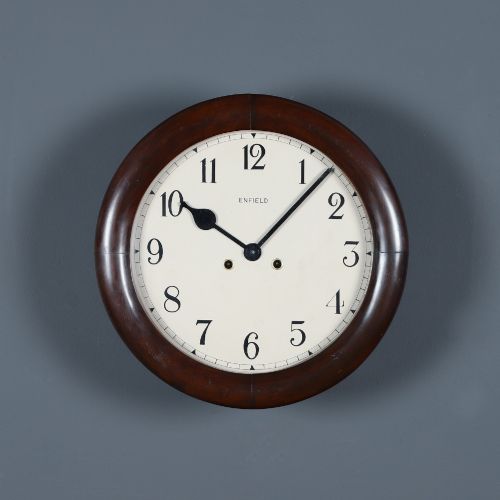
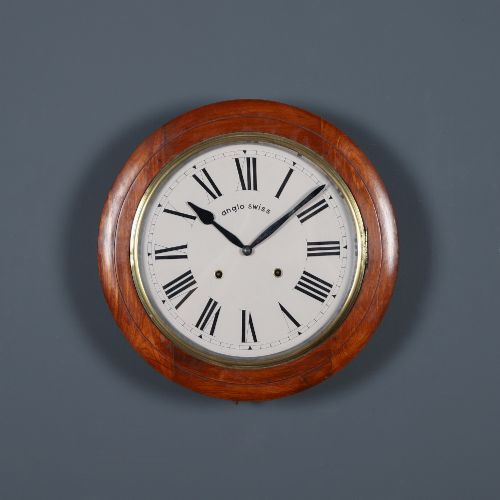
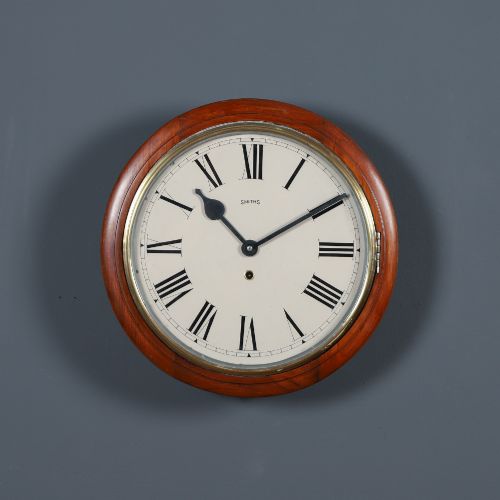
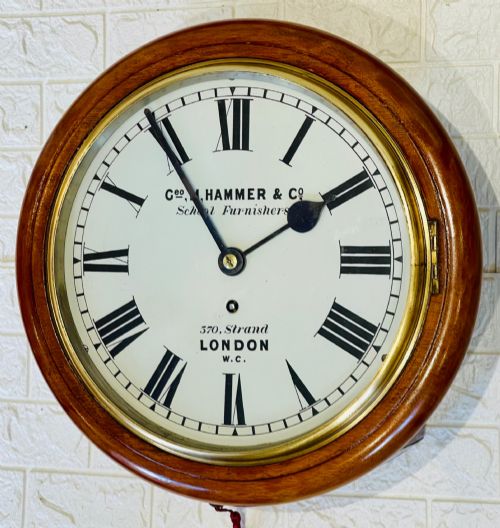
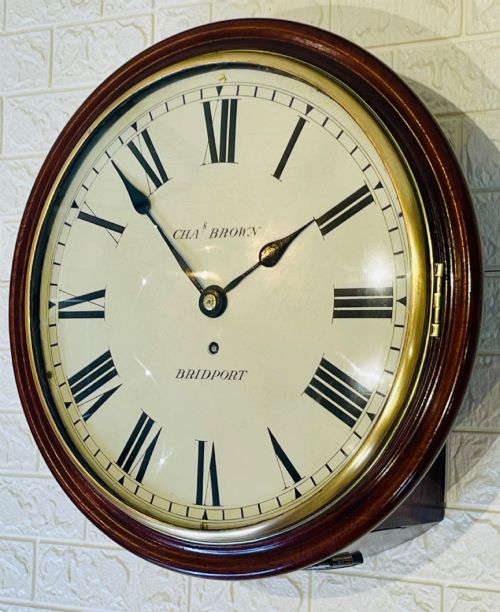
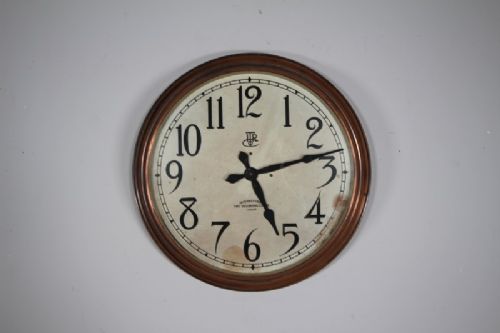
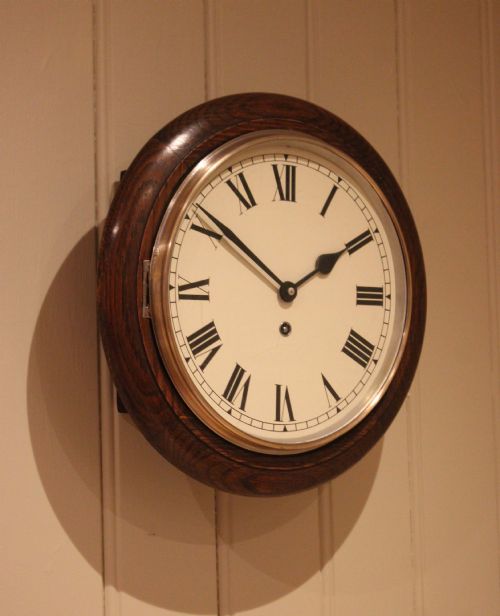
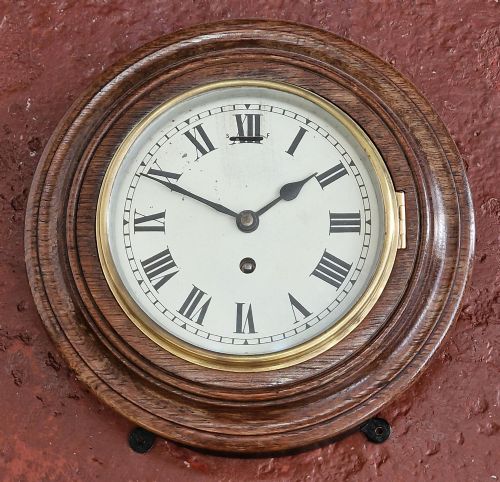
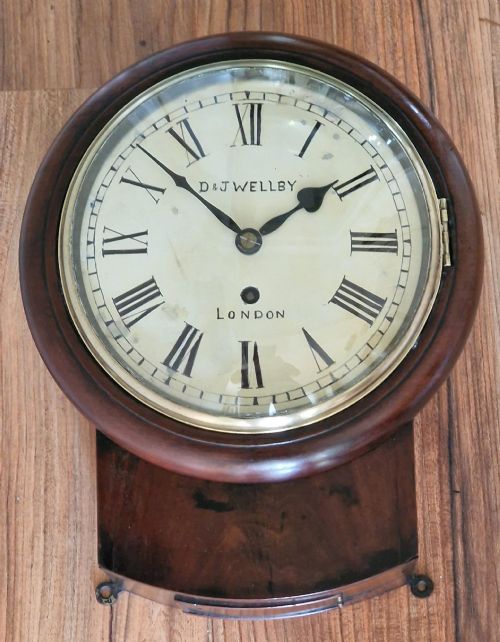
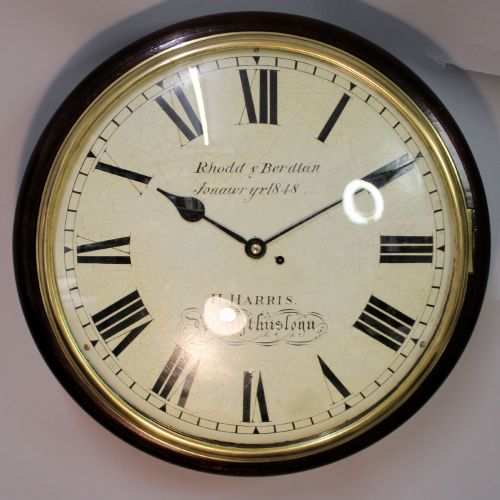
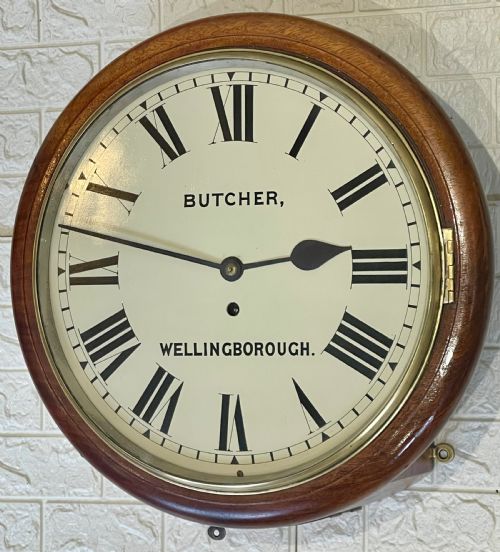
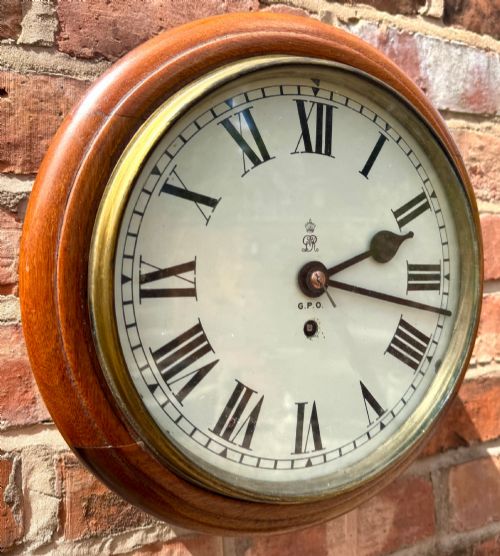
A vintage school wall clock is essentially a robust dial clock designed for institutional spaces like classrooms, offices, and railway stations. These wall clocks feature clear, legible faces meant to be read from a distance by many people at once.
The pieces you meet on this page most often originate from the Victorian era through the mid-twentieth century. They span utilitarian round dial formats in timber cases, reflecting a practical British tradition of public timekeeping.
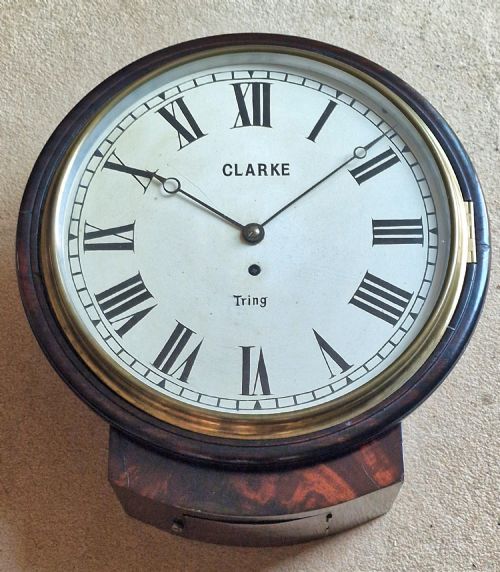
Makers housed these movements in durable circular surrounds, occasionally utilising drop-dial variations for striking mechanisms. The aesthetic prioritises function over ornament, though timber selection introduces subtle warmth.
How They Were Made
Timbers like mahogany, oak, beech, and walnut form the solid cases enclosing the mechanical works. Cabinetmakers constructed these frames to withstand vibration and daily wear in busy public buildings.
Movements rely on mechanical systems such as fusee drives, chain drives, or lever escapements to maintain steady tension and accurate time. Brass components operate within the housing, turning hands across glass-fronted dials.
Dials themselves utilise painted wood, metal, or enamel surfaces marked with bold numerals. Protective bezels in brass, copper, or turned wood seal the face against dust and moisture.
Vintage School Wall Clock Retail Price Guide 2026
Typical asking prices for vintage school wall clock among the pieces listed under this phrase on Sellingantiques today, from the lower quarter to the upper quarter. They describe what is for sale here now, not the wider market.
Some clocks feature twenty-four-hour dials for military or official use, ensuring nobody could mistake evening for morning.
What Varies in Quality
The grade of a dial clock rests heavily on the sophistication of its movement, such as a well-engineered chain fusee mechanism compared to a simpler lever escapement. Finer examples display meticulous hand-finishing on internal brass plates and gears.
Case construction separates utilitarian pieces from exceptional ones, with dense hardwoods like figured mahogany or rosewood holding superior joinery. Originality of components, including matching case numbers and untouched dial paint, elevates a piece significantly.
The presence of specialised striking or chiming trains, along with signed dials from notable regional makers or high-end retailers, marks the upper tier of quality.
Elliott·Smiths·Enfield·George Clarke·D and J Wellby·Henry Harris·L Morris·Rudge·J C Ralls
The Vintage School Wall Clock Glossary
- Fusee
- A conical pulley used in mechanical clocks to maintain even power as the mainspring unwinds. This device ensures consistent force is delivered to the gear train for greater accuracy.
- Dial clock
- A wall-mounted timepiece featuring a prominent round face and a compact case. These were standard in British offices, schools, and railway stations.
- Drop dial
- A clock case featuring a circular dial at the top and a short pendulum box hanging below. This drop section often houses a striking mechanism or weights.
- Lever escapement
- A mechanism that controls the release of power in a clock movement, translating rotational force into regulated ticks. It replaced pendulum regulation in certain environments.
- Bezel
- The metal or wooden ring that holds the glass protecting the clock face. It often opens on a hinge to allow hand-setting.
Vintage School Wall Clock: Frequently Asked Questions
How do fusee clocks work?
A fusee movement uses a spiral groove cut into a conical pulley to equalize the pull of the mainspring. As the spring loses tension, the chain moves to a wider part of the cone to maintain steady power.
This clever mechanical device keeps the timekeeping consistent throughout the running period without requiring heavy weights.
Where were these clocks used?
These round dial timepieces hung in British railway stations, schools, post offices, and military installations. Their clear markings allowed workers and students to check the hour from across a large room.
Institutional spaces demanded reliable, legible clocks that could withstand heavy daily use and minor vibrations.
How do I wind my wall clock?
Wind the clock using the appropriate key inserted into the winding hole on the dial face. Turn it gently until you feel resistance, taking care not to over-wind the mechanism.
Regular winding at consistent intervals helps keep the movement running smoothly and preserves the tension on the mainspring or chain.
How do I date a dial clock?
Examine the timber case style, the construction of the backbox, and the style of the numerals on the dial. Victorian and Edwardian examples often feature specific framing details and makers' signatures.
Stamped numbers inside the case or markings from retailers and government departments can also point toward a specific decade.