


Vintage Industrial Wall Clock
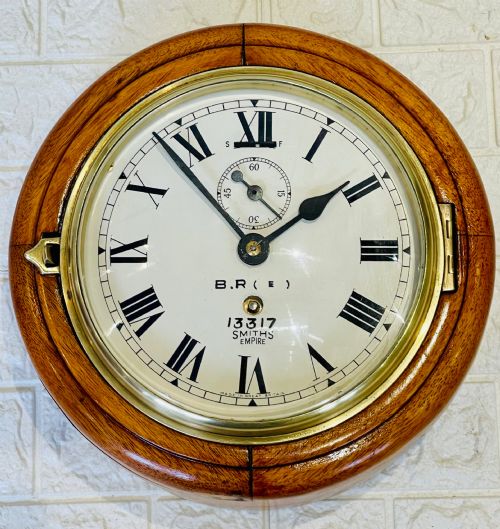
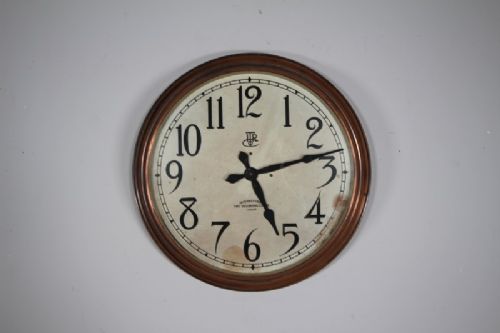
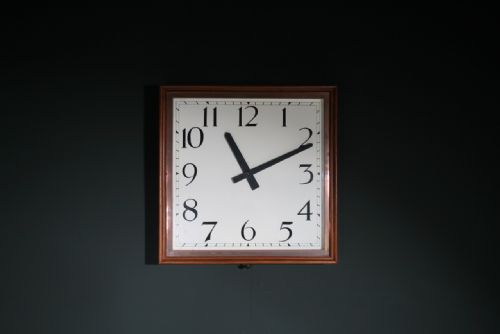
These vintage industrial wall clock pieces combine robust railway, factory and architectural origins with utilitarian utility.
Vintage Industrial Wall Clock
A vintage industrial wall clock serves as a sturdy timekeeper rooted in practical environments like railways, factories and stations. These timepieces range from heavy station dials to utilitarian office and workshop models.
Most examples found here date from the late nineteenth century through to the middle of the twentieth century. They encompass styles including Edwardian, Art Deco and French industrial designs.
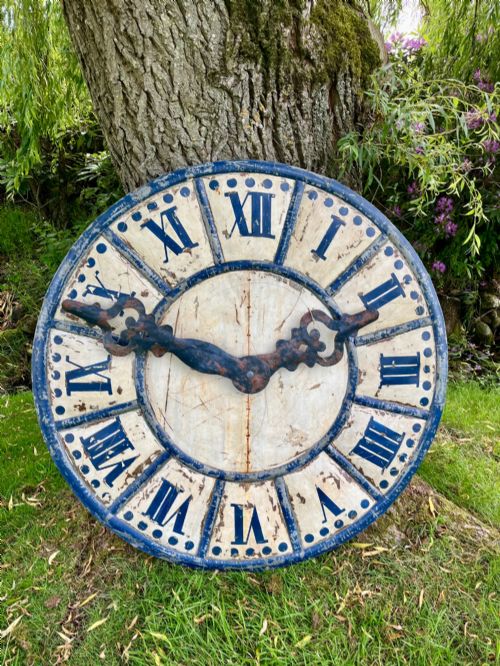
Buyers encounter a variety of forms beyond standard wall clocks, including massive tower clock faces, ship bulkhead clocks and specialised railway issue timepieces. The selection reflects hard-working pieces built for public and commercial spaces.
How they were made
Movements span traditional mechanical fusee designs to early electric systems and specialist 8-day mechanisms. Enamel and metal painted dials provide clear legibility under industrial conditions.
Vintage Industrial Wall Clock Retail Price Guide 2026
Typical asking prices for vintage industrial wall clock among the pieces listed under this phrase on Sellingantiques today, from the lower quarter to the upper quarter. They describe what is for sale here now, not the wider market.
Listings feature clocks manufactured across the nineteenth and twentieth centuries, utilising brass, iron, copper, oak and bakelite.
What varies in quality
Quality rests in the original provenance and the integrity of the maker's components. Pieces bearing authentic railway or institutional markings command particular attention for their documented history.
The sophistication of the movement, from standard timekeepers to master electric systems or fusee mechanisms, defines the engineering standard. Original enamel dials and untouched metal cases preserve the authentic character that collectors value.
John Walker·Smiths of London·Charvet·Gledhill Brook·Armstrong of Manchester
The Vintage Industrial Wall Clock Glossary
- Fusee dial
- A clock mechanism utilising a cone-shaped pulley to maintain even tension on the mainspring as it unwinds. This system ensures consistent timekeeping accuracy across the duration of the wind.
- Turret clock face
- A large exterior or architectural dial designed for public viewing on a tower or large building. These dials are typically constructed from heavy metal or enamel with bold numerals.
- Bulkhead clock
- A rugged, weather-resistant timepiece built for maritime or heavy industrial environments. Their secure housing protects the internal movement from moisture and vibration.
- Master clock
- An electrical or mechanical timekeeper that synchronizes secondary slave clocks across a large facility or station. They represent advanced commercial engineering of their period.
- Signal box clock
- A specialised wall clock utilised within railway infrastructure to manage train movements. These utilitarian pieces often feature distinct regional railway company stampings.
Vintage Industrial Wall Clock: Frequently Asked Questions
Are these clocks suitable for home use?
Industrial wall clocks bring strong architectural character to domestic interiors, serving as prominent focal points in kitchens, living spaces or hallways. Their utilitarian aesthetic contrasts effectively with contemporary or traditional room schemes.
Consider the operational sound of mechanical movements when placing them in quiet bedrooms or study areas.
How do I wind a fusee wall clock?
Fusee movements require a specialised key inserted into the dial face to tension the mainspring gently. Turn the key smoothly and stop immediately when resistance indicates a full wind.
Avoid over-winding historical movements to prevent strain on the fusee chain and internal brass gears.
What is the difference between electric and mechanical models?
Mechanical models rely on traditional springs and weights that require manual winding at regular intervals. Electric examples incorporate early solenoid or master clock wiring systems designed for continuous automated operation.
Both types reflect the technological transition within twentieth-century railway and factory timekeeping.