

Vintage Oak Chairs Set
These vintage oak chairs set options provide matching character around a dining table, drawn primarily from nineteenth and early twentieth century English workshops.
Vintage Oak Chairs Set
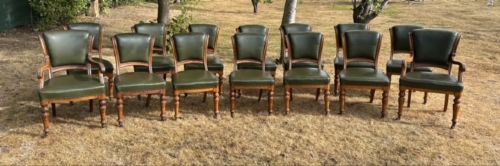
A vintage oak chairs set brings multiple matching seats together for dining tables, kitchen spaces, and studies. These groupings range from small foursomes to larger sets of ten or fourteen pieces.
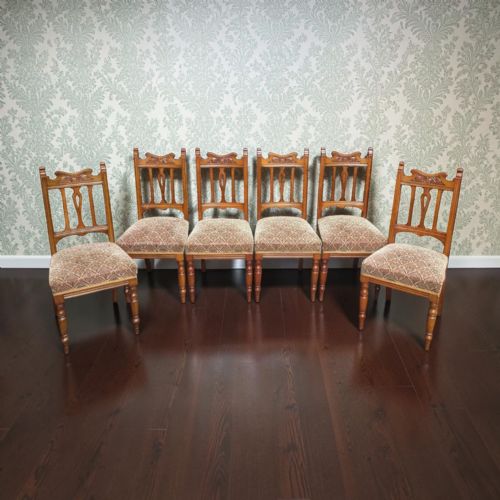
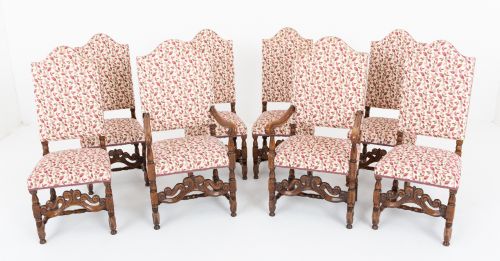
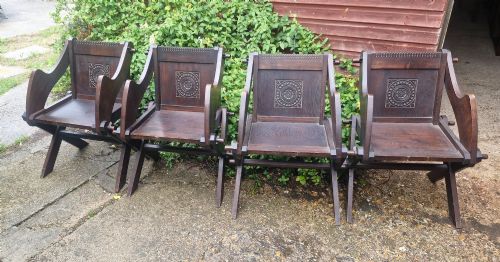
The selections on this page span the Victorian and Edwardian eras through to the 1930s. Regional country styles appear alongside revival designs modelled on seventeenth century vernacular forms and Arts and Crafts ideals.
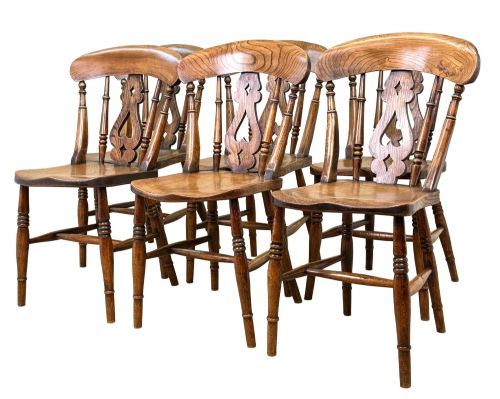
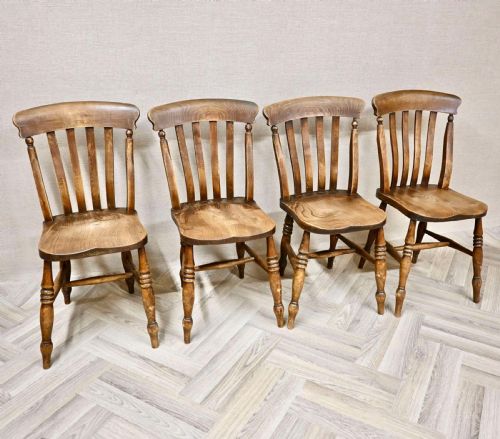
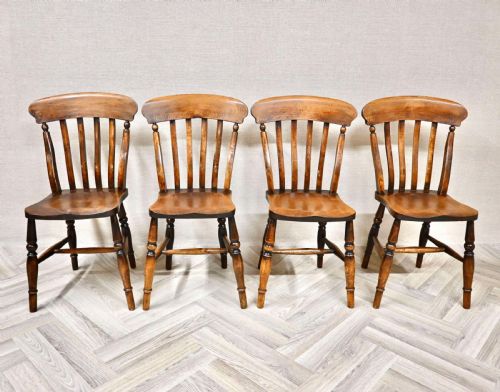
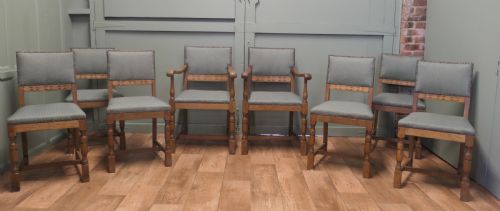
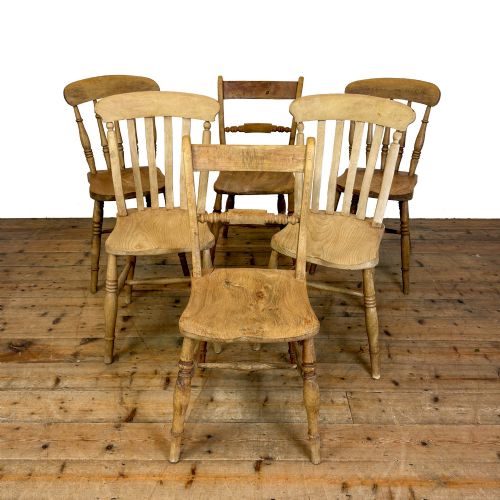
Kitchen and farmhouse Windsor chairs, ladder backs, and upholstered dining suites form the core of what is available. Buyers encounter both uniform matched sets and assembled harlequin groups gathered over time.
Materials and Construction
Solid timber provides the primary frame structure, utilising oak supplemented by elm, beech, and ash for turned spindles and bentwood elements. Joinery relies on traditional pegged mortise and tenon joints designed to withstand daily use.
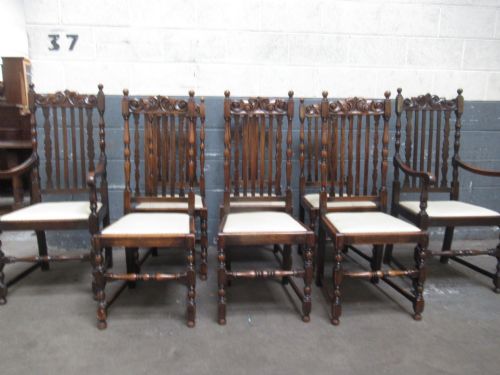
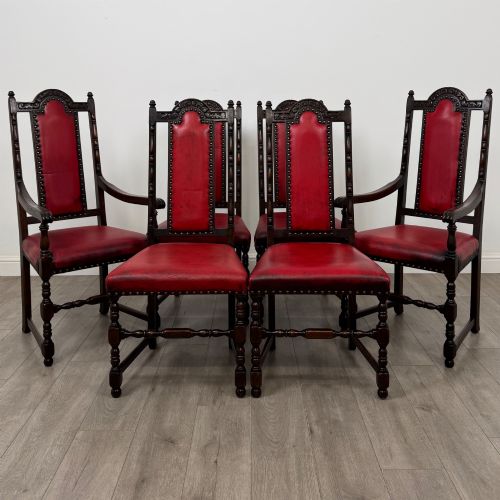
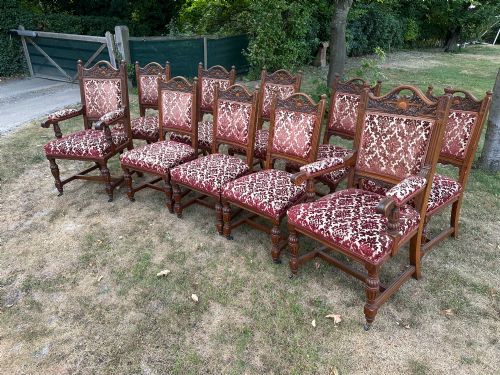
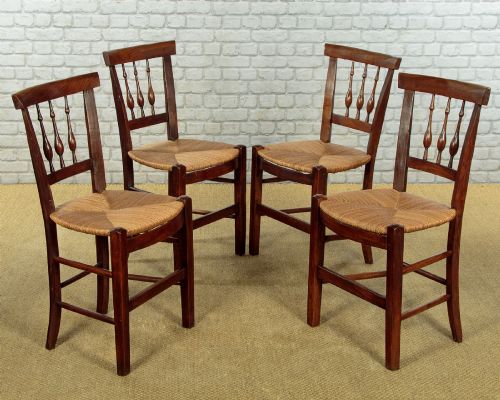
Seating surfaces vary from carved solid timber and woven rush to pads upholstered in leather, fabric, and velvet. Turned supports, barley twist legs, and carved crest rails add decorative detail to the heavier structural frames.
Materials recorded across the inventory include Oak, Elm, Beech, Brass, Fabric, Rush, Leather, and Velvet.
Evaluating the Seating
Quality rests in the uniformity of the timber selection and the integrity of the original joints across all pieces in the group. Matched sets displaying consistent grain patterns and original surface patination command stronger interest than assembled groups.
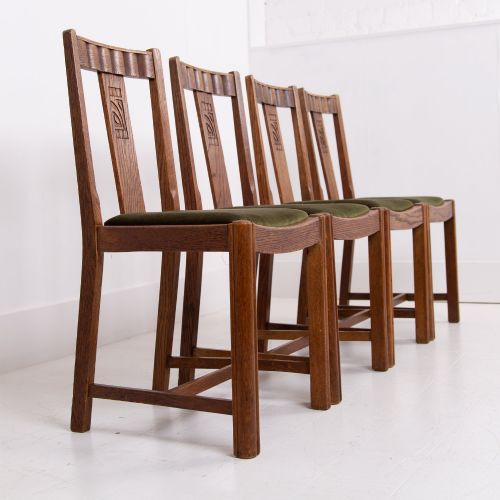
The crispness of carved details on revival styles and the tightness of turned stretchers indicate the skill of the original maker. Substantial frames with minimal timber replacement retain greater integrity over lighter or heavily restored examples.
The Vintage Oak Chairs Set Glossary
- Harlequin set
- A group of chairs assembled to match in general style and period rather than originating as a single workshop batch. These sets often share common heights and similar ladder back or Windsor forms.
- Smoker's bow
- A low-backed Windsor armchair with a rounded continuous arm rail, frequently found in kitchen and office settings. They provide sturdy support with turned spindle details.
- Barley twist
- A decorative turning technique resembling a twisted rope, common on the legs and vertical supports of Edwardian and Victorian furniture. This detail adds movement to otherwise solid oak frames.
- Rush seat
- A seating surface woven from dried marsh rushes around a wooden frame, providing a textured and resilient pad. This traditional method appears frequently on country and Arts and Crafts chairs.
- Draw leaf table
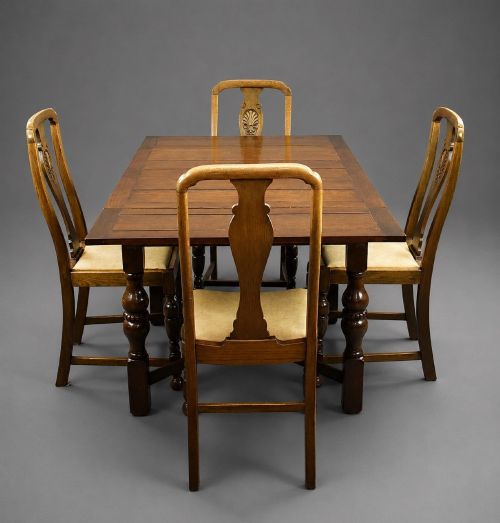
- A dining table equipped with pull-out extension leaves stored beneath the main top, designed to accommodate larger sets of chairs when entertaining.
Vintage Oak Chairs Set: Frequently Asked Questions
How do I match a harlequin set?
Harlequin sets rely on consistent seat heights, matching timber species, and similar vernacular styles rather than identical manufacturing origins. Look for shared characteristics such as ladder backs or similar turned leg profiles to create a cohesive dining arrangement.
Mixing chairs from the same regional tradition allows a large gathering around a table without requiring a uniform factory batch from a single workshop.
Are these chairs suitable for daily dining?
Most solid oak and elm frames from the nineteenth and early twentieth centuries were built for heavy domestic use and remain structurally robust. Traditional mortise and tenon joinery handles regular sitting when joints remain tight and well-maintained.
Upholstered pads and rush seats may require periodic professional re-webbing or re-caning if the original materials show thinning from age.
What is the difference between Windsor and ladder back chairs?
Windsor chairs utilise a thick wooden saddle seat into which turned legs and spindle backs are wedged and pinned directly. They often feature bentwood arm rails and ergonomic curved backs designed for kitchen and farmhouse utility.
Ladder backs rely on horizontal slats set between two vertical rear posts, offering a rigid upright posture typical of seventeenth century vernacular seating traditions.
How do I date an oak dining set?
Dating relies on combining stylistic clues, such as Arts and Crafts influences or Barley twist turnings, with the visible tool marks and timber preparation methods on the underside of the seats. Nineteenth-century examples often display pit-sawn or early circular-sawn board marks.
Revival styles often borrow motifs from the seventeenth century but reveal later nineteenth or twentieth-century joinery techniques upon closer inspection.