

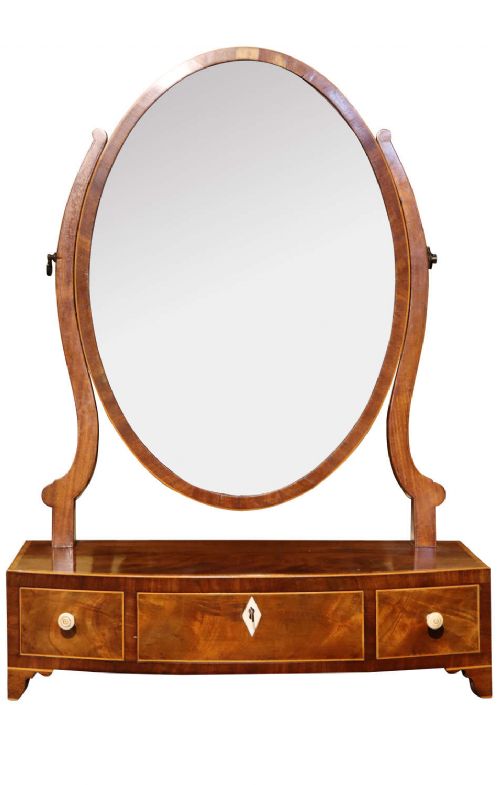


Vintage Desktop Mirror
A vintage desktop mirror brings practical grace to a dressing space, offering period timber and polished glass designed to pivot on a stable stand.
Vintage Desktop Mirror
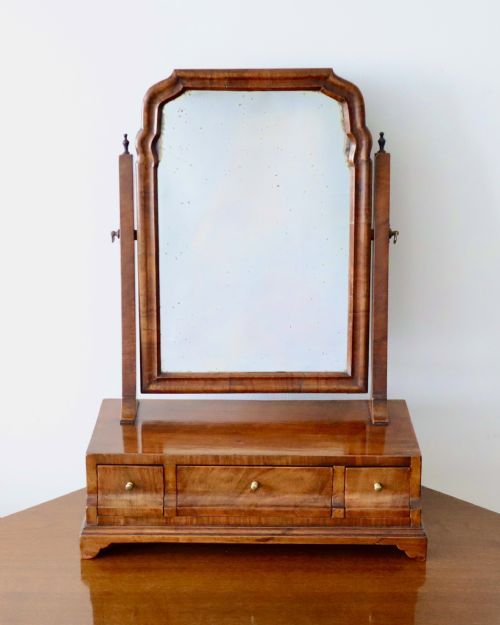
A vintage desktop mirror encompasses a range of traditional table-standing looking glasses, commonly referred to in period terms as toilet or dressing mirrors. These pieces sit comfortably upon a chest of drawers, bureau, or vanity, allowing the user to adjust the angle of the glass via side pivots.
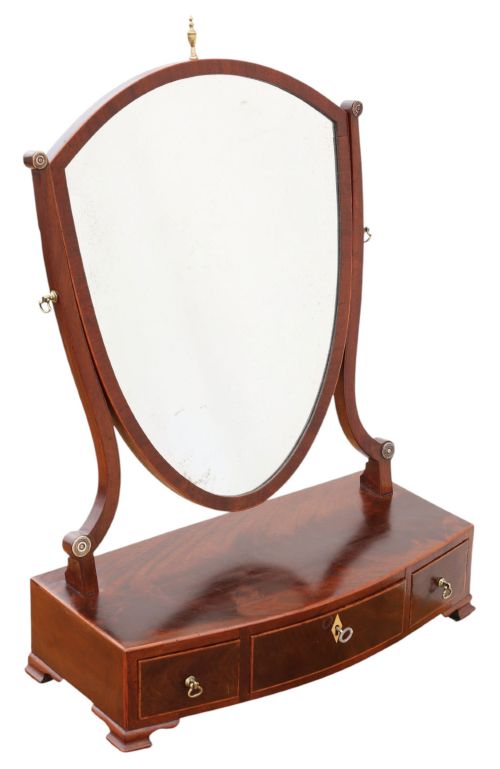
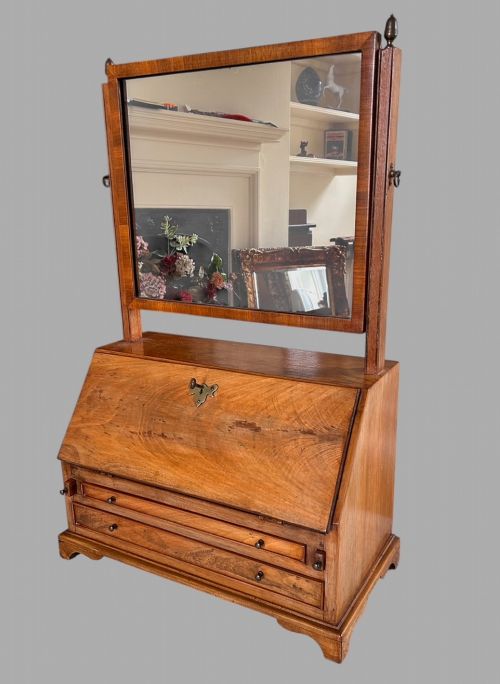
The examples gathered here span from the eighteenth century through to the early twentieth century, showing influences from the Georgian era, the Victorian period, and Edwardian design. Forms vary from simple shield-shaped swing plates to elaborate multi-drawer table-top bureaus.
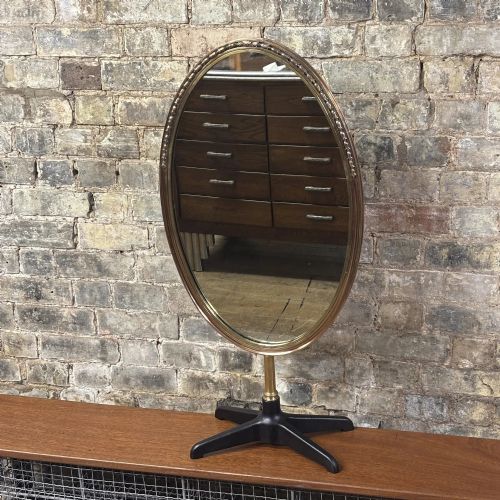
Mahogany and walnut dominate the selection, often enriched with crossbanding or satinwood, while brass and giltwood frame alternative interpretations. Regional and stylistic diversions introduce Dutch Neo-Classical framing and Italian religious reliquary designs alongside standard English forms.
Materials and construction methods
Cabinetmakers constructed these frames using dense hardwoods like mahogany and walnut, frequently selecting fine veneers and incorporating stringing or crossbanding for visual depth. The glass plate sits within a movable frame supported by upright arms attached to a heavy base or box plinth.
The supporting base often doubles as a functional storage compartment, housing small drawers fitted with bone or wood knobs. Metal pivots, usually cast in brass, allow the mirror frame to tilt smoothly and hold its chosen position without slipping.
Vintage Desktop Mirror Retail Price Guide 2026
Typical asking prices for vintage desktop mirror among the pieces listed under this phrase on Sellingantiques today, from the lower quarter to the upper quarter. They describe what is for sale here now, not the wider market.
Assessing craftsmanship and execution
Quality rests upon the crispness of the timber joinery and the selection of figured veneers, where superior pieces exhibit well-matched grains and tight dovetail joints in the drawer construction. The weight and proportion of the brass hardware also indicate standard, as solid cast components outlast lighter replacements.
The integrity of the mirror glass itself and the retention of original backboards distinguish superior examples from heavily altered items. Finer mirrors maintain balanced proportions between the upright supports and the pivoting plate, ensuring structural stability.
Thomas Rubergall
The Vintage Desktop Mirror Glossary
- Swing mirror
- A looking glass hung on horizontal pivots between two upright arms, allowing it to tilt back and forth. This mechanism is central to the design of most desktop dressing mirrors.
- Toilet mirror
- The historical term for a small dressing table mirror, often incorporating a small box base with drawers for cosmetics or trinkets. These sat upon larger furniture surfaces.
- Shield mirror
- A mirror plate shaped like a heraldic shield, popular during the late eighteenth century. The curved top narrows down to square shoulders above the pivot points.
- Crossbanding
- A decorative border technique where thin strips of veneer are laid across the grain of the primary wood. This creates a contrasting frame around drawer fronts or mirror surrounds.
- Reliquary mirror
- A devotional mirror incorporating sacred iconography, such as a flaming heart, used within religious settings rather than domestic dressing spaces.
Vintage Desktop Mirror: Frequently Asked Questions
What is the difference between a toilet mirror and a dressing mirror?
In historical usage, a toilet mirror specifically refers to a table-standing glass that often includes a small box base fitted with drawers for accessories. A dressing mirror is a broader term that encompasses these smaller table models as well as larger standalone vanity glasses.
Both terms appear across various periods to describe essentially the same desktop function, though the presence of drawers usually points toward the toilet mirror designation.
How do I date an older desktop mirror?
Dating relies heavily on the timber species, veneer patterns, and the shape of the mirror frame itself. For instance, shield-shaped plates and fine mahogany crossbanding point towards the eighteenth century, while serpentine drawer arrangements suggest the Georgian period.
Later Victorian and Edwardian pieces often display heavier proportions or alternative woods like satinwood and lighter brass fittings. Examining the construction of the base drawers and the style of the wood screws offers further confirmation of the period.
Where should I place a desktop mirror in my home?
These mirrors work best on sturdy chest of drawers, sideboards, or dedicated dressing tables where their weight is fully supported. Positioning them near a natural light source helps maximise their original purpose of reflecting illumination into the room.
Because the base often contains small drawers, placing them at a comfortable height allows you to access stored trinkets while utilising the adjustable glass.
Are the mirror plates usually original?
Mirror glass is fragile and prone to degradation over long periods, meaning many surviving pieces have replacement plates fitted at a later date. Examining the silvering for natural foxing and uneven ageing helps determine whether the glass has survived from the period of manufacture.
Original plates often show characteristic signs of gentle age, while replacement glass typically appears clearer and more uniform.