


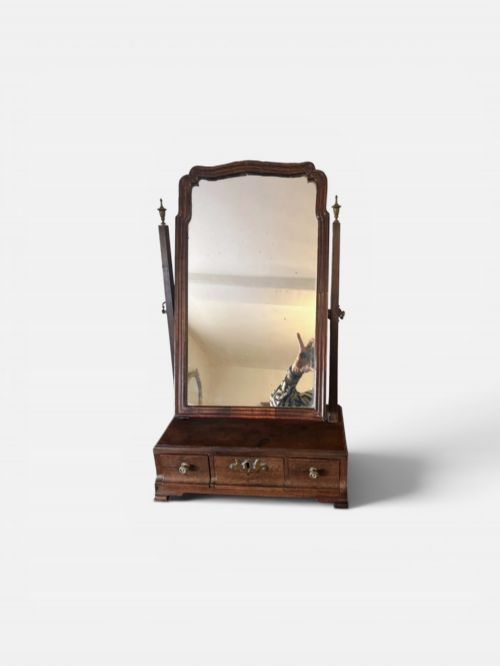
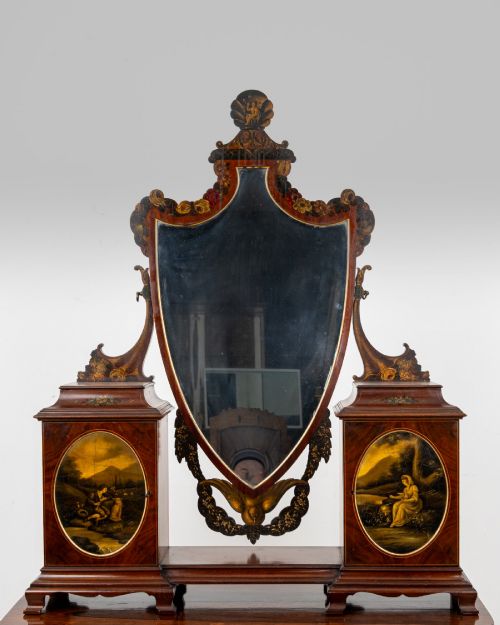
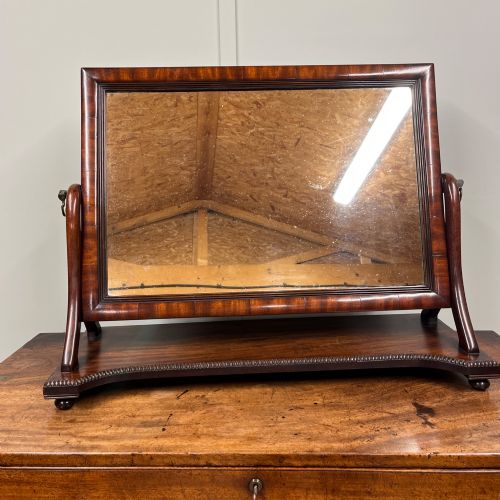
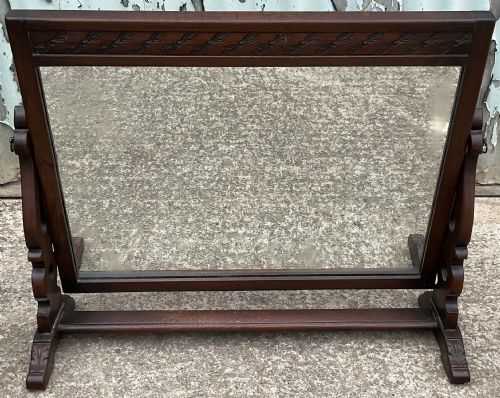

Antique Cheval Toilet Mirror
An antique cheval toilet mirror offers a practical and elegant addition to a dressing surface, providing adjustable reflection for everyday grooming.
Antique Cheval Toilet Mirror
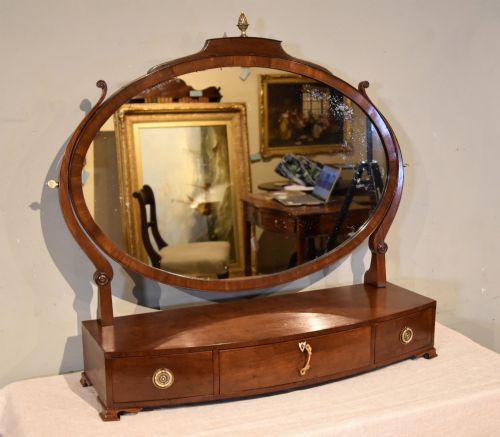
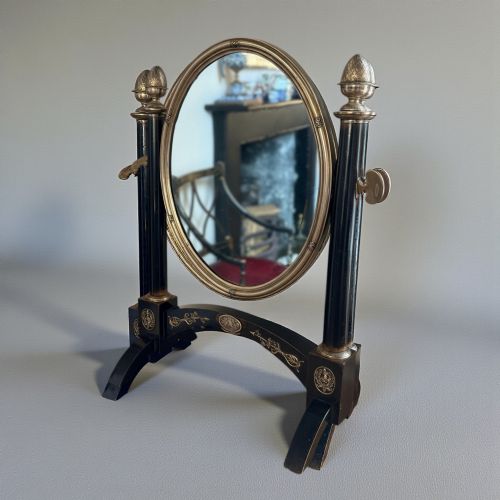
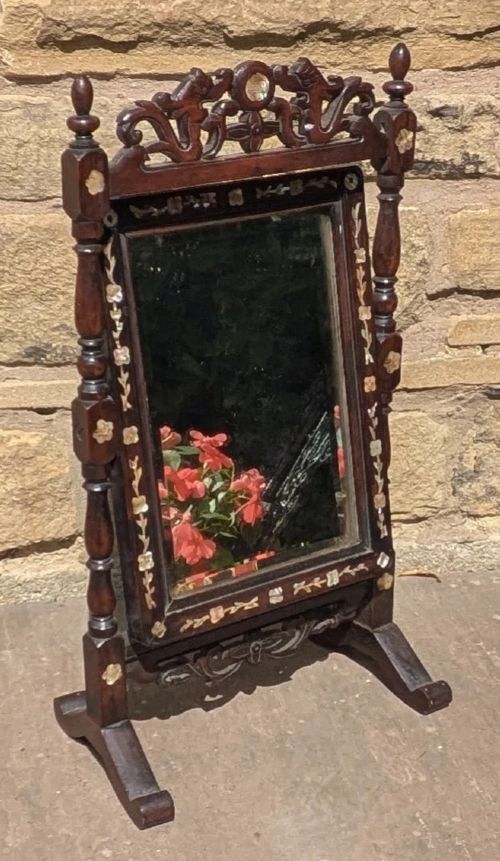
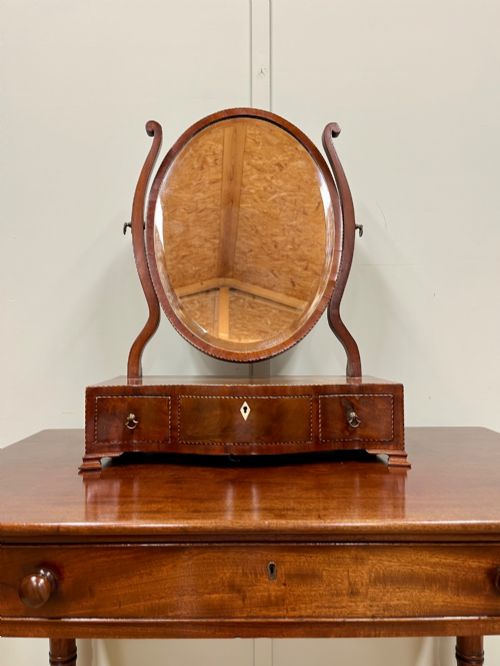
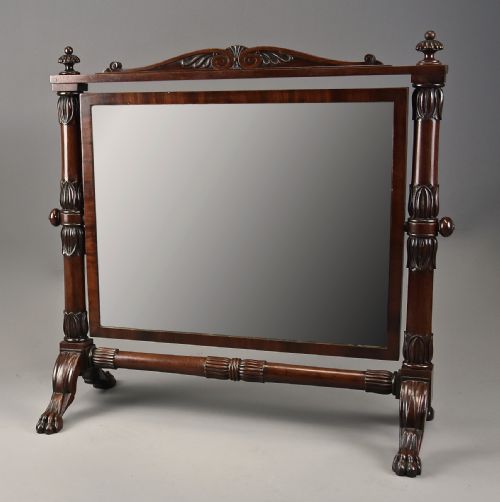
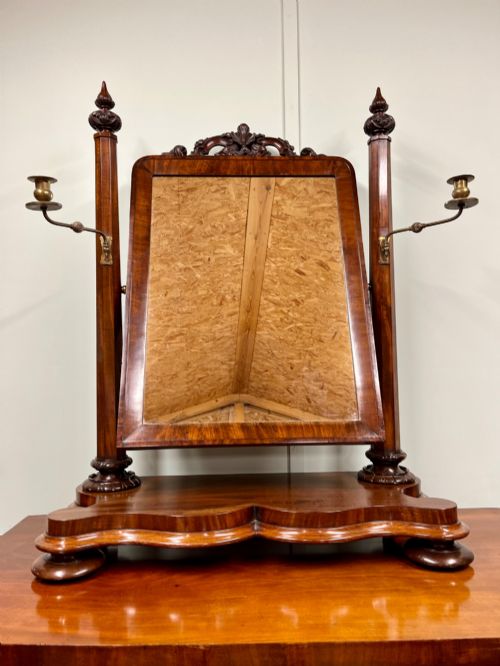
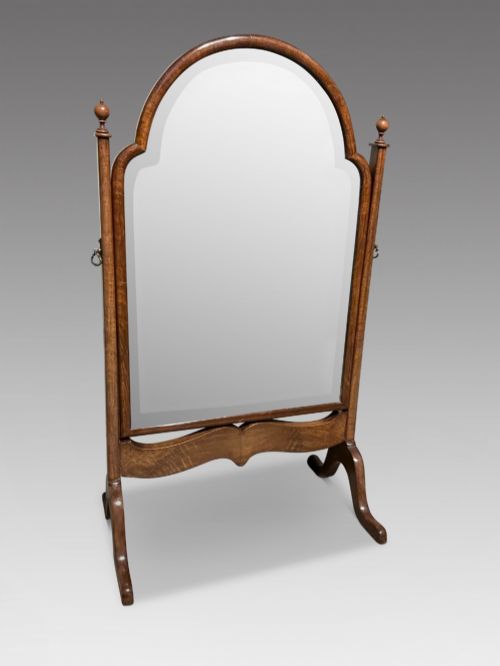
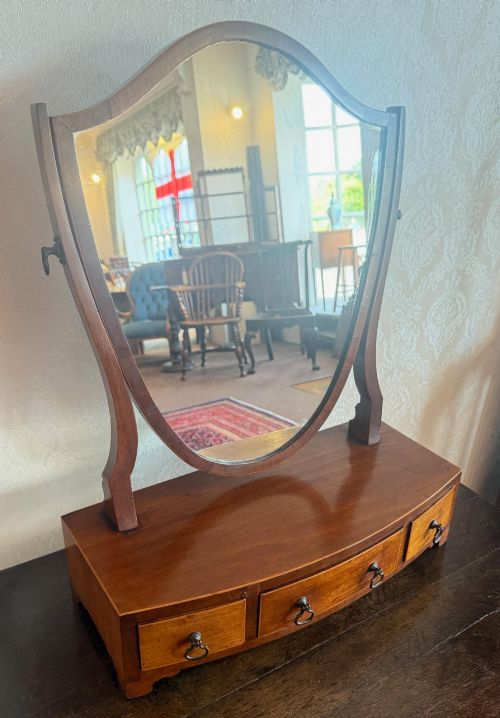
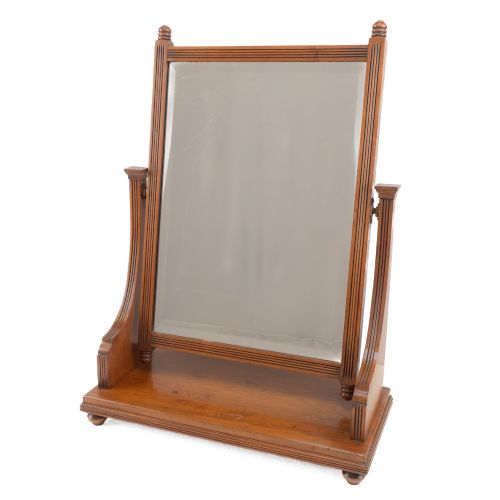
When you search for an antique cheval toilet mirror, you encounter pieces designed to sit upon tables or dressing chests rather than standing independently on the floor. These items appear across the Georgian, Regency, and Victorian periods, manifesting primarily in various forms of mahogany alongside walnut and oak.
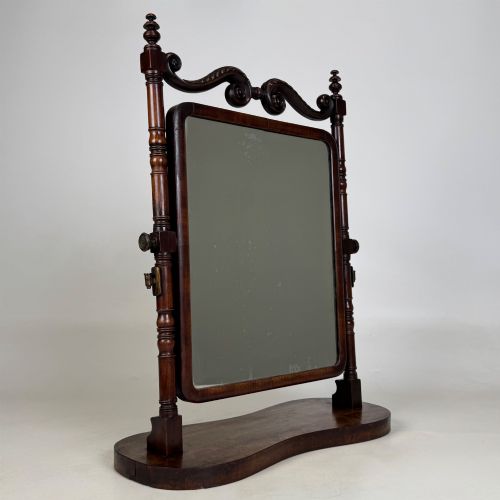
The objects combine a mirror glass plate set within a swinging frame, supported by upright arms known as standards, mounted onto a base that frequently incorporates small drawers. The smaller scale permits placement on a dressing table, while the swivelling mechanism allows the user to adjust the angle of the glass.
Most examples originate from the nineteenth century, though eighteenth-century and Edwardian pieces also present themselves. The forms range from simple rectangular swing mirrors on serpentine bases to more elaborate designs featuring integrated jewellery cabinets and boxwood inlay.
Distinctions in craftsmanship and design
The standard of a piece is determined by the selection of timber and the precision of the cabinetwork, particularly in the dovetailing of the base drawers and the turning of the support pillars. Superior examples display carefully matched veneers and robust brass hardware that withstands the repeated adjustment of the mirror plate.
Design complexity also separates standard items from exceptional ones, with serpentine fronts, intricate marquetry inlay, and integrated compartments for storage marking out the higher end of the range. Proportion and the retention of original mirror glass and hardware further elevate the standing of an individual piece.
Antique Cheval Toilet Mirror Retail Price Guide 2026
Typical asking prices for cheval toilet mirror among the pieces listed under this phrase on Sellingantiques today, from the lower quarter to the upper quarter. They describe what is for sale here now, not the wider market.
Some miniature dressing mirrors include secret compartments hidden behind the base drawers for storing small valuables.
Jean Gille·P & MA Nicholson
The Antique Cheval Toilet Mirror Glossary
- Cheval mirror
- A freestanding or table-top mirror supported by a frame that allows it to swing fully on pivots. This permits the user to adjust the angle of reflection easily.
- Toilet mirror
- A smaller mirror designed to sit upon a dressing table or chest of drawers. They frequently incorporate small drawers within the base for storage.
- Swing mirror
- A glass plate mounted on vertical pivots between two upright posts, enabling it to tilt back and forth. The mechanism relies on thumb screws or wooden pins.
- Marquetry
- Decorative patterns formed by the insertion of pieces of wood, brass, or other materials into a veneered surface. This technique creates elaborate pictorial or geometric designs.
- Serpentine
- A front edge or shape that curves inward in the centre and outward at the ends, creating a gentle undulating contour. This outline appears frequently on Georgian dressing mirror bases.
Antique Cheval Toilet Mirror: Frequently Asked Questions
What is the difference between a toilet mirror and a cheval mirror?
A toilet mirror is designed to sit on top of a dressing table, chest, or desk, providing a portable surface reflection. A cheval mirror is traditionally a full-length floor-standing glass, though smaller table-top versions also exist.
Both types utilise pivoting frames to adjust the angle of the glass, but their scale and intended placement within a room differ significantly.
How do I date an antique swing mirror?
Dating relies on observing the timber species, construction techniques of the base drawers, and the style of the mirror supports. Georgian and Regency pieces often feature hand-cut dovetails and elegant serpentine shaping.
Victorian and Edwardian examples tend to display heavier proportions, different veneer choices, and sometimes added storage compartments or marquetry decoration.
Are the mirror plates usually original?
Many mirrors retain their original glass, which can exhibit light foxing or small blemishes due to age. However, some pieces have received replacement glass plates over the decades as earlier mirrors deteriorated.
Original glass often shows subtle distortions or marks within the silvering that confirm its period of manufacture.
How were these mirrors used historically?
These mirrors stood on dressing tables in bedrooms or dressing rooms to assist with personal grooming, styling hair, and adjusting cravats or bonnets. The pivoting mechanism allowed users to alter the tilt for optimal lighting and viewing angles.
Base drawers provided convenient storage for small personal items, pins, and cosmetics used during daily routines.