



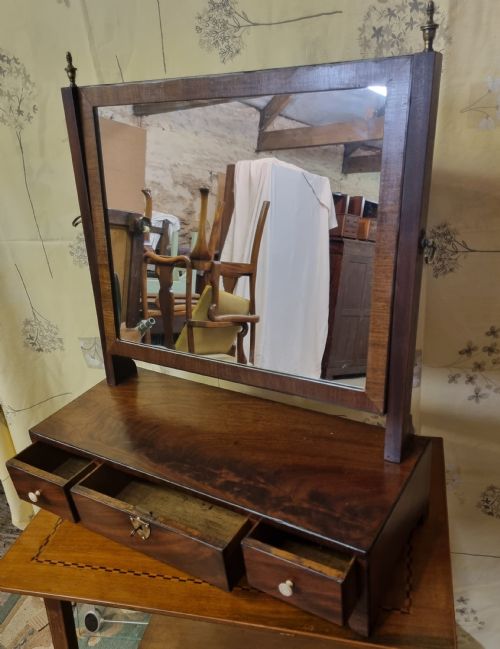
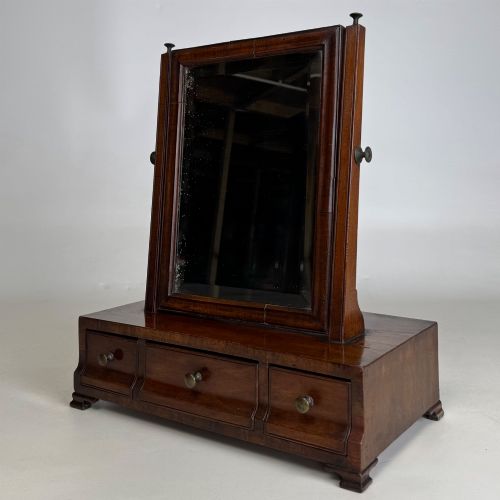
Dressing Table Mirror Drawers
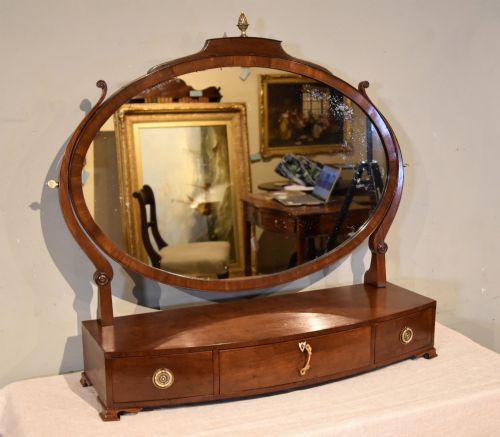
Dressing table mirror drawers offer functional refinement for the vanity, combining a pivoting mirror with concealed storage for small valuables.
Dressing Table Mirror Drawers
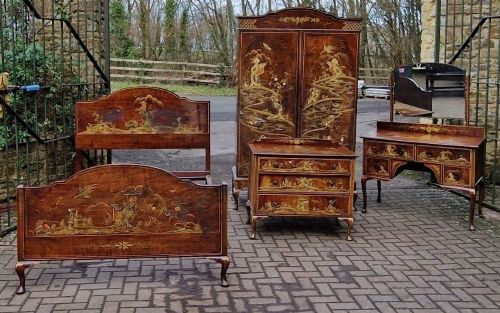
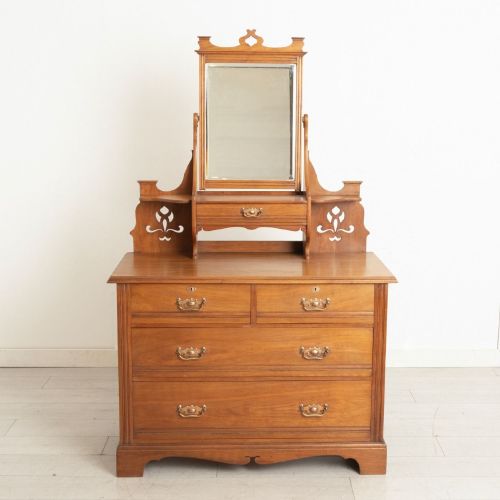
When you search for dressing table mirror drawers, you encounter compact tabletop toilet mirrors alongside larger dressing chests and vanity suites. The items listed here span from the 18th century through the Georgian, Regency, Victorian, and Edwardian periods.
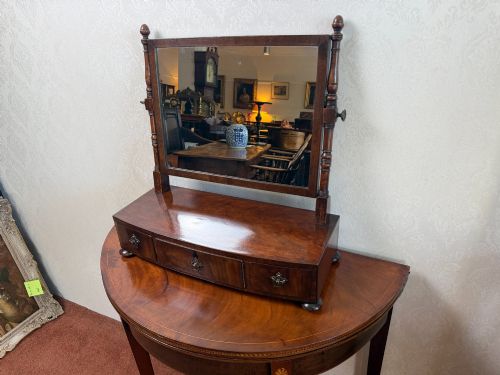
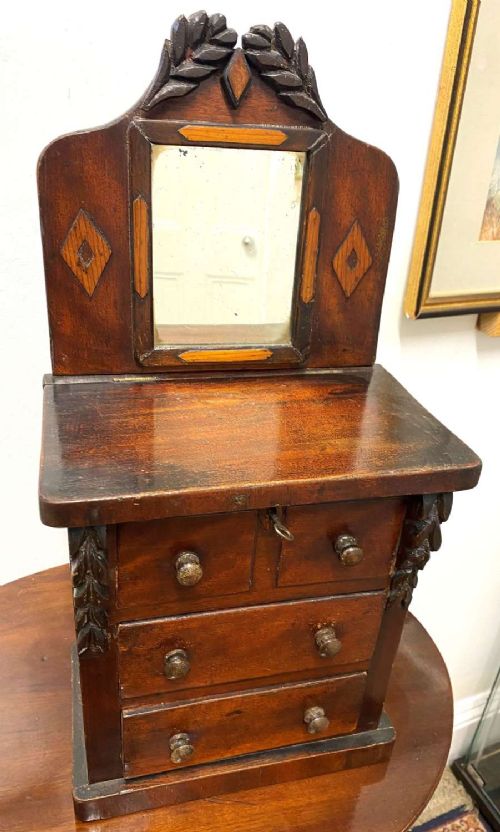
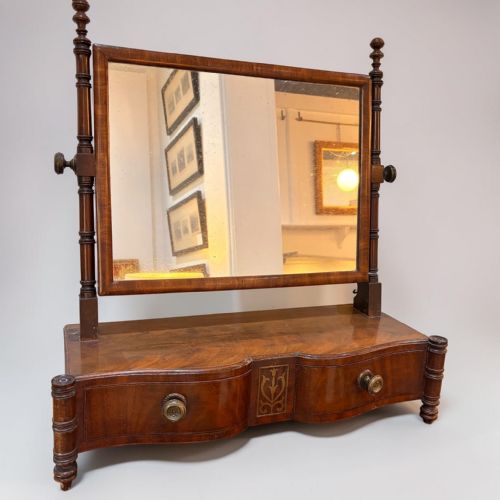
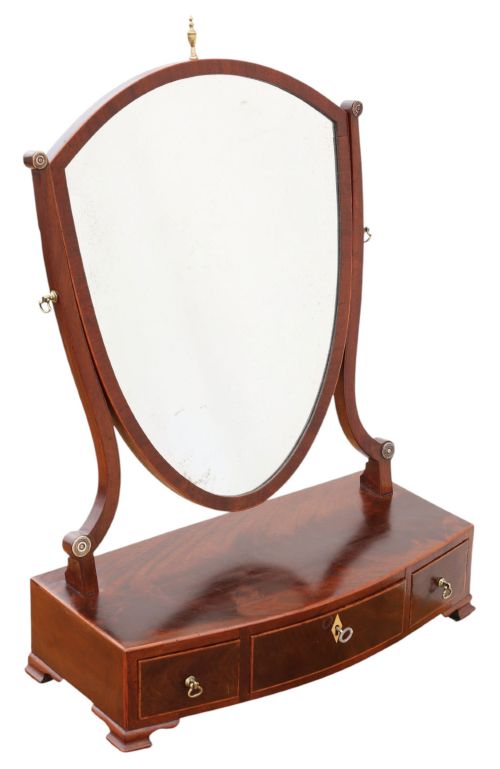
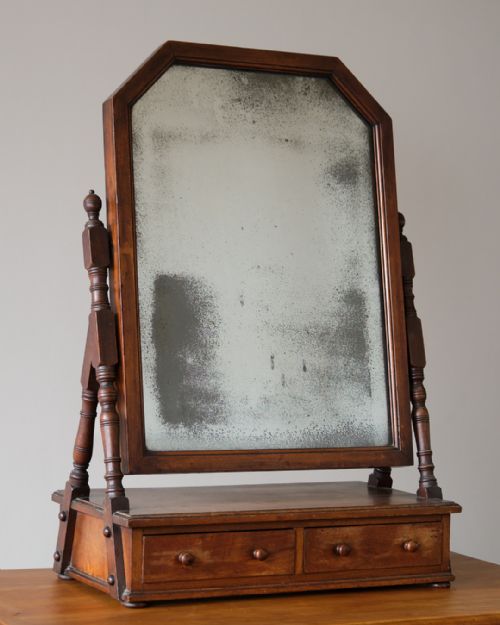
The most common version met on this page is the freestanding mahogany swing mirror equipped with a box base containing one or more small drawers. These pieces sit comfortably upon a chest of drawers or a dedicated dressing table to provide adjustable reflection and organised storage.
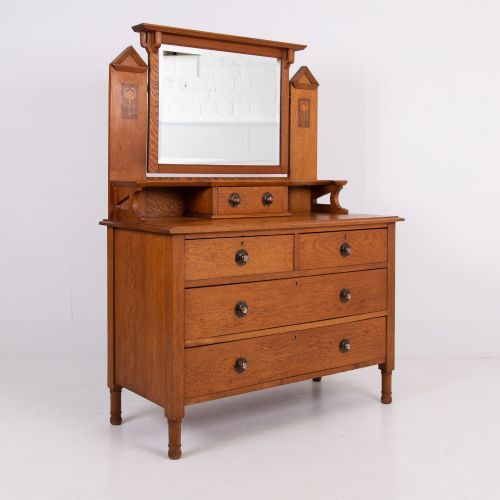
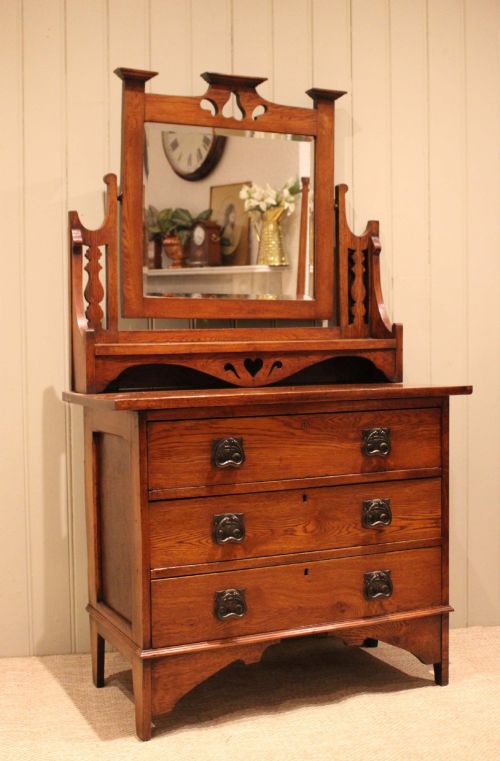
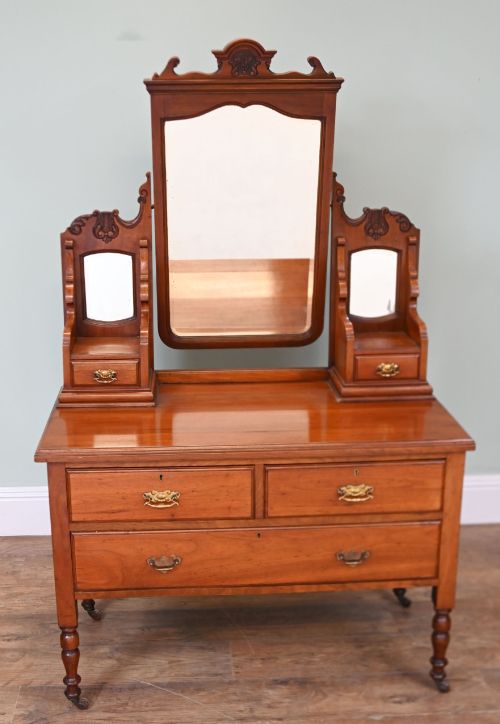
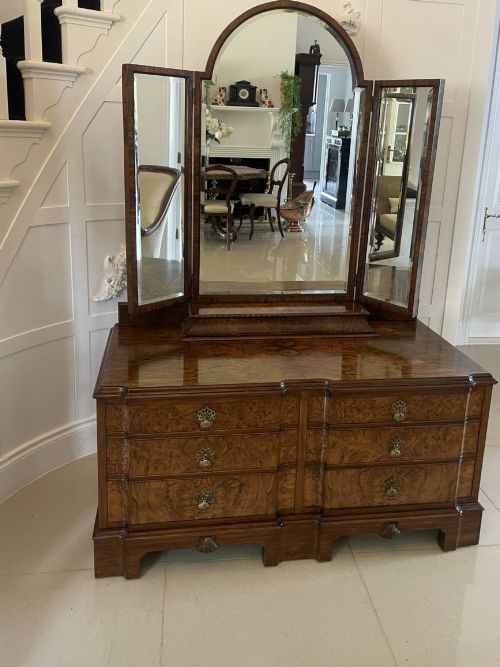
Examples range from shield-shaped and oval Georgian toilet mirrors to substantial walnut and oak dressing chests incorporating triple mirrors. Regional variations such as Dutch walnut and Italian giltwood pieces also appear within the selection.
Materials and Construction
Cabinet makers relied heavily on timber species such as mahogany, walnut, and oak, frequently enhancing surfaces with figured veneers, boxwood stringing, or crossbanding. Structural integrity depended on traditional joinery, with small drawers constructed using hand-cut dovetails.
Mirrors utilise glass fitted into pivoting frames supported by upright arms, often secured with brass screw caps or finials. Brass hardware, including swan neck handles and small bracket feet, completes the construction of these tabletop and chest units.
Dressing Table Mirror Drawers Retail Price Guide 2026
Typical asking prices for dressing table mirror drawers among the pieces listed under this phrase on Sellingantiques today, from the lower quarter to the upper quarter. They describe what is for sale here now, not the wider market.
Mahogany and walnut are the dominant timbers across these listings, spanning the Georgian, Regency, and Victorian periods.
Evaluation of Quality
Quality rests upon the choice of timber and the precision of the cabinet work, particularly in the figuring of mahogany or walnut veneers and the subtlety of crossbanding. Superior examples display refined proportions, delicate framing around the glass, and crisp carving on the supports.
The integration of the drawer base dictates the overall balance of the piece, where tight dovetailing and matching timber grains distinguish high workshop production from utilitarian output.
Heal And Sons·Maple And Co·Shapland And Petter
The Dressing Table Mirror Drawers Glossary
- Toilet mirror
- A small freestanding mirror designed to sit on a dressing table or chest. These pieces almost invariably include a box base fitted with drawers for trinkets.
- Swing mirror
- A glass plate mounted on vertical pivots between two upright arms, allowing the user to adjust the angle of reflection.
- Crossbanding
- A decorative border of veneer laid around the perimeter of a surface with the grain running perpendicular to the centre panel. This technique frames the primary timber grain.
- Serpentine front
- A curved furniture front featuring a convex centre flanked by concave wings. It requires considerable skill from the woodworker to shape accurately.
- Boxwood stringing
- Thin inlay lines of contrasting pale wood set into darker timbers to outline drawer fronts and borders. It provides a crisp linear definition to the piece.
Dressing Table Mirror Drawers: Frequently Asked Questions
How do I date a dressing table mirror?
Dating relies on timber choices, mirror glass thickness, and framing profiles. Earlier 18th-century pieces often feature walnut or laburnum, while mahogany dominates the Georgian and Regency eras.
Construction details such as hand-cut dovetails in the drawer boxes and the shape of the mirror frame shield or oval provide further chronological markers.
Were these mirrors fixed or adjustable?
The glass plates are mounted on pivot screws or brass side pins, allowing them to tilt forward or backward. This adjustable mechanism enabled the user to alter the angle of reflection during grooming.
The supporting uprights remain stationary while the central frame moves freely between them.
What were the base drawers used for?
The small compartments beneath the mirror provided secure storage for personal items, pins, cosmetics, and jewellery. The base acted as a miniature chest that elevated the mirror to a convenient height.
Some configurations feature three small drawers arranged along the apron or stepped box base.
How do I maintain the mirror glass?
Original mirror glass often exhibits light foxing or silvering loss, which is characteristic of age and authenticates the piece. Cleaning should be done gently using a soft cloth without harsh chemical ammonia.
The wooden frame requires occasional waxing to nourish the timber without building up heavy residue.