



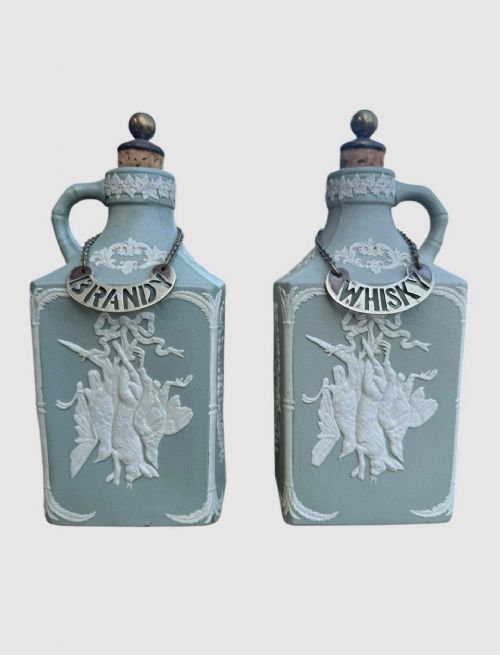


Victorian Stoneware Pair
A Victorian stoneware pair brings heavy, salt-glazed presence and rich glaze depth to a mantel or hall.
Victorian Stoneware Pair
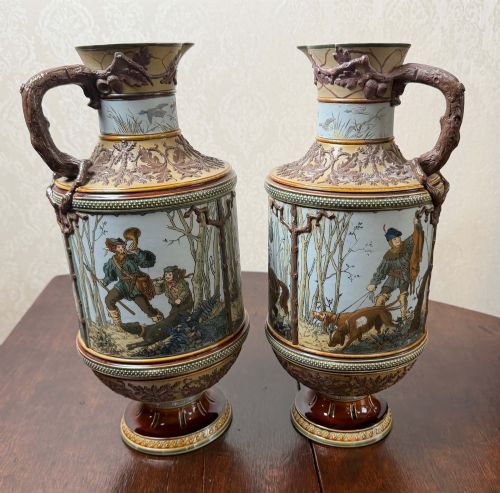
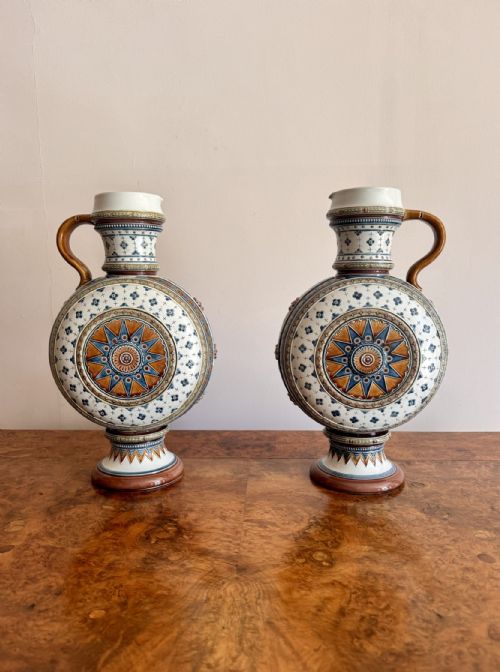
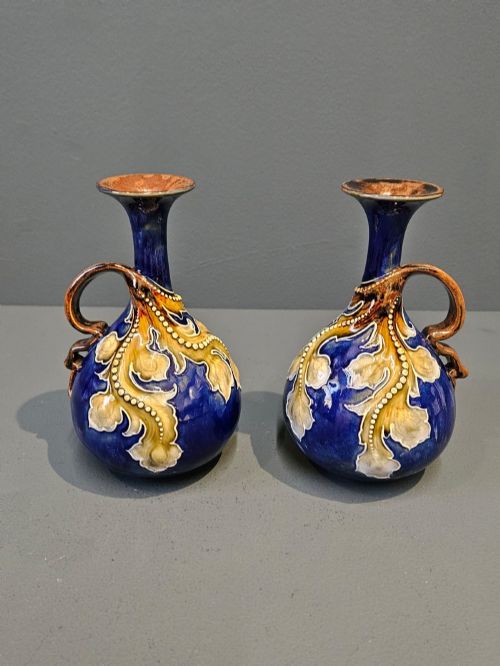
A victorian stoneware pair consists of matching vessels, vases, or lamps created during the nineteenth and early twentieth centuries from dense, vitrified clay. These matched sets range from sturdy garden urns and salt-glazed flagons to intricately decorated studio pottery vessels.
The selections encountered here most frequently include Doulton Lambeth vases, alongside German pottery and jasperware vessels from the period. Makers utilised durable stoneware bodies capable of holding liquids or withstanding outdoor exposure while carrying elaborate surface ornament.
Matched pairs served functional and decorative roles in Victorian interiors, sitting symmetrically on mantels, pedestals, or side tables. Their survival as a complete pair rather than a single survivor determines much of their appeal to collectors today.
Materials and production methods
Potters formed these items from heavy stoneware clay, applying salt glazes during firing to create characteristic textured, orange-peel surfaces. Other pieces received smooth enamel finishes or contrasting slip designs.
Decorators incised, moulded, or applied low-relief ornamentation directly onto the clay body before firing. Many items combined the dense stoneware body with metal additions such as silver rims or brass fittings.
Victorian Stoneware Pair Retail Price Guide 2026
Typical asking prices for victorian stoneware pair among the pieces listed under this phrase on Sellingantiques today, from the lower quarter to the upper quarter. They describe what is for sale here now, not the wider market.
RMS shipping alcohol jars once carried spirits across oceans before finding new life as heavy decorative vessels.
Judging quality in matched sets
Quality rests upon the crispness of the modelled or incised decoration and the evenness of the salt glaze. Stronger examples display deliberate artistic control by named decorators rather than mass-produced uniformity.
The integrity of the pair as an exact match in height, colour saturation, and surface detail separates superior items from assembled pairings. Original components, such as intact silver rims or untouched lamp conversions, retain higher integrity.
Doulton Lambeth·Villeroy and Boch·Royal Doulton·Mettlach Pottery·Wedgwood·Hurlford Kilmarnock
The Victorian Stoneware Pair Glossary
- Stoneware
- A dense, hard pottery fired at high temperatures until vitrified and impervious to liquid without glaze. It forms the heavy, durable body of these nineteenth-century items.
- Salt glaze
- A glossy, slightly textured finish achieved by throwing common salt into the kiln during high-temperature firing. This process leaves a distinct pitted surface resembling orange peel.
- Slaters stoneware
- A specific technique utilising lace or fabrics pressed into damp clay before firing to create intricate textured patterns. This method was widely used by major English potteries.
- Campana urn
- A bell-shaped classical vessel form mounted on a footed pedestal. Victorian makers frequently produced these in ceramic and stoneware for decorative display.
Victorian Stoneware Pair: Frequently Asked Questions
How were these stoneware pairs used originally?
Victorian households placed these matched vessels on mantelpieces, entrance tables, and pedestals for purely decorative effect or practical containment. Larger salt-glazed examples stood outdoors as garden ornaments or served inside as flagons and storage jars.
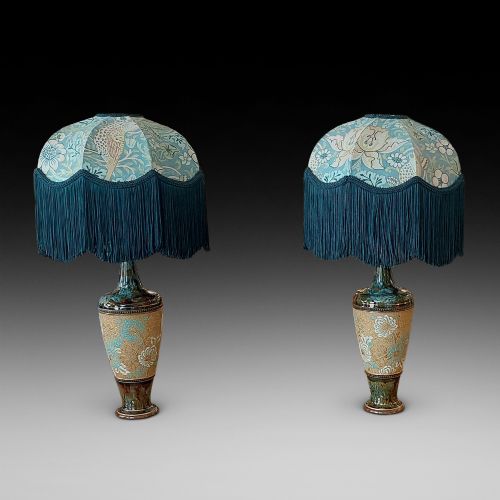
Over time, many surviving vessels transitioned into lighting through professional conversion into table lamps. Their durable construction allowed them to move easily from utilitarian roles to ornamental display.
How do I care for antique stoneware?
Dust these heavy ceramic pieces gently with a dry or slightly damp cloth to protect the glaze and surface ornament. Avoid harsh chemical cleaners that might damage vulnerable salt glazes or applied metallic rims.
Keep pieces away from sudden temperature shifts and unstable edges due to their heavy weight. Secure any mounted electrical components periodically if the vessels function as lamps.
Are these items waterproof?
Most nineteenth-century stoneware bodies are inherently vitrified and watertight due to high-firing temperatures. Salt-glazed interiors hold water safely for floral displays without needing protective liners.
Check items that have undergone conversions, such as lamps with drilled bases, before exposing them to moisture. Vessels fitted with metal rims or applied enamel require careful handling around water to protect secondary materials.
How can I tell if a pair is genuine?
Examine the base for period factory stamps, incised decorator monograms, and glaze pooling consistent with nineteenth-century kiln practices. Genuine pieces show appropriate weight, natural wear around the foot rim, and consistent clay ageing.
Compare both objects in the set closely to ensure matching dimensions, hand-finishing details, and uniform clay composition. Assembled pairs often display subtle variations in colour or height that reveal mismatched origins.