





Doulton Ceramic Urns
These doulton ceramic urns bring together late Victorian and Edwardian artistry in salt-glazed stoneware, faience and earthenware forms that collectors prize.
Doulton Ceramic Urns
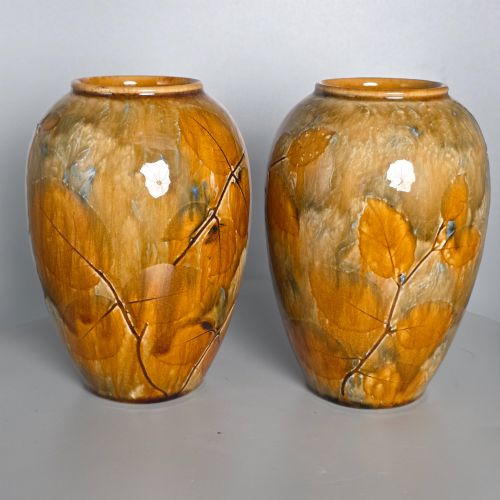
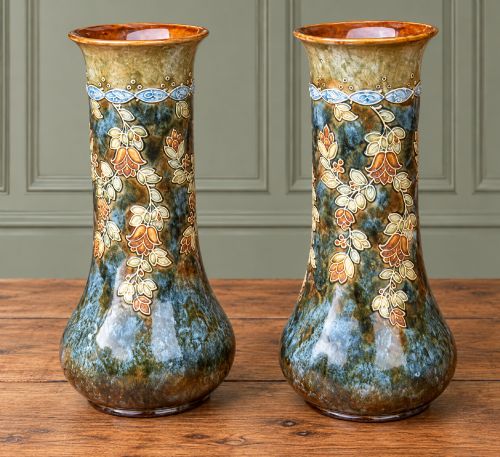
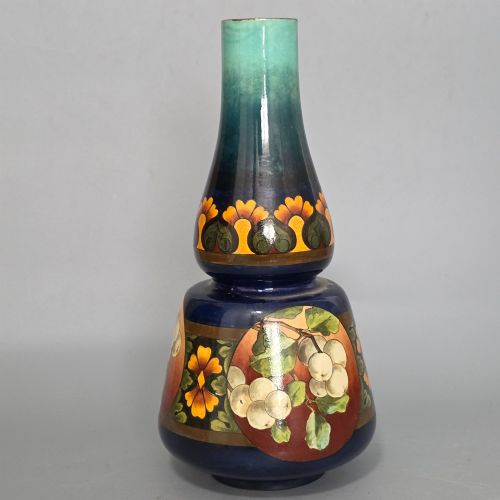
When buyers search for doulton ceramic urns, they encounter a range of forms spanning the late nineteenth and early twentieth centuries, primarily comprising vases, jardinieres and planters. The pieces on this page heavily feature the rich output of the Lambeth and Burslem potteries during the Victorian, Art Nouveau and Arts and Crafts periods.
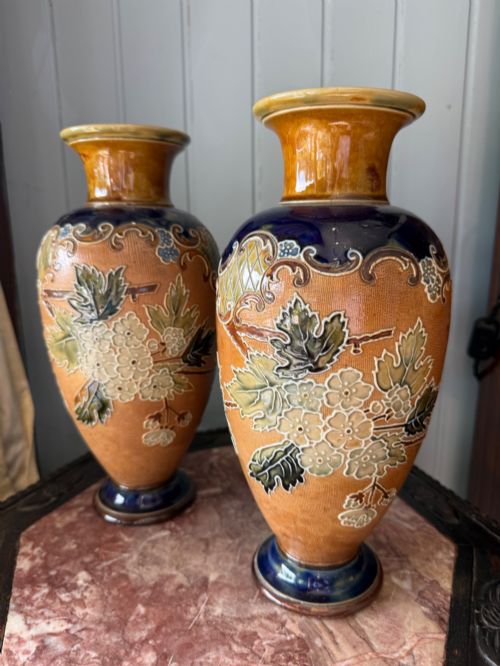
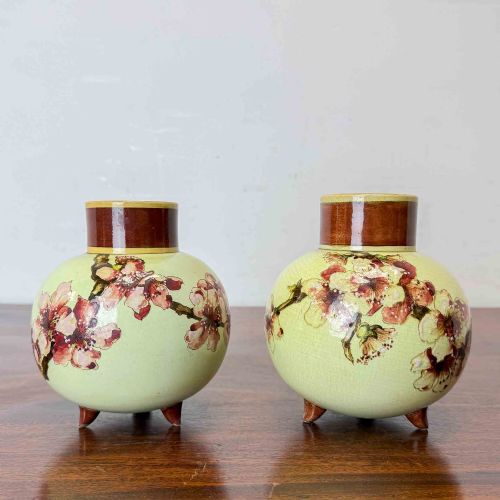
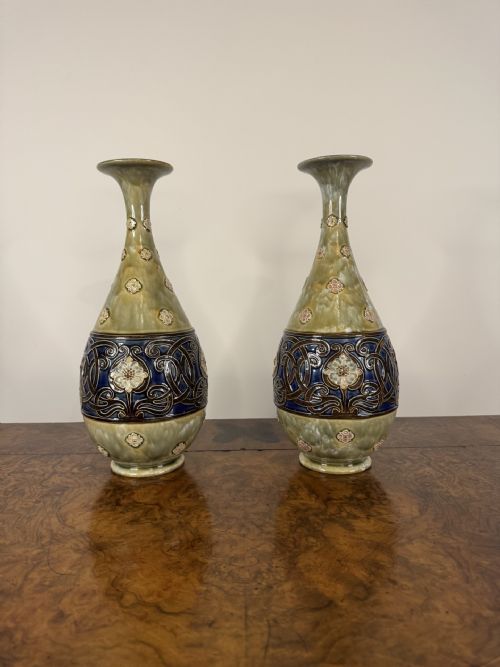
Vessels from these eras vary from robust salt-glazed stoneware baluster vases to delicate hand-painted faience and earthenware beakers. Makers utilised distinct styles such as Intarsio, Slaterware and Carrara Ware, resulting in diverse profiles ranging from standard baluster shapes to elaborate multi-part jardiniere stands.
Materials and Techniques
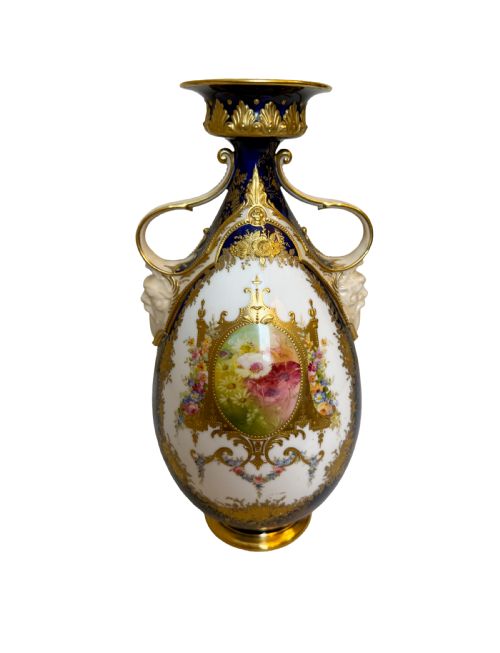
The physical construction of these ceramics relies on durable stoneware, earthenware and porcelain bodies shaped into vases and planters. Artisans applied salt glazes, rich enamel decoration and gold leaf accents to enhance the textured surfaces.
Decoration often involved hand-painted foliage, raised pate-sur-pate motifs, or impressing lace patterns directly into the clay body before firing. Skilled modellers manipulated the paste to achieve specific floral and abstract patterns associated with Art Nouveau design.
Doulton Ceramic Urns Retail Price Guide 2026
Typical asking prices for doulton ceramic urns among the pieces listed under this phrase on Sellingantiques today, from the lower quarter to the upper quarter. They describe what is for sale here now, not the wider market.
The listings on this page span the 16th Century to the 1920s, concentrating heavily on Victorian and Edwardian stoneware and faience.
Assessing Quality and Execution
Quality in these ceramics rests on the crispness of the impressed or incised ornamentation and the control shown during the firing process. Pieces bearing the signature or monogram of notable studio artists command greater attention due to the individual skill applied to each brushstroke or incised line.
The integration of complex glazes, such as the matte finishes of Carrara Ware or the glossy enamel highlights on Slaterware, dictates the refinement of an object. Balanced proportions in matched pairs and the complexity of decorative schemes differentiate standard production items from masterworks.
Alice Euphemia Thatcher·Louisa Wakely·Eliza Simmance·John H Plant·Emily Edwards·Emily Stormer·Ethel Beard·Florence Barlow
The Doulton Ceramic Urns Glossary
- Stoneware
- A robust, vitrified pottery body fired at high temperatures until impermeable to liquids. It forms the durable foundation for much of the Lambeth output.
- Faience
- Tin-glazed earthenware decorated with painted designs before a final glaze firing. This technique allowed artists to produce vivid floral panels.
- Slaterware
- A decorative technique involving the pressing of real lace or fabrics into damp clay to create textured surfaces. Artisans then highlighted these textured areas with coloured enamels and gold leaf.
- Baluster
- An architectural shape featuring a rounded body tapering toward a narrow neck and expanding at the base. Many tall vases on this page follow this traditional silhouette.
- Jardiniere
- A large ornamental pot or stand designed to hold live plants or floral arrangements. These pieces frequently include matching pedestals.
Doulton Ceramic Urns: Frequently Asked Questions
What periods do these pieces date from?
The listings span the late nineteenth century through to the early twentieth century, capturing the height of Victorian and Edwardian studio pottery production.
Most items originate between 1880 and 1920, aligning with the rise of the Art Nouveau and Arts and Crafts movements.
How were these vases displayed originally?
Vessels such as large baluster vases and jardiniere sets stood in prominent domestic reception rooms, entrance halls and Victorian conservatories.
Planters and large urns frequently accommodated indoor palms or heavy floral displays to suit the decorative tastes of the period.
How do I identify individual artists?
Many studio pieces feature incised monograms or full signatures scratched directly into the base by the decorator alongside factory stamps.
Reference marks allow collectors to trace specific items to Lambeth artists who specialised in pate-sur-pate, floral painting or incised foliage.
Are these ceramics waterproof?
Salt-glazed stoneware and glazed porcelain bodies are naturally vitrified and hold water safely for floral arrangements.
Earthenware and faience items benefit from cautious handling when used with water due to the porous nature of earlier clay bodies.