



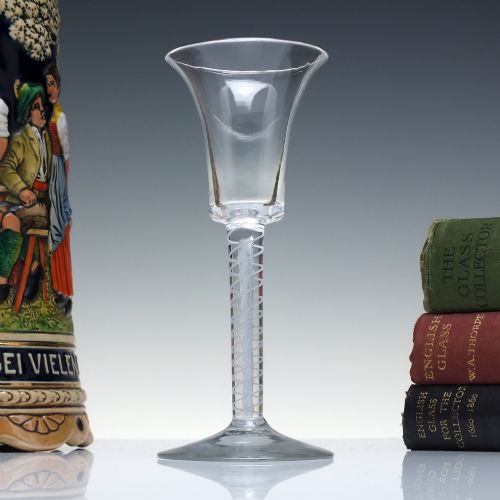
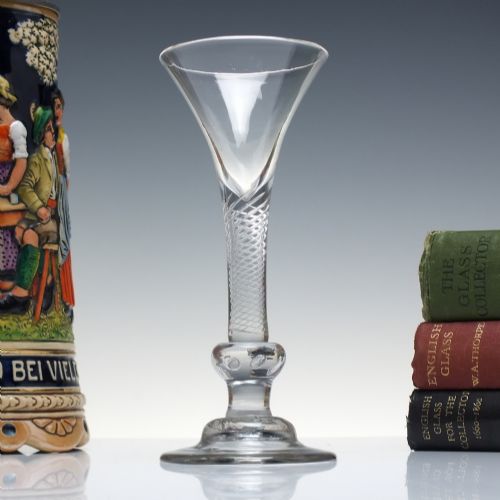
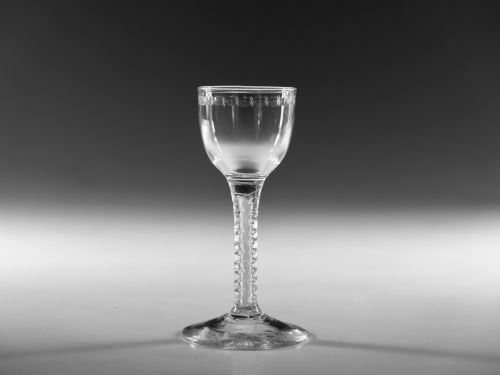
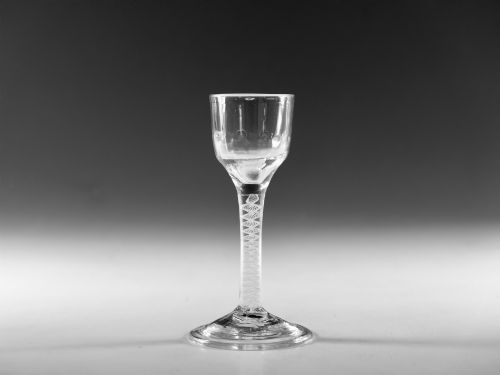
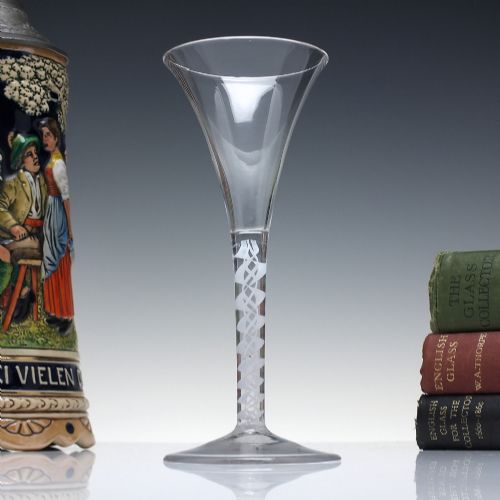
Twist Stem Drinking Glass
A twist stem drinking glass brings tactile weight and optical movement to the table, pairing historical craftsmanship with functional elegance.
Twist Stem Drinking Glass
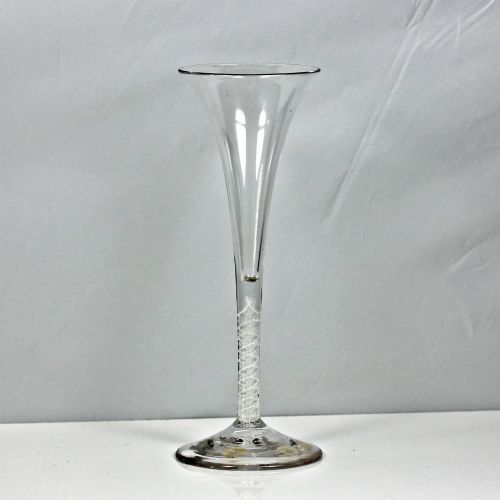
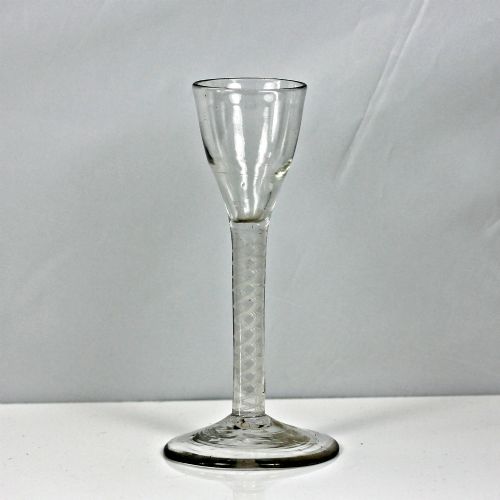
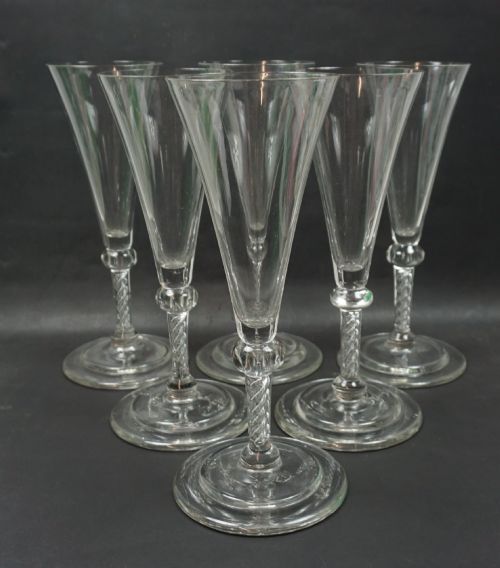
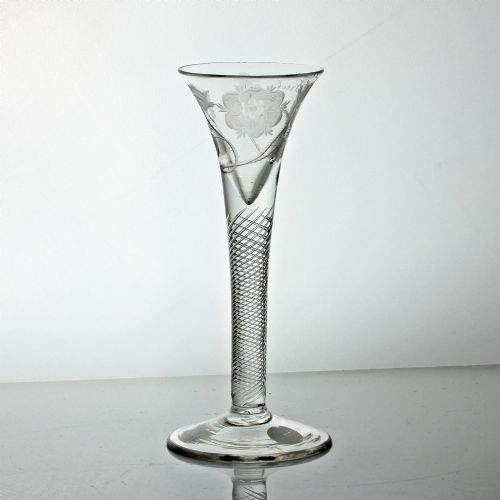
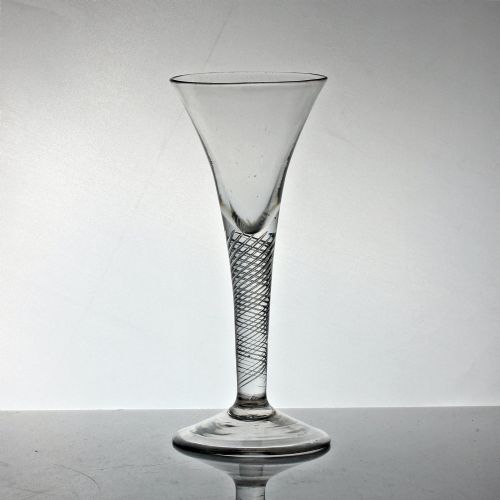
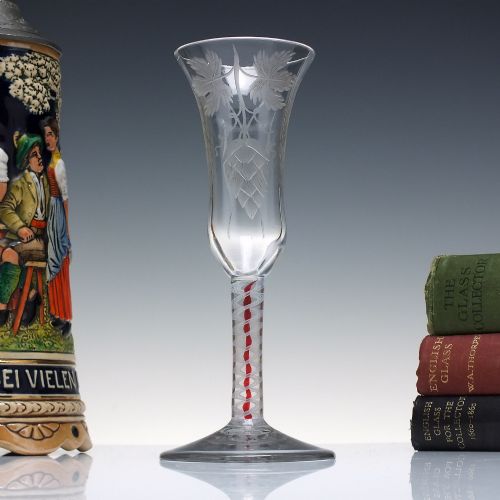
A twist stem drinking glass spans forms such as wine glasses, ale glasses, champagne flutes, cordials, and sweetmeat glasses, predominantly originating from the eighteenth century and the Georgian era.
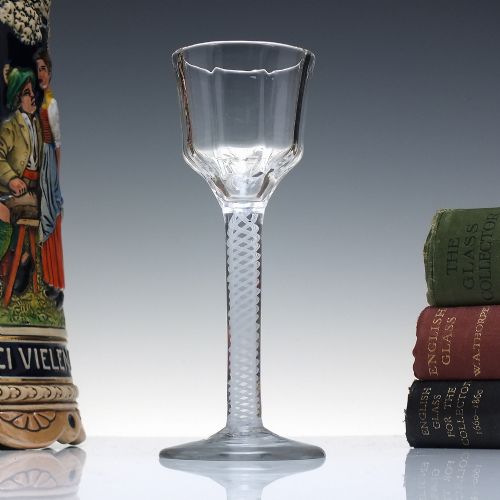
Buyers will most frequently encounter eighteenth-century Georgian specimens featuring trumpet, ogee, flared bucket, or flute-moulded bowls resting on intricate internal glass threads.
The selection ranges from standard wine vessels to taller flutes and ale glasses, occasionally displaying historical engravings like Jacobite or anti-Jacobite motifs.
Manufacturing Materials and Stem Techniques
These vessels utilise lead glass, flint glass, and lead crystal, which provide the high refractive index and material clarity necessary to display internal stem formations.
Makers formed internal optical channels by trapping air bubbles within the molten metal before drawing and twisting the stem, or by incorporating white enamel threads in single, double, or mixed twist configurations.
Object types include wine glasses, ale glasses, champagne flutes, cordial glasses, and sweetmeat glasses alongside Georgian revival examples.
Evaluating Quality and Design Complexity
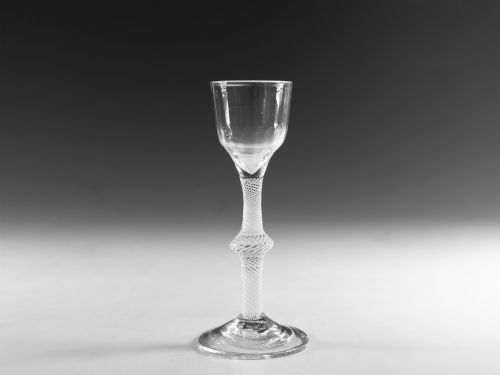
Quality rests upon the complexity of the internal stem construction, distinguishing straightforward single air twists from elaborate double series opaque twists, triple twists, and multi-knop or composite stems.
Clarity of the metal, presence of domed feet, and precision in bowl forms such as ribbed ogees or flute-moulded profiles separate standard examples from highly refined pieces.
The Twist Stem Drinking Glass Glossary
- Air twist
- A stem formation created by stretching imprisoned air bubbles into spirals within the glass. This technique produces delicate threads that catch the light.
- Opaque twist
- A stem containing white enamel glass rods drawn into spiral threads. These create solid white lines running through the transparent stem.
- Ogee bowl
- An S-curve profile curving outward at the rim and inward at the base. This shape helps concentrate the aromas of the drink.
- Composite stem
- A stem built by joining different sections, often combining an air twist or opaque twist with a plain or knop-collared section above a baluster base.
- Sweetmeat glass
- A small vessel designed for serving confectionery or small preserved fruits. They often feature flared bowls and wide supporting feet.
Twist Stem Drinking Glass: Frequently Asked Questions
How do I identify an air twist from an opaque twist?
Air twists contain clear internal channels formed by elongated bubbles that refract light through transparent metal.
Opaque twists incorporate solid white enamel rods within the stem, producing distinct white threads that remain visible against any background.
What is a composite stem glass?
A composite stem glass combines two or more distinct manufacturing styles within a single stem, such as an opaque twist joined to a knopped or baluster section.
These complex forms represent advanced eighteenth-century glassmaking techniques and often support heavier bowls like sweetmeat or cordial containers.
How were twist stem glasses used historically?
These vessels served aristocratic and middle-class dining tables for consuming wine, ale, champagne, and cordials during the Georgian period.
Specialist forms catered to specific drinks, such as narrow flutes for sparkling wine and shallower bowls for fortified wines or sweetmeats.
Can I use antique twist stem glasses today?
These glasses remain functional, though their age and lead glass composition require careful hand washing without abrasive materials.
Many collectors prefer to display them or reserve them for special toasts to preserve the fragile historical lead crystal and delicate stem formations.
What distinguishes a cordial glass from a wine glass?
Cordial glasses generally feature smaller bowls designed for potent spirits or liqueurs, paired with sturdy conical feet or taller stems.
Wine glasses offer larger capacities and varied bowl profiles like trumpets or ogees to suit table wines of the eighteenth century.