


Trumpet Bowl Wine Glass
These trumpet bowl wine glass pieces are Georgian drinking vessels defined by their flared, bell-like bowls, offering period elegance for the collector.
Identifying trumpet bowl wine glass pieces
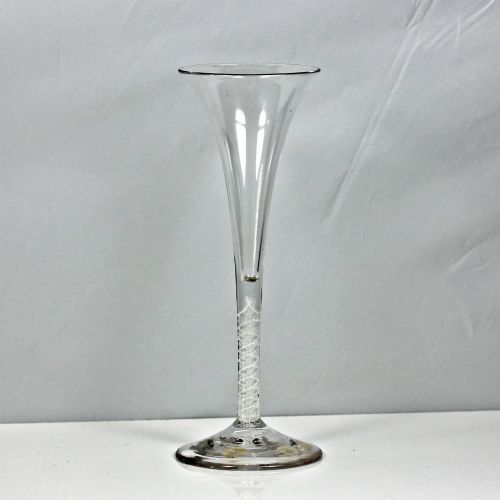
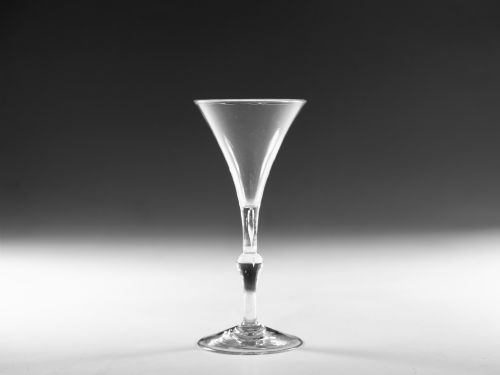
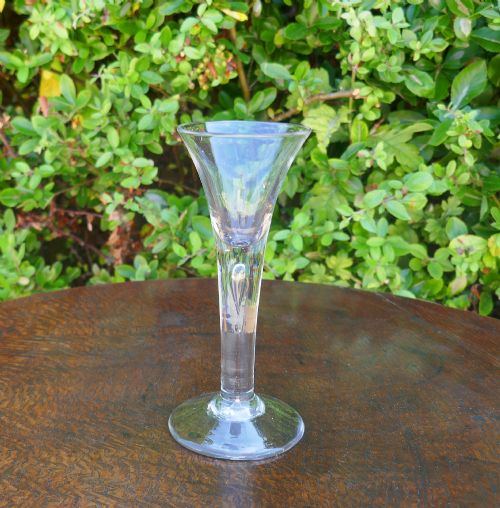
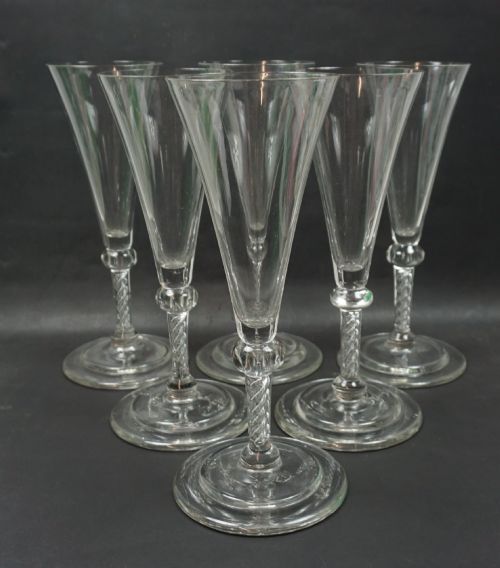
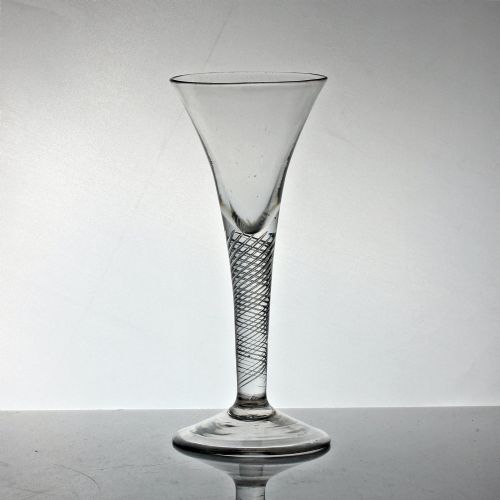
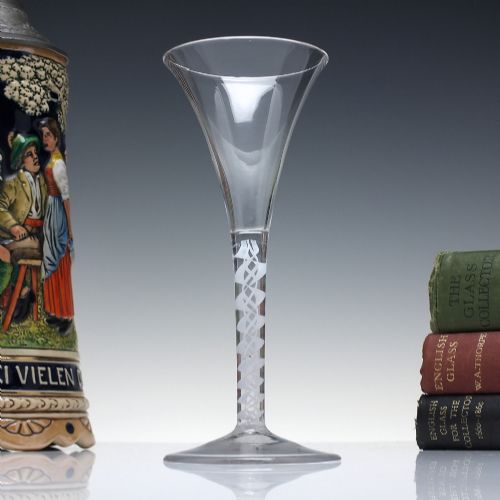
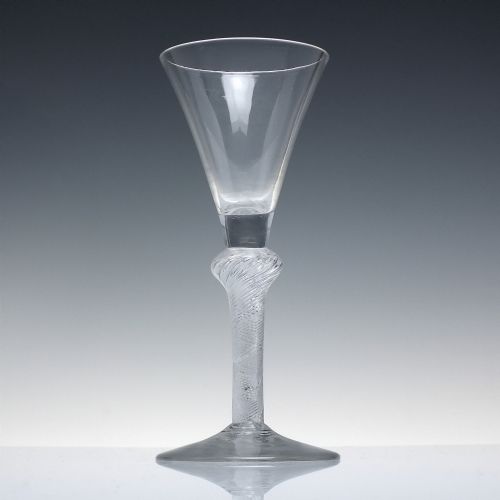
A trumpet bowl wine glass is a Georgian drinking vessel characterised by its distinctively flared bowl shape that broadens steadily towards the rim. These pieces originate predominantly from the eighteenth century, spanning several decades of British glassmaking history.
Engraving styles occasionally appear on the bowl, including vine motifs and Jacobite iconography. These glasses represent standard domestic and social tablewares of the Georgian era.
Manufacturing and materials
These vessels are produced from clear glass, lead glass, flint glass, lead crystal, and enamel components. The heavy metal content of lead glass allowed glassmakers to achieve brilliant clarity and substantial weight.
Stems are formed using specialised techniques to encase tiny air bubbles, known as air tears, or to draw out intricate threads of opaque white glass within the stem itself. Bowls are shaped by hand-manipulating the hot metal while rotating the pontil iron.
Retail Price Guide 2026
Typical UK retail prices for trumpet bowl wine glass, calculated from the Sellingantiques database of over a million retail prices indexed since 2003. This retail price guide relies exclusively on Sellingantiques data; no external sources or auction records are used, so the figures do not describe the wider market.
Georgian drinkers kept spare air tears in their stems just to prove the glassblower had not been drinking on the job.
Distinctions in quality
Quality in these vessels rests upon the precision of the stem twist and the balance of the metal. Fine examples display symmetrical air twists or crisp opaque threads without distortion in the glass body.
The Trumpet Bowl Wine Glass Glossary
- Trumpet bowl
- A bowl form that flares outward continuously from the base to the rim, resembling a musical trumpet. This shape directs the wine forward onto the palate.
- Air twist
- A stem formation created by drawing out elongated air bubbles inside the molten glass before twisting the stem. This produces a spiral of internal air channels.
- Opaque twist
- A stem containing threads of white or coloured enamel glass twisted through a clear glass rod. Double series examples combine two different twist formations.
- Folded foot
- A base edge turned underneath during manufacture to create a double layer of glass for added strength. This technique is typical of earlier eighteenth-century work.
- Air tear
- A deliberate small bubble trapped inside the stem or foot of a glass. Glassmakers introduced these as a decorative feature during the manufacturing process.
Frequently Asked Questions
What is a trumpet bowl wine glass?
It is an eighteenth-century drinking vessel with a bowl that flares outward continuously from the stem to the rim.
These glasses were standard dining accessories during the Georgian period and are collected for their distinct stem formations and handmade qualities.
How do you date an 18th century wine glass?
Dating relies on observing the form of the bowl, the construction of the stem, and the manufacturing characteristics of the foot.
Earlier pieces often feature plain stems with folded feet or air tears, while mid-century examples frequently incorporate air twist or opaque twist stems.
Were these glasses used for wine?
Yes, these vessels were designed for consuming wine at the table during the Georgian era.
The smaller capacity of eighteenth-century wine glasses reflects the strength and cost of the wines served at that time.
What does Jacobite-engraved mean?
It refers to decorative engraving associated with secret societies that supported the exiled Stuart dynasty.
Such engraving on a wine glass typically includes specific floral symbols or portraits intended for loyal toasts.