




Antique Trumpet Wine Glass
These antique trumpet wine glass examples bring eighteenth-century English craftsmanship to the table, offering tactile historical drinking vessels that collectors prize for their drawn bowls and twisted stems.
Antique Trumpet Wine Glass
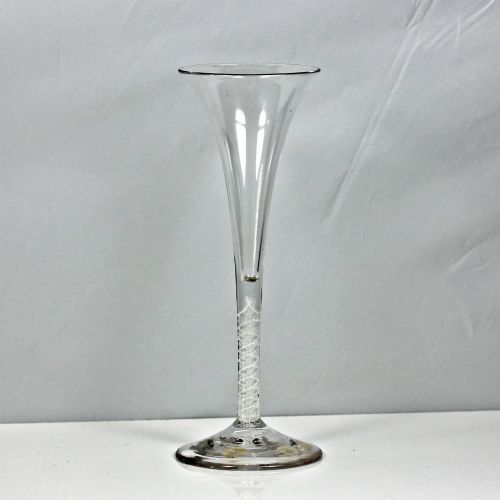
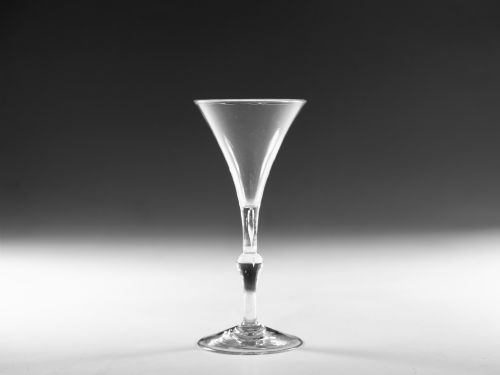
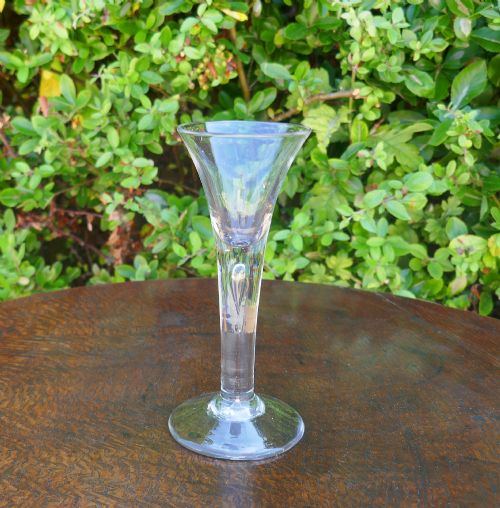
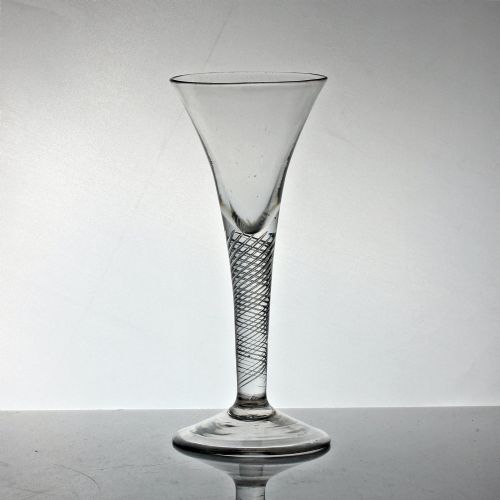
An antique trumpet wine glass represents eighteenth-century English drinking vessels, defined by a distinct flared bowl shape that widens towards the rim. Most pieces found here originate from the Georgian era, spanning the middle decades of that century.
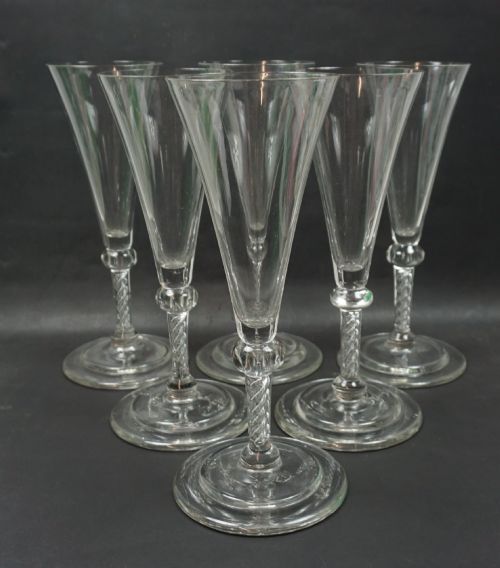
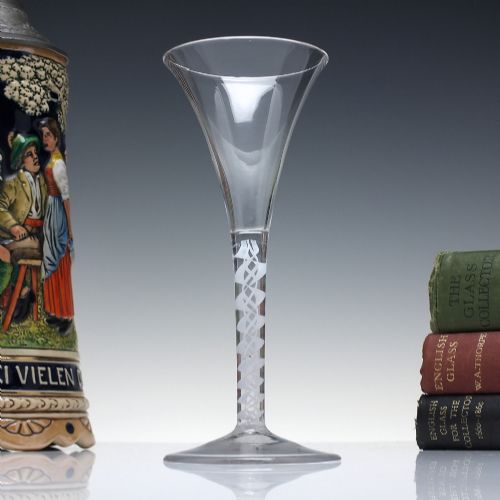
Collectors encounter forms ranging from simple drawn bowls on plain stems to complex variations featuring air twists and opaque white twists within the glass. These glassware items survive from the Georgian period as tangible examples of early manufacturing.
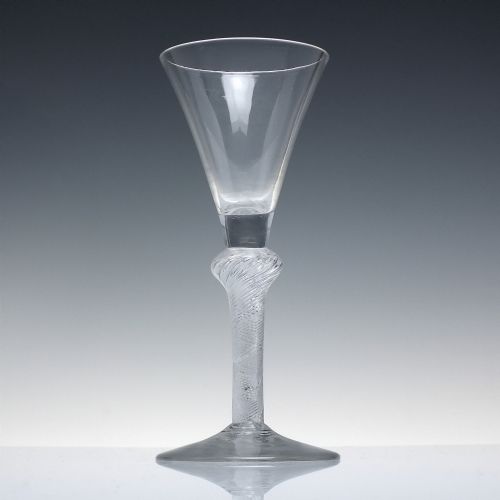
The selection centres on English tavern and dining table glasses, often displaying drawn trumpet profiles alongside balustroid or multi-spiral stem formations. Each antique trumpet wine glass preserves the proportions and weight characteristic of eighteenth-century tableware.
How they were made
Glassmakers shaped these pieces using clear glass, lead glass, and flint glass, manipulating molten material to form the characteristic flared bowls and slender stems. Workers incorporated lead crystal to achieve clarity and weight in the finished vessel.
Techniques included drawing the bowl directly from the stem while hot, which often produced internal air bubbles known as tears trapped inside the glass. Masters also manipulated enclosed air channels to create spiral air twists and opaque enamel threads within the stems.
Antique Trumpet Wine Glass Retail Price Guide 2026
Typical asking prices for trumpet wine glass among the pieces listed under this phrase on Sellingantiques today, from the lower quarter to the upper quarter. They describe what is for sale here now, not the wider market.
Current listings and past archives feature eighteenth-century Georgian pieces produced in clear glass, lead glass, and flint glass with enamel details.
What varies in quality
Quality rests in the precision of the stem formations, where tightly wound air twists or complex double series opaque twists demonstrate superior glasshouse skill. Simpler drawn stems rely entirely on clean lines and balanced proportions.
The Antique Trumpet Wine Glass Glossary
- Trumpet bowl
- A bowl shape that flares outward continuously from the stem to the rim in a profile resembling a musical horn. This form defines the primary silhouette of these eighteenth-century drinking vessels.
- Air twist
- A stem formation containing elongated internal air bubbles drawn into spiral threads during manufacture. Glassmakers achieved this effect by puncturing the hot metal before stretching and twisting the stem.
- Opaque twist
- A stem structure featuring threads of white or coloured enamel glass enclosed within clear metal. These threads are typically arranged in single or double series patterns.
- Folded foot
- A base edge turned underneath and pressed flat during shaping to create a thickened, rounded rim. This technique added stability and strength to eighteenth-century tableware.
- Balustroid
- A stem style that echoes the stout, swelling contours of architectural balusters while maintaining a slender profile. It often appears on pieces dating from the earlier decades of the eighteenth century.
Antique Trumpet Wine Glass: Frequently Asked Questions
What are air twists in old glassware?
Air twists are elongated bubbles trapped inside the stem and pulled into spiral threads during the hot glassmaking process. They catch the light and create intricate internal patterns.
Glassmakers manipulated these air channels to produce single or multi-spiral designs within clear lead glass stems.
Were these glasses used for wine?
Yes, these vessels served wine at eighteenth-century dining tables and gatherings. Their modest capacity reflects the stronger fortified wines and smaller pours common during the Georgian period.
Today, collectors use them primarily for display or careful appreciation rather than everyday dining.
What is a folded foot on a glass?
A folded foot is a base where the outer edge of the glass is turned underneath and fused back against the underside. This created a smooth, reinforced rim that protected the base from chipping.
This technique appears frequently on drinking vessels from the first half of the eighteenth century.