
Antique Glass Wine Stem
An antique glass wine stem brings tactile weight and historic clarity to the table, tracing centuries of drinking vessels from Georgian twists to Victorian rummers.
Antique Glass Wine Stem
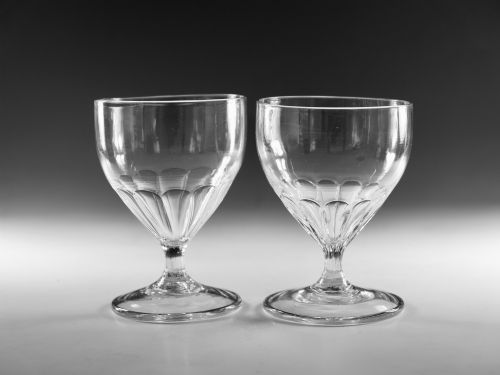
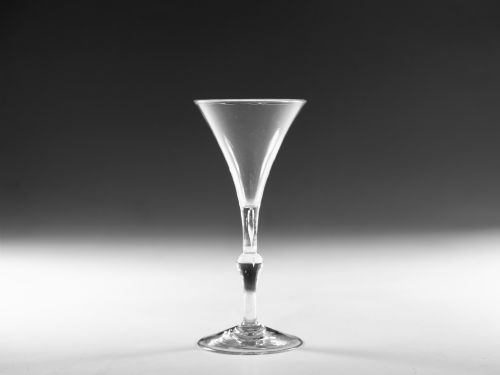
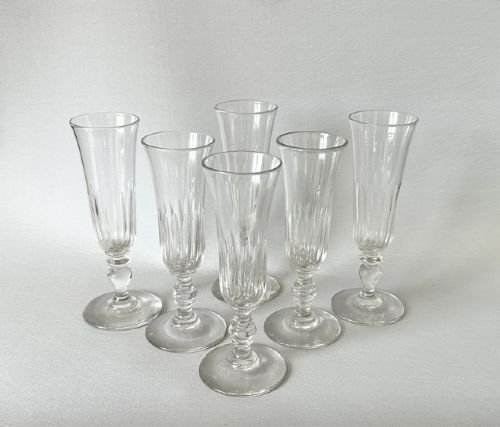
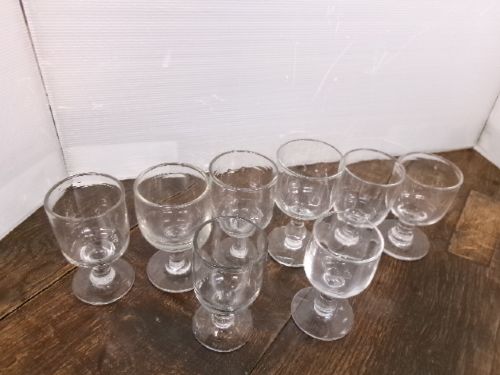
When searching for an antique glass wine stem, collectors encounter drinking vessels spanning the eighteenth, nineteenth, and early twentieth centuries, dominated by Georgian and Victorian forms. These pieces include wine glasses, rummers, hock glasses, and goblets designed for social dining and celebration.
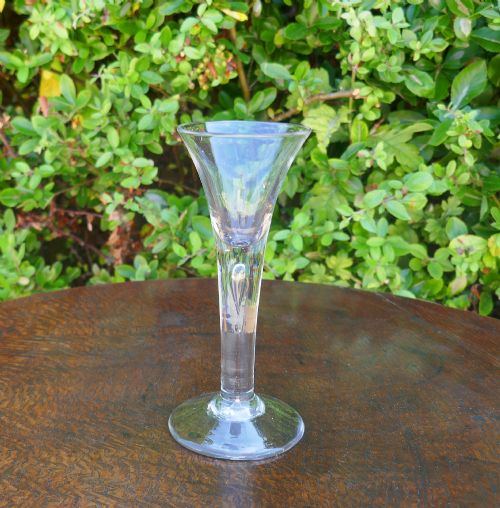
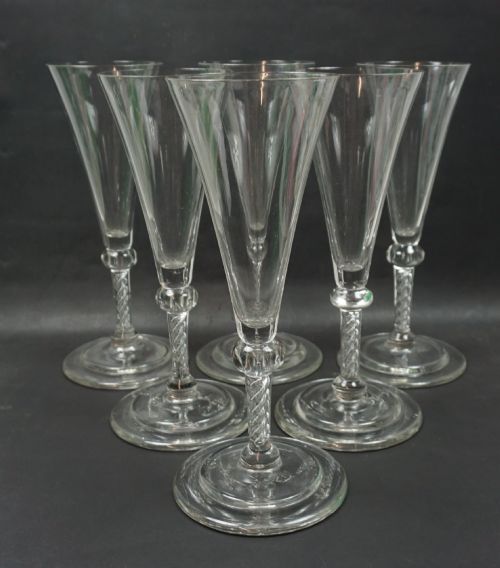
The eighteenth-century examples lean heavily towards English lead glass with engineered stems, while later nineteenth-century pieces introduce coloured glass, cut decoration, and continental enamelling. Buyers frequently meet stems shaped by air twists, opaque twists, balusters, and plain configurations.
Materials and construction methods
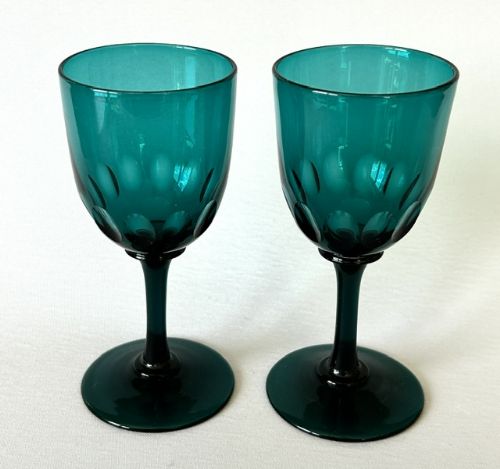
The primary material across British and continental pieces is lead glass or clear lead crystal, prized for its refractive properties and weight. Makers also utilised flint glass, coloured glass for green roemers, and applied white enamel details.
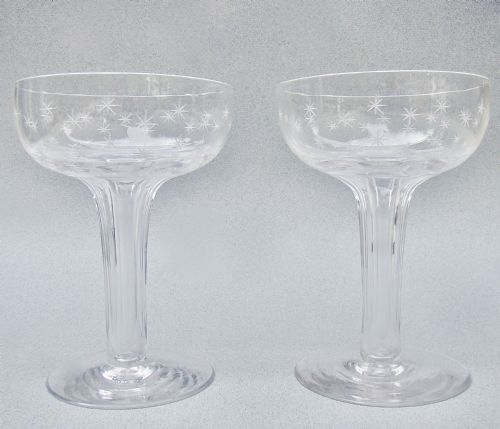
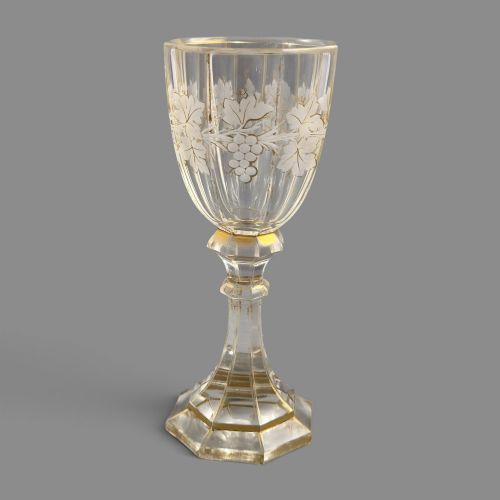
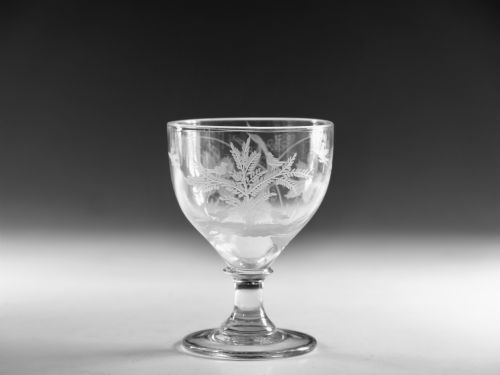
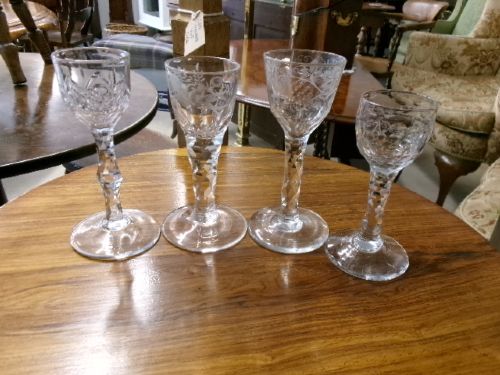
Stems were formed through various methods, from pulling and moulding plain profiles to inserting air bubbles, twisting threads of white enamel inside the glass, or faceting the stem by hand. Bowls often featured wheel engraving, star-etching, or ribbed moulding before being joined to a wide foot base.
Listings feature lead glass, clear lead crystal, flint glass, and enamel across Georgian and Victorian periods.
Markers of distinction and finesse
Quality in these stems rests upon the precision of the glassmaker's hand, particularly in the regularity of internal twists and the crispness of facet cutting. Superior pieces display harmonious proportions between the bowl, stem, and foot without distracting optical distortions.
The depth and detail of engraved or enamelled decoration separate standard utility glassware from exhibition pieces. Exceptional examples also show careful finishing on the pontil mark and a resonant, clear ring when struck gently.
Moser Bohemian·Theresienthal
The Antique Glass Wine Stem Glossary
- Air twist
- A stem containing elongated bubbles of air drawn into spirals during manufacture. This technique creates delicate internal threads that catch the light.
- Opaque twist
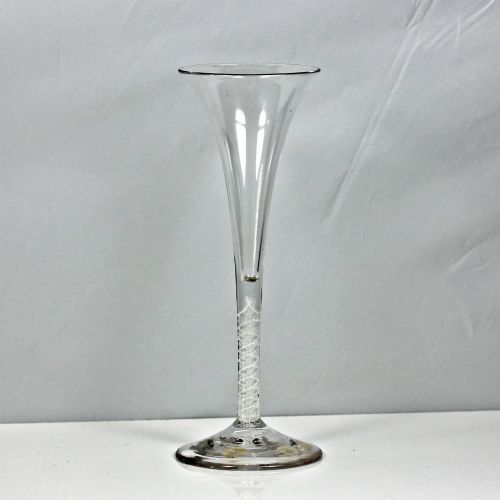
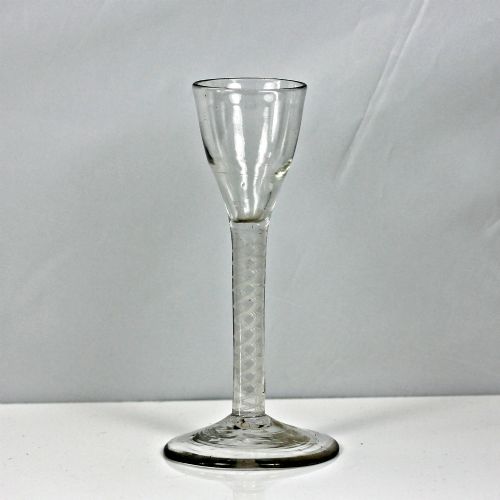
- A stem incorporating one or more threads of white or coloured enamel glass twisted within clear lead glass. These threads form single, double, or multi-spiral patterns.
- Baluster stem
- A heavy, thick stem shaped with swelling knots and profiles reminiscent of architectural balusters. These robust forms are typical of earlier eighteenth-century vessels.
- Roemer
- A continental drinking vessel featuring a wide bowl atop a cylindrical hollow stem studded with raspberry prunts. They appear in olive and Bristol green hues.
- Pontil mark
- A rough scar on the base of the glass where the punty rod was snapped off after blowing. Its presence indicates traditional hand-finished manufacture.
Antique Glass Wine Stem: Frequently Asked Questions
How do I date an antique wine stem?
Dating relies on examining the stem form, manufacturing technique, and material composition. Eighteenth-century pieces often feature lead glass with baluster or twist stems, while Victorian examples lean towards heavier cutting, coloured glass, and etched patterns.
Foot construction and pontil marks also offer clues, as older vessels frequently exhibit pontil scars and folded feet. Comparing the bowl shape and engraving style to documented period examples helps narrow the decade of origin.
What is an opaque twist stem?
An opaque twist stem contains fine threads of white or coloured enamel glass encased within clear lead glass. Craftsmen twisted these threads into single or double spiral formations while shaping the hot metal.
This decorative technique gained popularity in England during the mid-eighteenth century. The complexity of the internal spiral often indicates the skill level of the glasshouse.
Are these glasses safe to use?
While these pieces were originally created for dining and drinking, antique lead glass requires gentle handling today. Hand washing in lukewarm water with mild soap is essential, as modern dishwashers can cloud the historic material and thermal shock can crack it.
Many collectors prefer to reserve them for special occasions or display. Careful use preserves the surface engraving and the integrity of the delicate stems.
Why do some stems have hollow centres?
Hollow stems appear on specific regional forms like continental roemers and certain nineteenth-century champagne flutes. This design reduced the weight of heavy glass vessels and altered how liquid sat within the bowl.
In green roemers, the hollow stem connected to a wide round foot that provided stability on tavern tables. It represents a distinct stylistic tradition separate from solid drawn stems.