
Traditional Wooden Credenza
A traditional wooden credenza is a substantial storage piece built to anchor a dining room or hallway.
Traditional Wooden Credenza
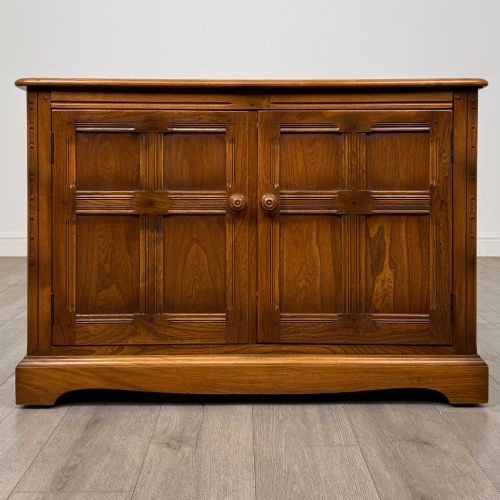
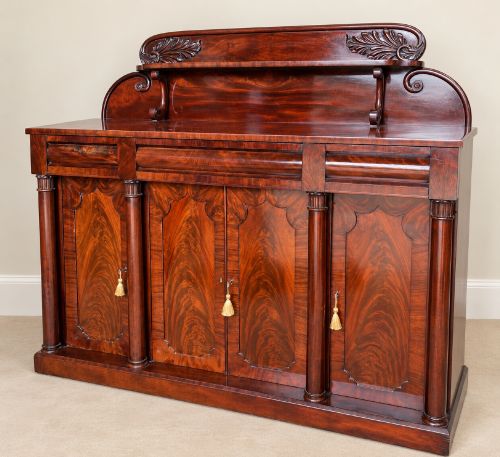
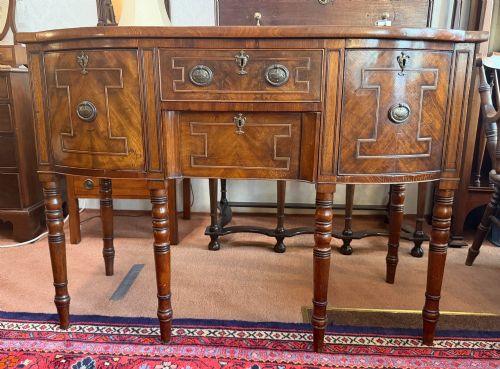
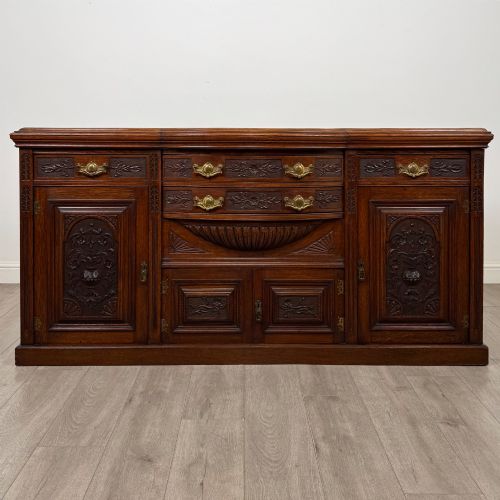
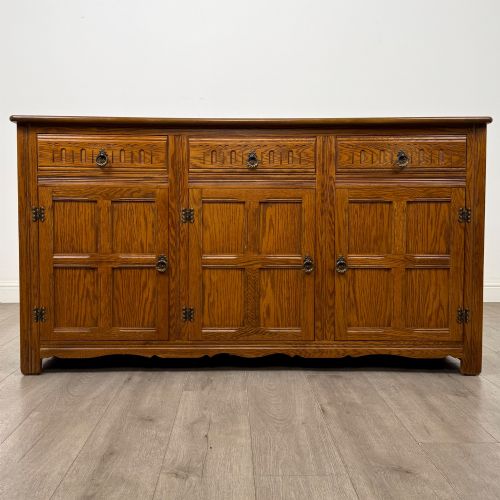
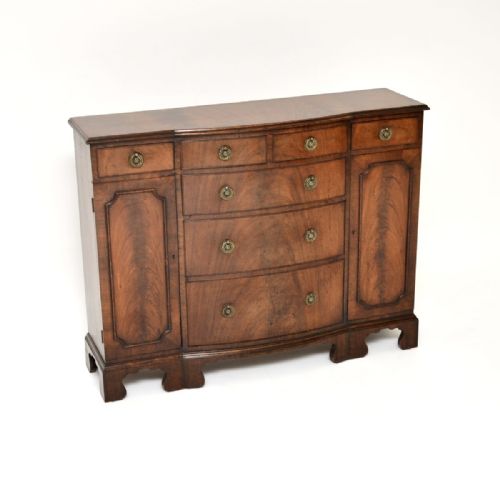
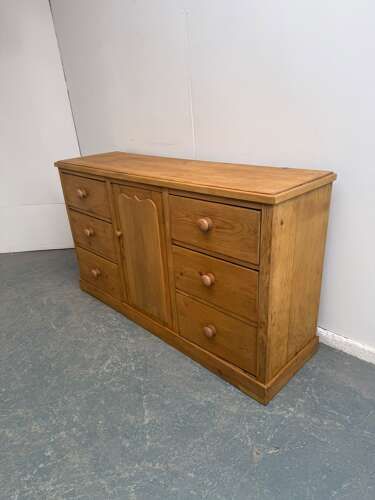
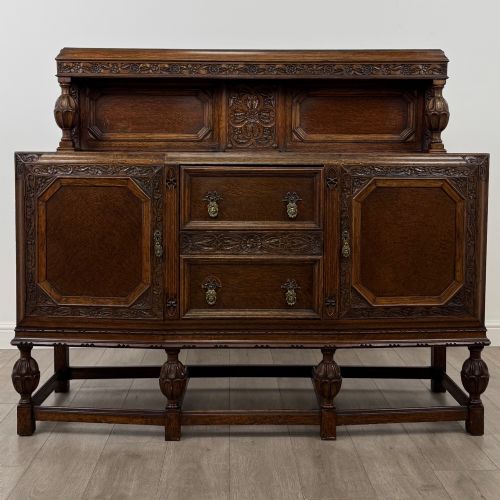
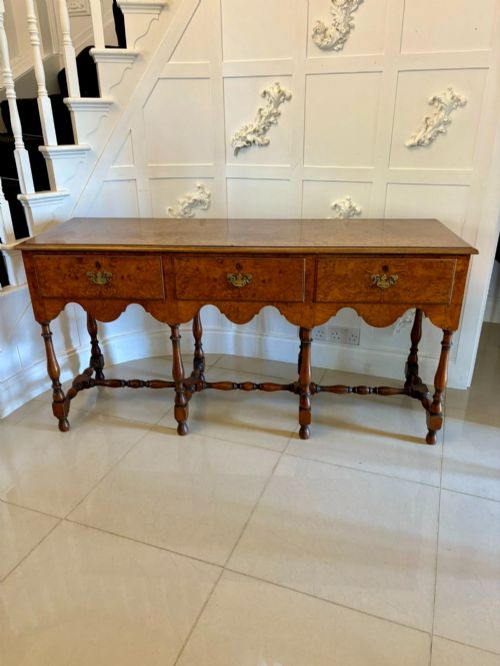
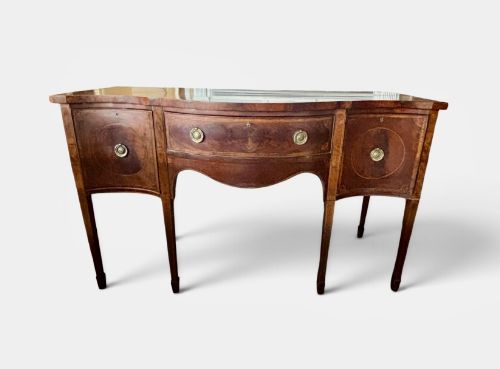
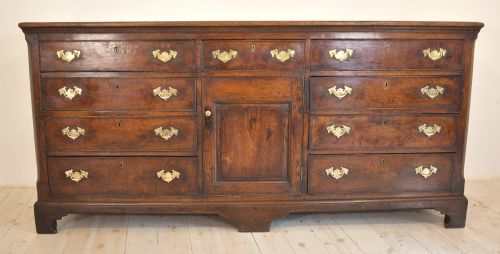
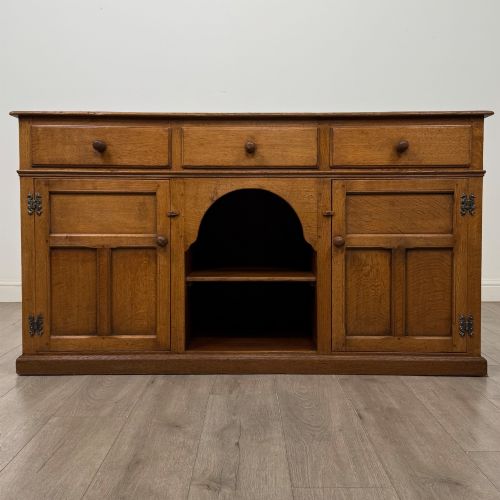
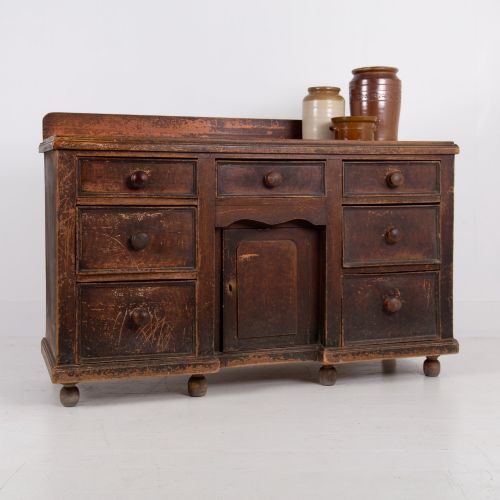
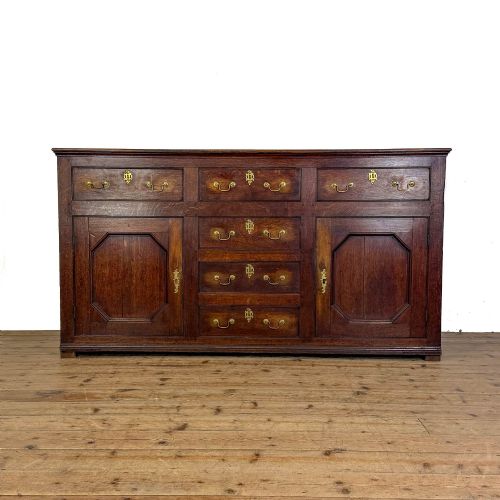
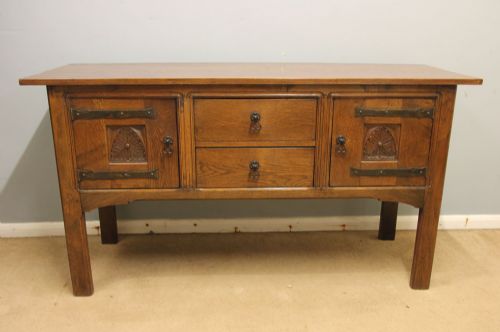
When searching for a traditional wooden credenza, buyers encounter a diverse group of large storage items spanning sideboards, dresser bases, and cabinets. The pieces on this page originate from periods ranging from the eighteenth century through the Edwardian era and the early twentieth century. Common forms include bow-front and breakfront sideboards alongside low kitchen dresser bases and country cupboards.
Mahogany and oak dominate the selection, appearing alongside walnut, pine, elm, cherrywood, and teak. Stylistic influences vary from classical Georgian lines and Regency revival to robust Victorian carving, Jacobean revival, and rustic country execution. Buyers are most likely to meet mahogany sideboards from the nineteenth century or golden oak cupboards from the Edwardian period.
How they were made
Cabinetmakers constructed these pieces primarily using solid hardwoods such as mahogany, oak, and walnut, often enhanced by decorative flame mahogany or burr walnut veneers. Regional vernacular makers utilised secondary timbers like elm and pine for internal construction and drawer linings. Surface decoration frequently relied on natural timber grain, wax finishes, original paint, or intricate hand carving.
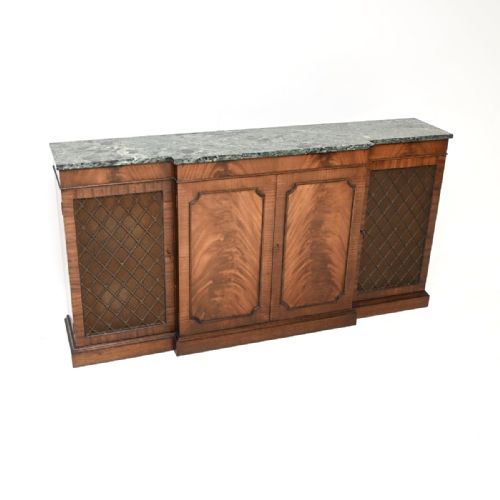
Functional hardware relied heavily on brass fittings, whilst iron elements reinforced structural joints on utilitarian storage furniture. Construction methods combined traditional joinery like dovetailing for drawers with mortise and tenon frames for doors and carcases. Marble inserts also appear on selected twentieth-century pieces to provide durable serving surfaces.
Listings feature oak, mahogany, walnut, pine, elm, cherrywood, and teak across eighteenth, nineteenth, and twentieth-century periods.
What varies in quality
Conversely, utilitarian variants intended for country kitchens or domestic service prioritise robust practicality over refined ornament. The presence of original paint, untouched waxed finishes, or period-correct structural timber marks the upper tier of surviving examples. Variations in carving depth and the integrity of internal shelving further separate standard utility furniture from finer formal reception room pieces.
The Traditional Wooden Credenza Glossary
- Bow-front
- A convex, curved cabinet front that projects outward in a smooth arc. This shape gained popularity during the Georgian and Regency periods to soften the room's geometry.
- Breakfront
- A large cabinet design where the central section projects forward from the flanking outer sections. This architectural arrangement creates depth and visual interest on formal sideboards.
- Dresser base
- A low utilitarian table fitted with drawers and frequently a lower shelf known as a pot board. These items originated in working kitchens before transitioning to dining spaces.
- Linenfold
- A carved wood panel motif resembling folded fabric sheets. This decorative technique appears frequently on revival pieces from the Edwardian era.
- Serpentine
- A shaped furniture front featuring a concave centre flanked by two convex ends. The flowing line requires advanced woodworking skill to execute properly.
- Pot board
- An open lower shelf built into the base of a dresser for storing heavy kitchen pots and ceramic vessels. It provides structural stability to the legs.
Traditional Wooden Credenza: Frequently Asked Questions
What is a traditional wooden credenza?
A traditional wooden credenza encompasses heavy storage furniture designed for dining rooms and living spaces, including sideboards, buffet cabinets, and dresser bases. These items provide expansive surface areas alongside enclosed cupboard and drawer space.
They serve primarily to store tableware, linen, and dining accessories while anchoring the room's decor.
How do I date a wooden sideboard?
Dating relies on observing timber choices, hardware types, and stylistic ornament such as Georgian inlay or Victorian carving. Eighteenth-century pieces often feature solid mahogany with hand-dovetailed drawer construction.
Later Edwardian examples frequently utilise golden oak or burr walnut veneers alongside machine-finished components.
Where were these cabinets used?
These storage units historically belonged in formal dining rooms, drawing rooms, or large country kitchens. Sideboards served the dining room for carving meat and storing silver.
Dresser bases functioned in domestic kitchens for food preparation and everyday crockery storage.
How do I care for antique wood?
Maintenance requires keeping wooden surfaces away from direct heat sources and strong sunlight to prevent timber splitting and fading. Regular application of traditional beeswax helps nourish the grain and preserve the surface patination.
Avoid modern silicone sprays that can damage historic finishes.