
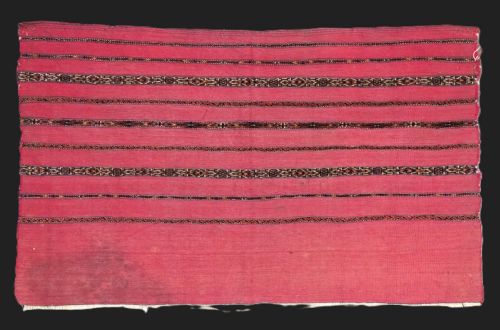


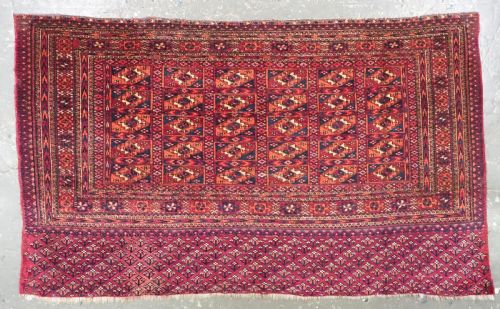


Tekke Chuval Face
When you search for a tekke chuval face, you enter the distinctive world of Central Asian tribal weaving.
Tekke Chuval Face
A tekke chuval face represents the front panel of a large tribal storage bag made by nomadic weavers in Central Asia. These textiles display precise geometric arrangements, most notably repetitive guls and specialised formats like the kizil or ak variations.
Most examples you encounter date from the mid-nineteenth century to around nineteen hundred, reflecting the traditional aesthetic of Turkmen tribal groups. The format typically functions as a wall hanging or decorative textile in modern interiors, retaining its original nomadic character.
Makers utilised structured layouts featuring rows of primary motifs, sometimes incorporating borrowings from neighbouring Salor or Saryk traditions. The recurring presence of hanging loops on certain pieces indicates their functional origin inside a traditional Turkmen tent.
Materials and construction
Weavers relied primarily on wool foundation and pile, paired with cotton elements for structural contrast or specific detailing. Natural dyes provide the characteristic palette seen across these tribal textiles, yielding deep reds, browns, and contrasting secondary tones.
The construction involves tight knotting and a very fine weave, which allows intricate gul patterns to maintain sharp geometric clarity. Certain pieces incorporate silk highlights to accentuate particular design elements within the field.
Listings span periods from the mid-nineteenth century to nineteen hundred, constructed in wool, cotton, and natural dyes.
The spectrum of quality
Quality rests heavily on knot density and the precision of the weave, where finer examples display exceptional clarity in the geometric guls. The choice and saturation of natural dyes also dictate distinction, particularly when cochineal or rich madder hues dominate the field.
Rarity of design layout influences the standing of a piece, with uncommon formats likeaina guls or specific turreted gul configurations commanding greater attention. The overall condition of the wool pile and the survival of original side cords or hanging loops further separate standard examples from finer works.
The Tekke Chuval Face Glossary
- Chuval
- A large tent storage bag used by nomadic tribes for household possessions. The face represents the decorative front portion preserved after the utility back vanished.
- Gul
- A primary medallion motif repeated across Turkmen carpets and storage bags. These octagonal or polygonal forms identify specific tribal affiliations.
- Torba
- A smaller storage bag format related to the chuval, often featuring similar guls and tribal weaving structures. It shares the same nomadic origins.
- Elem
- The decorative lower border panel of a textile, frequently filled with floral or tree designs below the main field. It anchors the primary composition.
- Kizil
- A descriptive term denoting a red ground colour variation characteristic of certain tribal weavings. This palette defines specific regional groups.
Tekke Chuval Face: Frequently Asked Questions
How were these bags used?
Nomadic families used chuvals inside felt tents to store blankets, clothing, and household goods. The sturdy wool construction protected the contents from dust and dampness.
Over time, collectors separated the decorative faces from the plain backs for display. Many surviving examples retain original hanging loops for mounting on walls.
How do I date a piece?
Dating relies on assessing the wool quality, dye palette, and structural characteristics of the weave. Pieces from the mid-nineteenth century often display softer wool and specific tribal layouts.
Items from around nineteen hundred tend to feature sharper synthetic influences or different structural rhythms. Comparing the gul designs to dated archival examples helps narrow the period.
What are guls?
Guls are the repeating octagonal medallions that form the core pattern of Turkmen tribal rugs and bags. Different tribes utilised distinct gul shapes to signal their specific heritage.
Tekke weavers frequently incorporated their own primary guls alongside borrowed Salor or Saryk motifs. The precision of these medallions indicates the weaver's skill.