
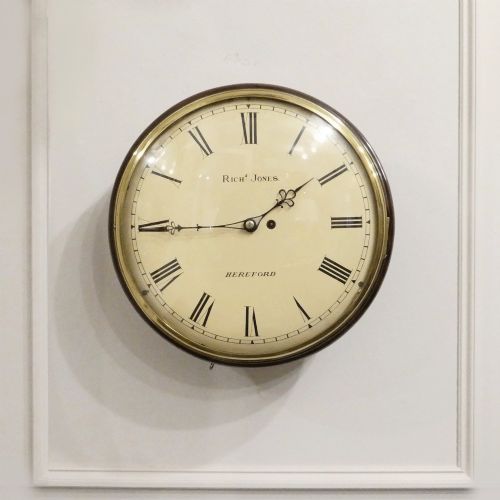
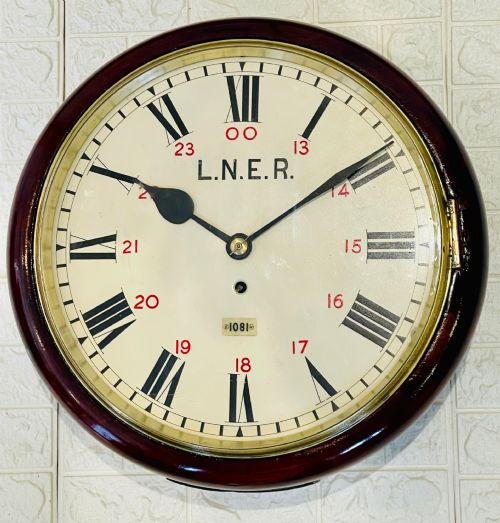
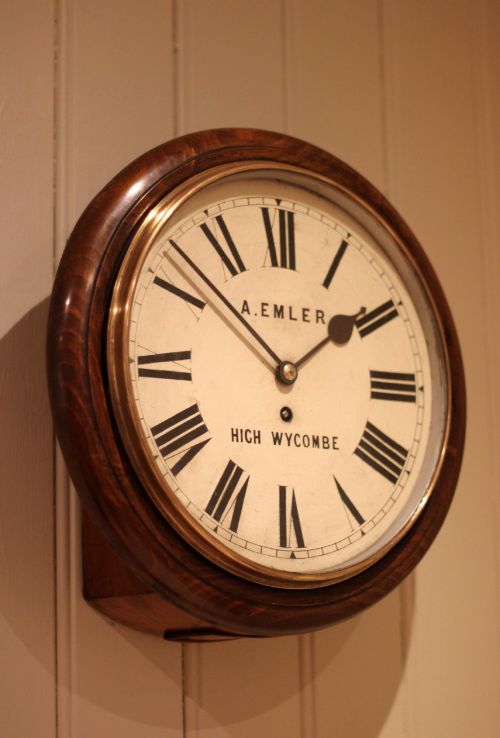
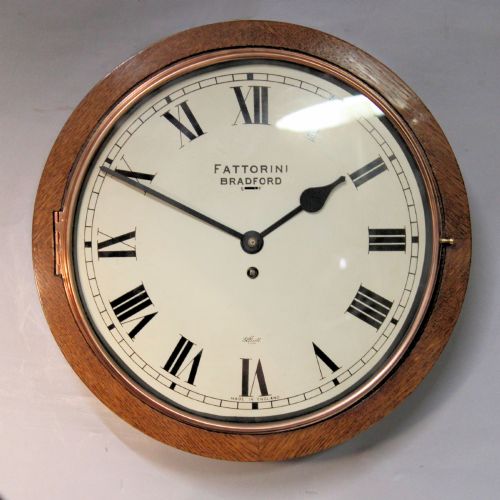
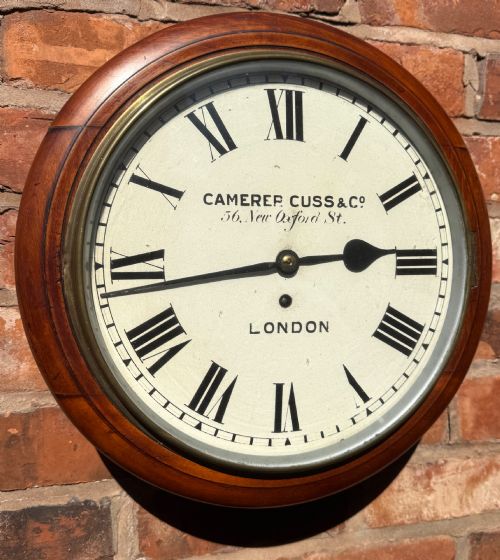

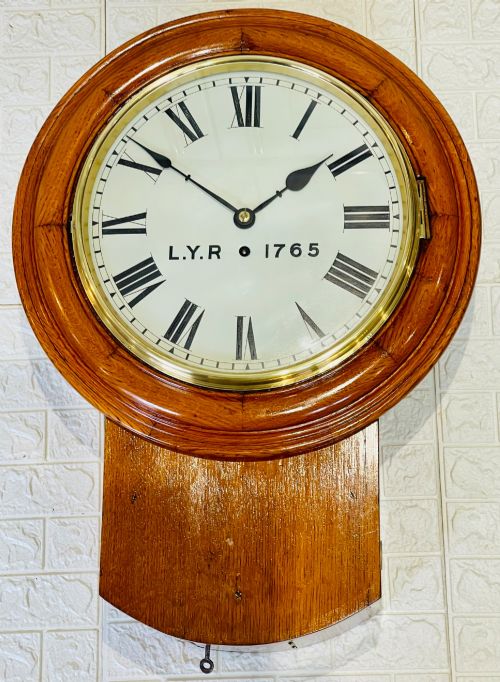
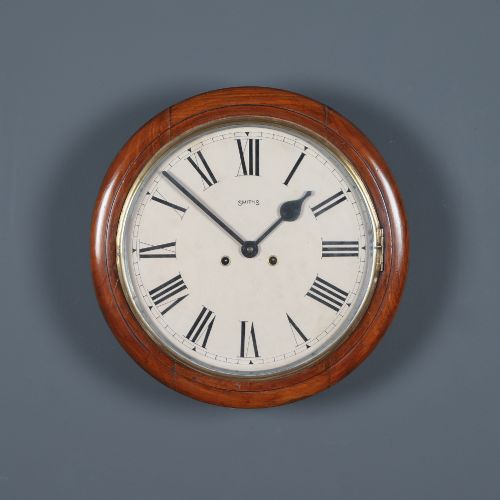
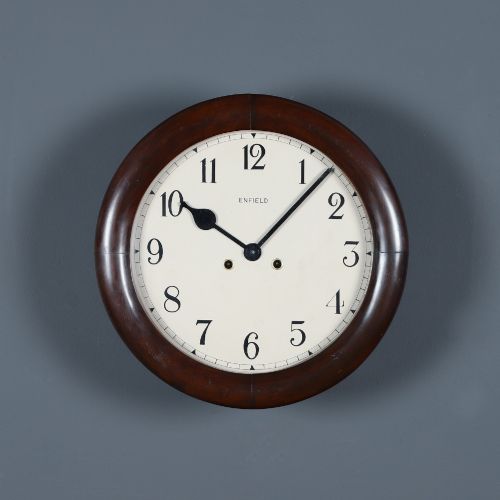
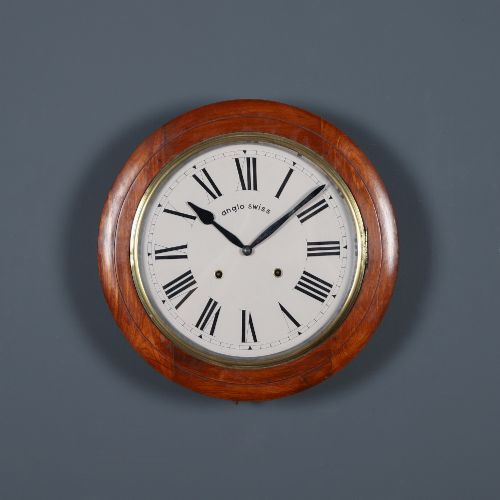
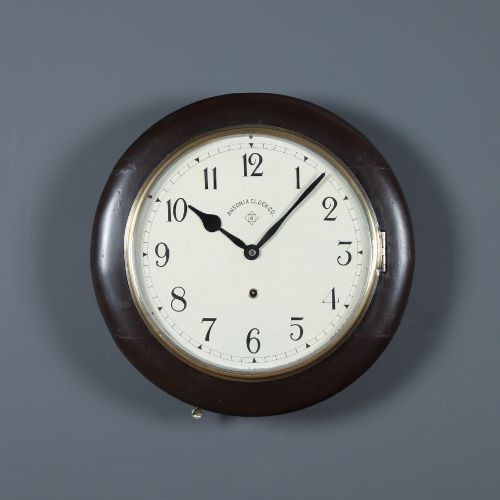
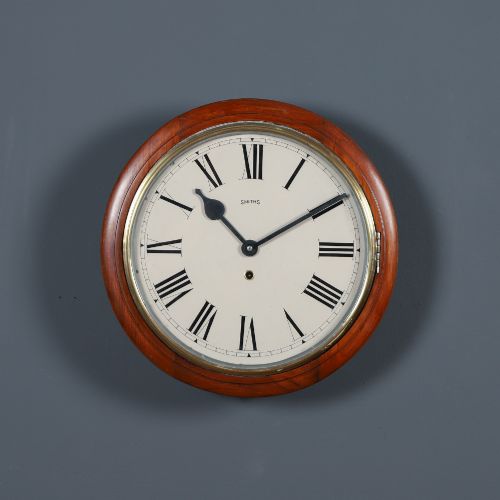
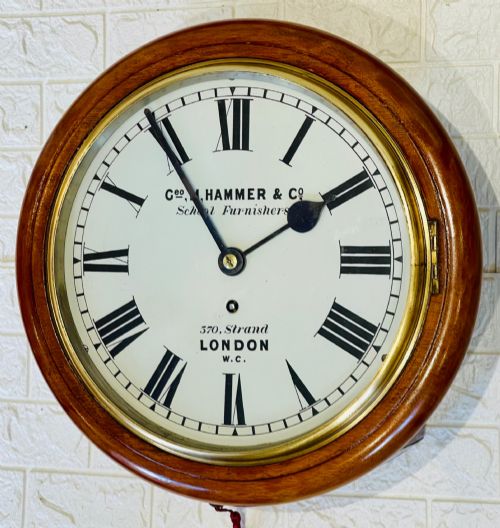
Station Dial Wall Clock
When you search for a station dial wall clock, you are looking at utilitarian round timekeepers built to keep time in busy public spaces.
Station Dial Wall Clock
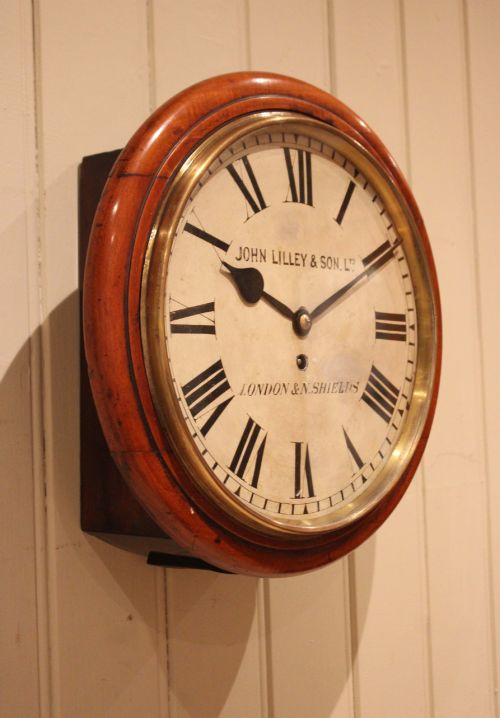
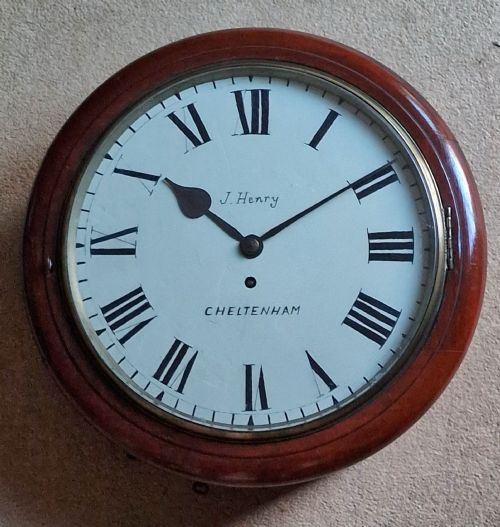
A station dial wall clock is a heavy circular timepiece designed for clear reading from a distance in railway termini, offices, schools and factories. The versions most commonly met on this page span the Georgian, Victorian and Edwardian periods through to the mid twentieth century.
Many examples bear the stamps of railway companies such as the Great Western Railway, London and North Eastern Railway, or British Railways. Others originate from municipal buildings or utility networks, housed in round wooden cases intended to be mounted high on a wall.
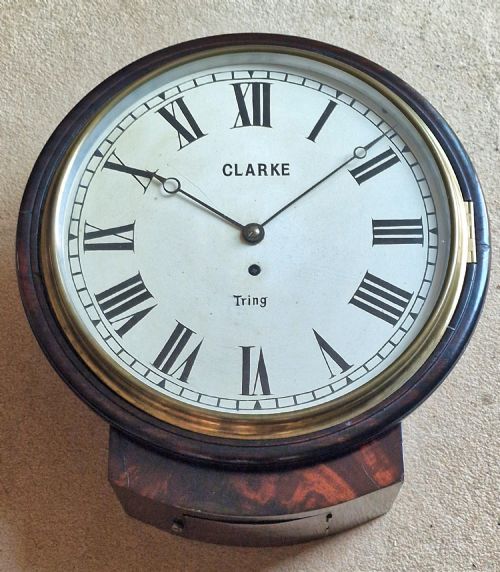
These clocks follow traditional British and early twentieth century styles, ranging from simple timber drum cases to drop-dial variants with lower access doors. They are robust, functional objects created to serve transport networks and public institutions reliably.
Materials and Construction
Casework relies heavily on solid timbers, predominantly mahogany and oak, with occasional examples in beech. These woods were chosen for their stability and durability in public environments where temperature fluctuations and vibrations were common.
Movement design centres on the chain fusee or single chain fusee mechanism, which maintains even tension on the gear train as the mainspring unwinds to ensure accurate timekeeping. Dials are constructed from painted wood, metal or iron, protected by heavy brass bezels and thick glass covers.
Several clocks bear the battle scars of busy railway platforms, where generations of stationmasters wound them weekly with steady hands.
Judging Quality
Quality in these timepieces rests on the original maker's reputation and the crispness of the movement. Pieces signed on the dial or movement by known makers demonstrate superior precision and finishing compared to anonymous utility clocks.
The integrity of the timber case and the preservation of original dial paint also dictate worth. Retaining original hands, matching case components and legible station or company markings separate standard utility examples from historically significant specimens.
Richard Jones of Hereford·Elliott·Camerer Cuss and Co London·Smiths·Enfield·Ansonia·J Henry Cheltenham·George Clarke Tring·Henry Harris of Monytuslwyn·W and H Sch·Joseph Bird of Stroud·John Walker·G W Barker Chiswick
The Station Dial Wall Clock Glossary
- Fusee
- A conical pulley connected to the mainspring by a chain or cord. This device equalises the diminishing power of the spring as it runs down.
- Drop dial
- A clock case featuring an extended lower portion, often with a pendulum box and a side or bottom access door. This form accommodates the drop of the pendulum or extra train work.
- Bezel
- The brass or metal ring that holds the glass door protecting the dial. It usually swings open on a hinge to allow hand-setting.
- Escapement
- The mechanical linkage that controls the release of the gear train and gives impulses to the pendulum. Common variants include anchor and lever escapements.
- Timepiece
- A clock that indicates the time without striking or chiming mechanisms. Many railway examples were built solely as timepieces for straightforward reading.
Station Dial Wall Clock: Frequently Asked Questions
How do I wind a fusee wall clock?
Use the appropriate winding key on the dial arbor, turning it carefully until resistance is felt. Avoid over-winding to protect the historical chain and spring mechanism.
Ensure the key matches the square arbor precisely to prevent rounding the metal over time.
Where were these clocks originally hung?
These clocks were mounted high on the walls of railway station platforms, booking halls, boardrooms and school rooms. Their large circular dials allowed staff and the public to read the time clearly from across a busy space.
Railway examples often remained in administrative offices or signal rooms long after steam services ended.
How do I tell an original railway clock from a reproduction?
Examine the movement for fusee construction, the timber for age-related wear, and the dial for authentic painted lettering rather than modern printed vinyl. Genuine examples carry weight, tool marks and signs of decades of institutional use.
Company lettering or station stamps should integrate naturally with the surface patination.
What is the difference between a timepiece and a striking clock?
A timepiece simply tracks the hours and minutes without making sound. Striking or chiming variants include additional gear trains and hammers to ring bells or gongs on the hour.
Most working railway platform clocks were kept simple as timepieces for reliability.