
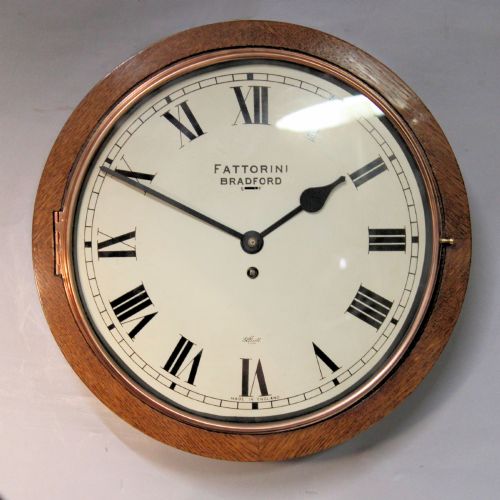

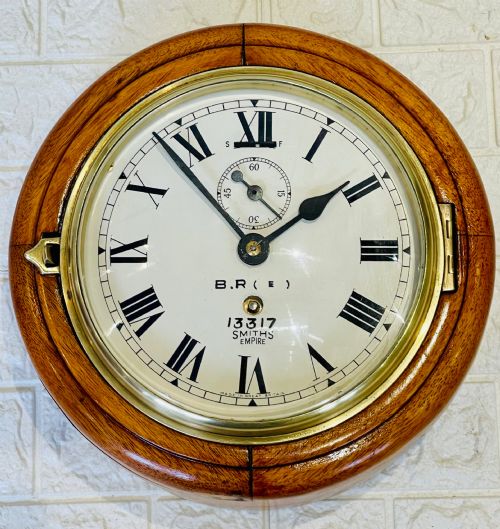
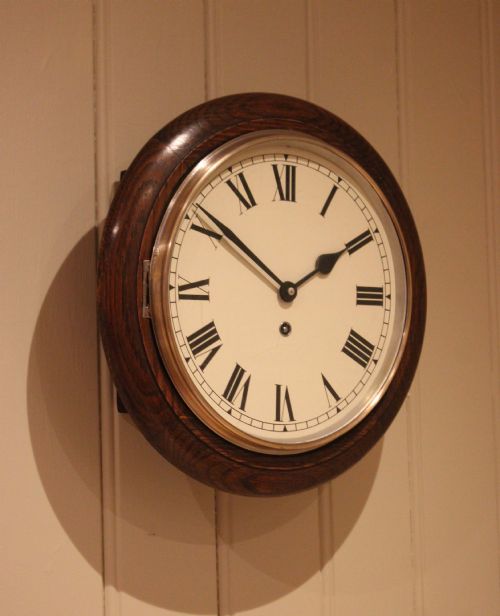
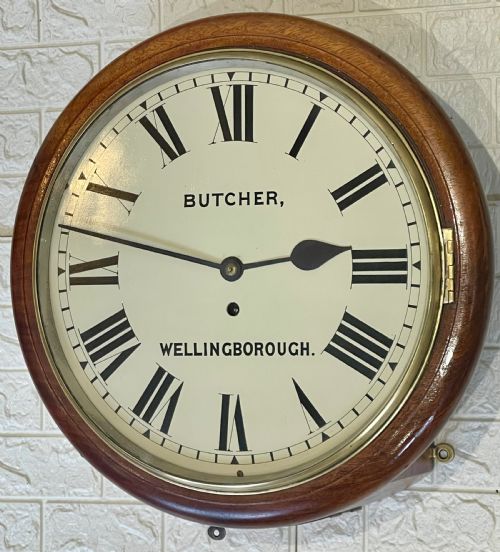
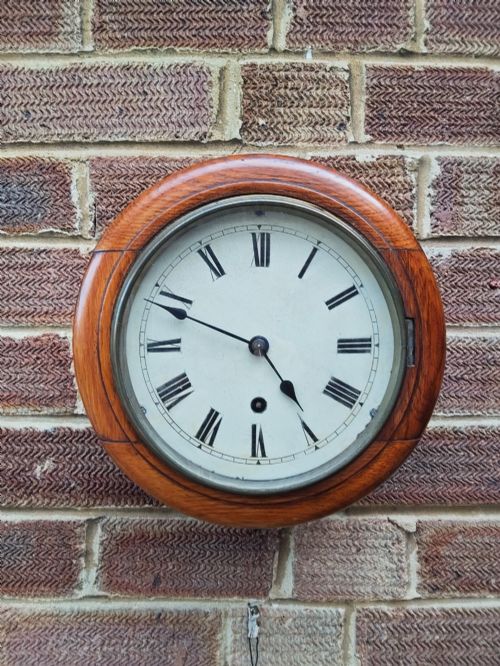
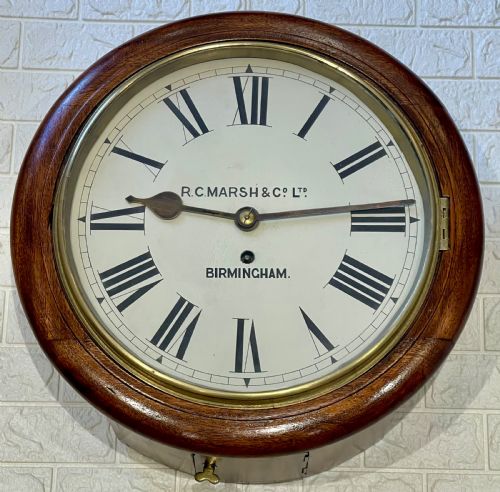
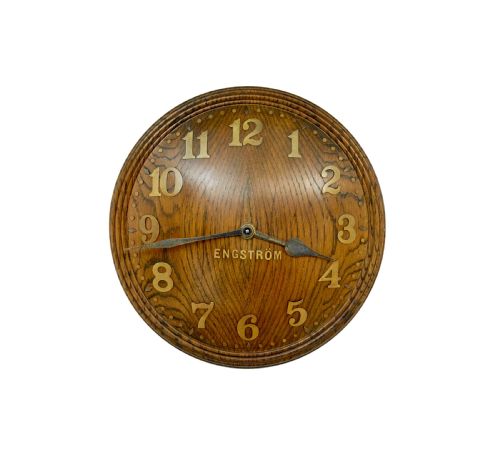


Brown Oak Wall Clock
These brown oak wall clocks bring warmth and reliable timekeeping to any room, spanning styles from Victorian to Art Deco.
Brown Oak Wall Clock
When you search for a brown oak wall clock, you are looking at timepieces mounted in timber cases that display distinct figuring and grain. These pieces range from simple dial clocks to elaborate architectural Vienna models and striking Art Deco designs.
The versions you are most likely to meet on this page date from the late nineteenth century through to the middle of the twentieth century. They appear in forms such as traditional round dial clocks, octagonal frames, and specialised electric master clocks.
Origins span English, French, German, and Dutch workshops, reflecting diverse regional tastes in domestic and industrial timekeeping. Oak cases dominate, often paired with glass viewing panels and brass bezels to house the movement.
How they were made
Movements rely on traditional weight-driven systems, spring-driven mechanisms, fusee chains, or later electric circuits. Glass protects the dial face, while metal components form the escapements, pendulums, and dial markers.
Some timepieces combined timekeeping with meteorological duties, letting owners check the barometric pressure while waiting for the hour to strike.
What varies in quality
The refinement of the timber preparation and the crispness of the case carving separate standard utilitarian timepieces from finer examples. Superior pieces display carefully selected oak grain that enhances the visual depth of the wall case.
Mechanical complexity and the reputation of the maker heavily influence the standing of an individual clock. Precision movements, such as double fusee systems or specialised electric calibres, demonstrate a higher tier of horological execution.
Elliott·Engström·Zenith·Charvet·Negretti & Zambra
The Brown Oak Wall Clock Glossary
- Fusee
- A conical pulley used in spring-driven clocks to ensure even tension as the mainspring unwinds. This mechanism helps maintain consistent timekeeping accuracy throughout the power reserve.
- Dial clock
- A wall-mounted timepiece featuring a prominent circular face, frequently used in offices, railway stations, and domestic hallways. The dial is usually protected by a hinged glass door.
- Escapement
- The mechanical linkage that controls the release of power in a clock movement, giving the characteristic ticking sound. Different types, such as lever or anchor escapements, regulate precision.
- Vienna regulator
- A high-precision pendulum clock originating in nineteenth-century Austria, housed in an elongated timber case with extensive glass panels. These clocks showcase meticulous mechanical and cabinet work.
- Aneroid barometer
- An instrument measuring atmospheric pressure without using liquid mercury, often paired alongside wall clocks in combined weather-station frames. It relies on a flexible metal box that expands and contracts with pressure changes.
Brown Oak Wall Clock: Frequently Asked Questions
How do fusee wall clocks work?
A fusee movement uses a specialised conical pulley connected to the mainspring by a fine chain or cord. As the spring unwinds, the leverage shifts across the cone to deliver steady force to the gear train.
This clever design compensates for the decreasing power of an unspooled spring. It results in much more reliable timekeeping across the running duration of the clock.
Where were dial clocks typically used?
Dial clocks were common fixtures in public buildings, railway offices, schools, and domestic spaces where clear legibility was essential. Their straightforward circular faces allowed workers and residents to check the time quickly from across a room.
Sturdy oak cases protected the mechanisms from dust and heavy atmosphere in busy environments. Over time, these functional items found a permanent place in residential interiors.
How do I date an oak wall clock?
Dating involves examining the case style, hardware materials, and movement construction alongside any maker markings. Victorian examples often feature carved ornamentation, while 1930s pieces lean towards clean geometric lines.
Horological technology also provides clear clues, transitioning from traditional mechanical fusee setups to early electric movements. Comparing the dial typography and timber finish helps narrow down the production era.
How should I hang a heavy wall clock?
Securing a substantial timber wall clock requires fixing directly into solid masonry or locating a sturdy wall stud behind plasterboard. Using appropriate screws and heavy-duty wall anchors ensures the weight of the oak case is fully supported.
Position the clock at a comfortable eye level away from direct heat sources or damp environments. Ensuring the wall surface is flat also helps the pendulum swing freely without catching.