



Staffordshire Porcelain Figures
Staffordshire porcelain figures capture domestic pets, royalty and literary subjects in charming glazes that bring character to any mantelpiece.
Staffordshire Porcelain Figures
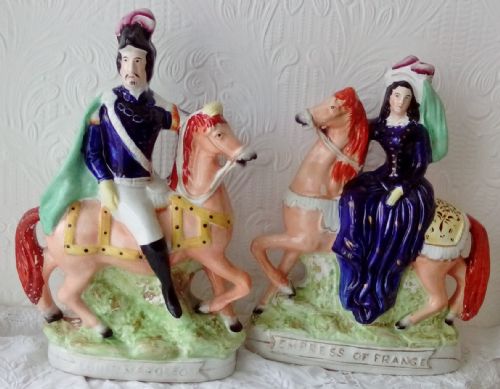
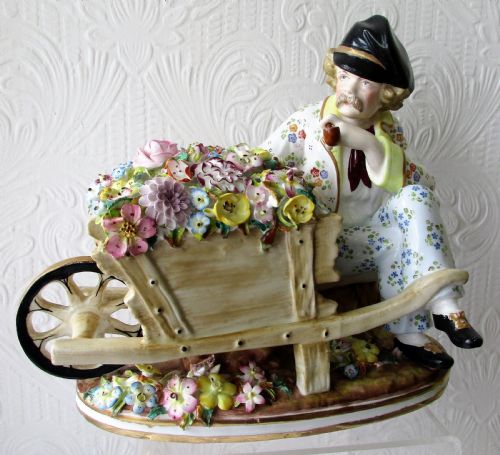
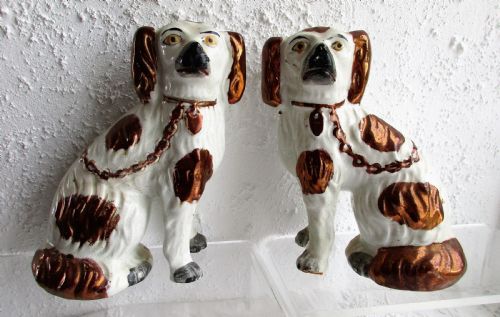
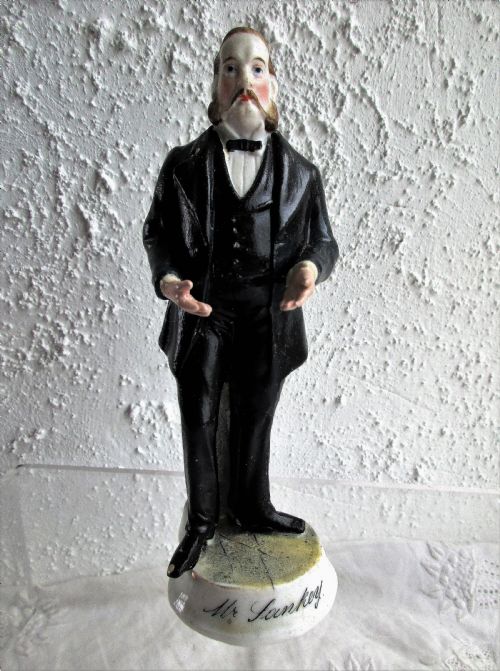
When searching for staffordshire porcelain figures, collectors encounter an array of decorative objects including spaniels, spill vases, portrait groups and poodles. The most common examples on this page date from the nineteenth century and depict animals, royals or agricultural workers.
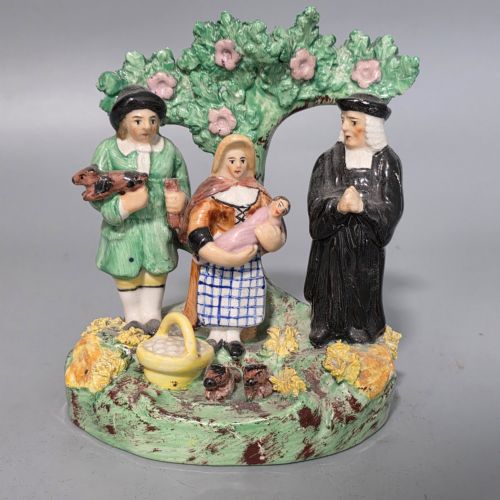
These pieces range from flatback figures designed to stand against a wall to pairs of mantle dogs and utilitarian quill holders or inkwells. Subjects span historical rulers such as Queen Victoria alongside pastoral scenes of milkmaids and harvesters.
Materials and production methods
Potters utilised ceramic bases finished with lead glaze and enamel colours to create the vibrant surface patterns seen across these objects. Gilt highlights frequently accent the details on nineteenth-century specimens.
Makers shaped the pieces using earthenware and porcelain bodies, applying underglaze painting and enamel decoration before firing in kilns to set the hardwearing gloss.
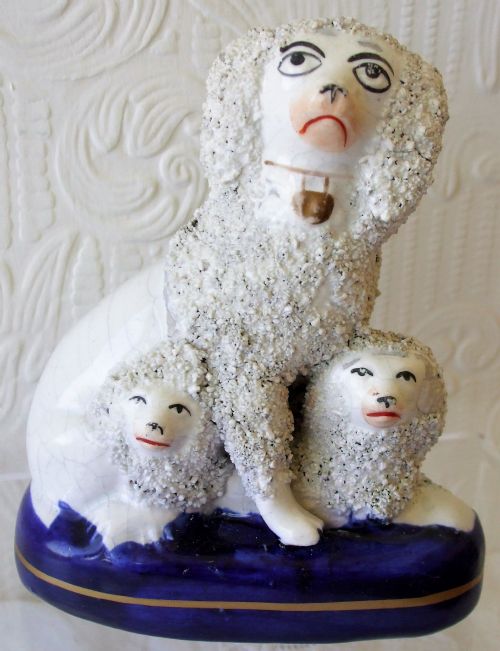
Poodles dominate the seating arrangements here, looking suitably fluffy whether guarding inkwells or posing alongside loyal pups.
Assessing visual quality
The finesse of the hand-painting separates simpler examples from superior works, particularly in the rendering of facial expressions on animals and portrait figures. Crisper moulding and minimal glaze pooling indicate greater skill in the kiln room.
Pairs displaying matching dimensions and even enamel saturation command more attention than mismatched or heavily worn counterparts. Well-preserved gilt accents and clean white ceramic grounds elevate the visual impact of an object.
John Bevington·Thomas Parr·Wedgwood and Co Ltd·Minton
The Staffordshire Porcelain Figures Glossary
- Flatback
- A figure moulded with a finished front and a plain, unglazed or lightly glazed flat reverse designed to sit flush against a wall.
- Spill vase
- A hollow vertical cylindrical vessel incorporated into a figure group, intended to hold wooden spills for lighting fires.
- Pearlware
- A fine-grained earthenware developed in the late eighteenth century featuring a faint bluish glaze that pooled in recesses to mimic Chinese porcelain.
- Quill holder
- A decorative ceramic base fitted with small apertures designed to receive writing quills or pens on a desk.
Staffordshire Porcelain Figures: Frequently Asked Questions
What are Staffordshire flatback figures?
Flatbacks are ceramic sculptures modelled with detailed fronts and flat backs so they could sit neatly on mantelpieces against cottage walls.
Potters produced them in large numbers during the Victorian era to depict royalty, famous actors and domestic animals.
How do I care for antique figures?
Keep ceramic figures out of direct sunlight to prevent the enamel colours from fading over time.
Dust them gently with a soft dry brush and avoid using water or chemical cleaners on the painted surfaces.
Were these dogs meant for display?
Comforter spaniels and greyhounds sat on nineteenth-century parlour hearths as ornaments rather than functioning toys.
Pairs were typically placed facing inwards towards each other at either end of the mantelpiece.
How can I tell the period?
Dating relies on stylistic clues like clothing fashions, glaze types and whether the reverse is finished flat or fully modelled.
Nineteenth-century pieces often feature bright enamel palettes and characteristic crazing within the glaze.