



Antique Ceramic Couple
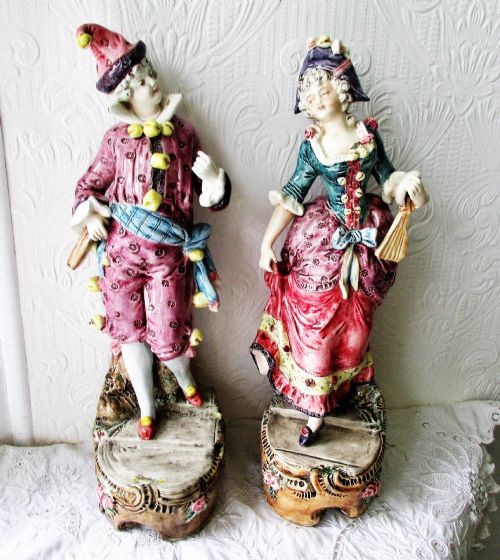
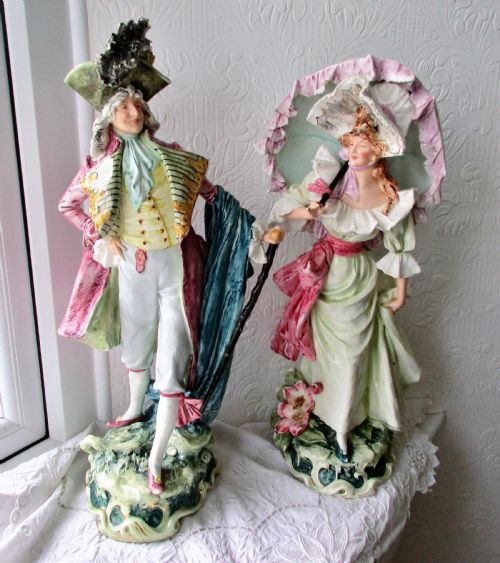
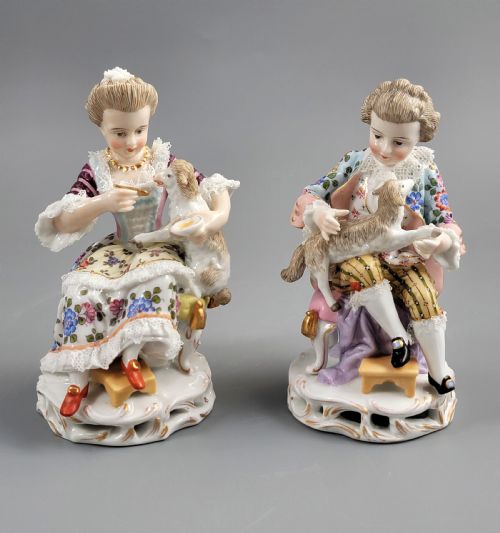
These antique ceramic couple figures are charming figural pairs of porcelain and faience, bringing the grace of the nineteenth century into any room.
Understanding antique ceramic couple pieces
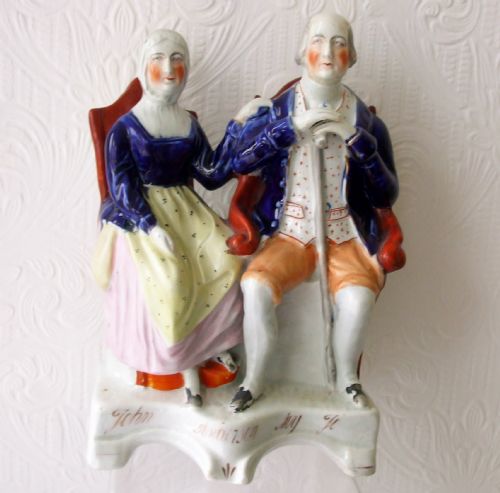
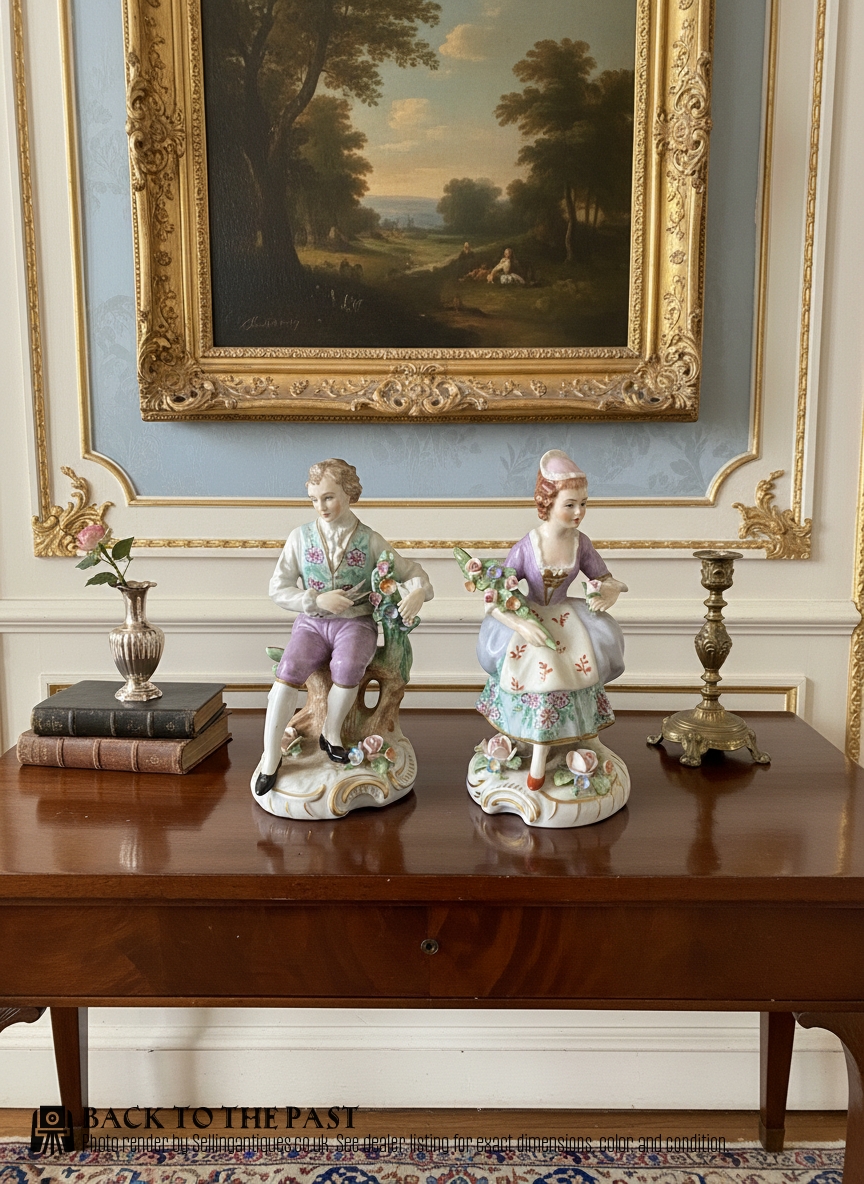
An antique ceramic couple comprises paired figures modelled as companions, gardeners, gallants, and young boys or girls. These delightful ornaments capture domestic and pastoral scenes beloved by nineteenth century makers.
Most examples found here date from the Victorian era and the broader nineteenth century, reflecting European craftsmanship from German, French, and English factories. The forms include decorative figurines and statuettes designed strictly for mantelpieces and display cabinets rather than utility.
Collectors frequently encounter figures styled in the Victorian Continental and Rococo Revival traditions. These pairings often show meticulous attention to historical costume and romantic narrative.
Materials and methods of manufacture
The construction of these pieces relies heavily on fine porcelain, bisque porcelain, and glazed earthenware or faience. Bisque porcelain offers an unglazed, marble-like matte texture, whereas glazed pieces utilise smooth surface coatings and rich enamel colours.
Decoration often incorporates hand-painted details enhanced with gold leaf and gilt highlights. Faience techniques provide a distinct tin-glazed ceramic surface upon which artisans painted gallant figures and their ladies.
Retail Price Guide 2026
Typical UK retail prices for ceramic couple, calculated from the Sellingantiques database of over a million retail prices indexed since 2003. This retail price guide relies exclusively on Sellingantiques data; no external sources or auction records are used, so the figures do not describe the wider market.
Gardeners carrying flowers and gallant gentlemen with their ladies stand ready to argue politely over who gets the best view from the mantelpiece.
Distinguishing quality across the range
Superior quality in an antique ceramic couple lies in the crispness of the modelling and the delicacy of the facial expressions. Master modellers achieved subtle contours in hands, drapery, and foliage that lesser workshops rendered heavily.
The application of enamel and gold leaf further separates standard factory output from exceptional work. Finer examples retain precise hand-painting and careful gilding that elevate the decorative presence of the pairing.
The Antique Ceramic Couple Glossary
- Faience
- Tin-glazed earthenware produced across continental Europe, often featuring hand-painted pastoral scenes. This technique provides an opaque background ideal for colourful figurative decoration.
- Gilt
- A thin layer of gold applied to the surface of ceramics to highlight clothing edges or base scrolls. It adds a warm metallic contrast to the painted enamel colours.
- Rococo Revival
- A nineteenth century design movement reviving the ornate, asymmetrical curves and shell motifs of the eighteenth century. Figures from this period often stand upon scrolled bases enriched with gilt.
- Statuette
- A small freestanding sculptural figure designed for tabletop or mantel display. These decorative objects are typically modelled in pairs to create a balanced visual arrangement.
Frequently Asked Questions
What periods do these figures come from?
The pieces available date primarily from the nineteenth century, including specific Victorian examples from around 1880 and 1910.
Production spans various European traditions, reflecting the distinct aesthetic preferences of English, French, and German kilns.
How were these ceramic figures originally displayed?
These figural pairs were intended strictly as decorative ornaments for parlours and drawing rooms. Owners typically placed them on mantelpieces, side tables, or within glazed display cabinets.
Because they served a purely ornamental purpose, they avoid the wear associated with functional tableware.
What is the difference between bisque and glazed porcelain?
Bisque porcelain is left unglazed after firing, resulting in a tactile, matte finish that resembles carved marble. This surface finish highlights the fine sculptural details modelled by the artisan.
Glazed porcelain receives a glassy coating that seals the ceramic body and provides a glossy reflective surface beneath the enamel paint.
Are these figures always sold as pairs?
Yes, these decorative pieces are assembled and offered as matching pairs representing companions, gardeners, or gallant figures and their ladies. The pairing is fundamental to their design and balanced visual appeal.
Collectors look for matched sets that retain their original corresponding poses and decorative schemes.