


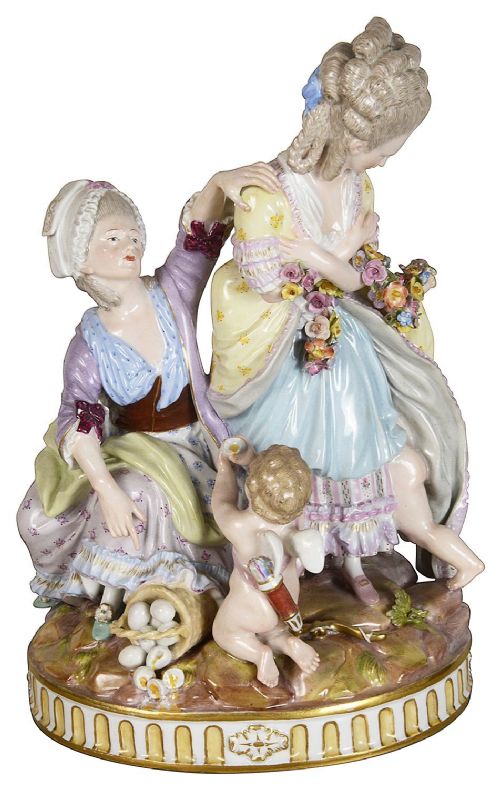


Pastel Porcelain Statuettes
These pastel porcelain statuettes bring delicate 18th-century charm and 19th-century Victorian character directly to any mantelpiece.
Pastel Porcelain Statuettes
When you search for pastel porcelain statuettes, you are looking at figurative ceramic sculpture, primarily consisting of individual figures and pairs created in European kilns. These decorative figurines depict human subjects, notably children, young boys, and girls, often arranged in pastoral or domestic scenes.
The pieces you are most likely to meet on this page span from the mid 18th century through the Victorian era and into the early 20th century. Forms range from early English porcelain figures to 19th-century French and German pairs executed in the Rococo revival style.
Many of these decorative objects draw inspiration from earlier Meissen models, echoing historical European porcelain traditions. They function primarily as ornamental table or shelf figures, capturing human form and narrative through glazed and unglazed ceramic mediums.
How they were made
Makeries utilised both hard-paste porcelain and soft-paste porcelain, alongside ceramic and unglazed bisque porcelain. Bisque figures omit the final glaze entirely, leaving a matte, marble-like finish that highlights fine sculptural detail.
Colour comes from enamel and paint applied to the ceramic body, often in soft pastel hues. Artisans also applied gold leaf to accentuate details on select pieces, such as the historic English gold anchor mark.
Listings span the 18th, 19th, and early 20th centuries, featuring materials such as bisque porcelain, enamel, and gold leaf.
What varies in quality
The finesse of the modelling separates standard decorative items from superior sculptural works. Finer statuettes display crisp facial expressions and detailed hand-painting in enamel rather than heavy, flat colour.
The choice of body material also influences the character of the piece, with delicate soft-paste or finely finished bisque offering a different tactile and visual depth compared to standard commercial ceramics.
Meissen·Volkstedt·Bow·Sitzendorf
The Pastel Porcelain Statuettes Glossary
- Bisque porcelain
- Unglazed ceramic fired once to produce a matte, porous surface resembling white marble. It captures subtle sculptural contours without the glossy sheen of traditional enamel.
- Hard-paste porcelain
- A durable ceramic compound fired at very high temperatures, composed of kaolin and petuntse. It originated in China and was later mastered at European factories like Meissen.
- Soft-paste porcelain
- An artificial ceramic mixture fired at lower temperatures than hard-paste, common in early English factories. It produces a slightly warmer, softer lustre beneath the glaze.
- Gold leaf
- Extremely thin sheets of beaten gold applied to ceramic surfaces for decoration. It is often found highlighting garments or bases on period figures.
- Rococo Revival
- A 19th-century design movement that revived the ornate, asymmetrical curves and naturalistic motifs of the 18th century. It heavily influences the bases and poses of Victorian decorative figures.
Pastel Porcelain Statuettes: Frequently Asked Questions
What are pastel porcelain statuettes?
These pieces are small decorative ceramic sculptures depicting human figures, children, and pastoral scenes. They were produced across European factories from the mid 18th century onwards.
Most examples serve as ornamental mantel or shelf pieces, valued for their delicate modelling and historical manufacturing techniques.
Are these figures English or continental?
The selection includes both English and continental European origins, with notable pieces originating from German and French factories. Historic English works appear alongside continental productions from manufacturing centres like Meissen, Volkstedt, and Sitzendorf.
Stylistic markers and factory marks on the base usually indicate the specific regional origin of each piece.
How should I display them?
These delicate statuettes require stable, secure placement away from high-traffic areas or vibrations. Because porcelain and bisque can be fragile, placing them on a sturdy mantel or inside a glass cabinet protects them from accidental knocks.
Keep them out of direct, harsh sunlight to protect any hand-painted enamel colours and gold leaf details over time.