

Rococo Style Porcelain
When you search for rococo style porcelain, you encounter ornate 18th-century revival vessels and figures that bring theatrical French flair to interior spaces.
Rococo Style Porcelain
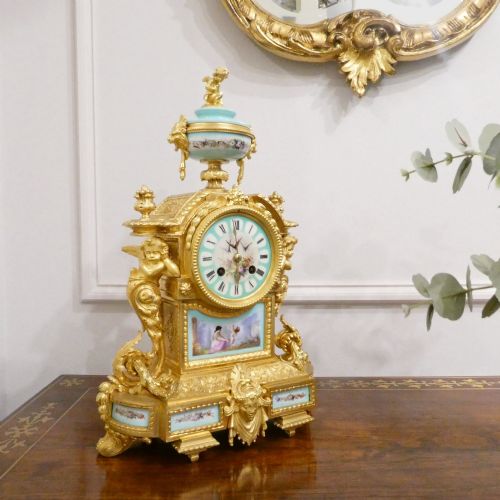
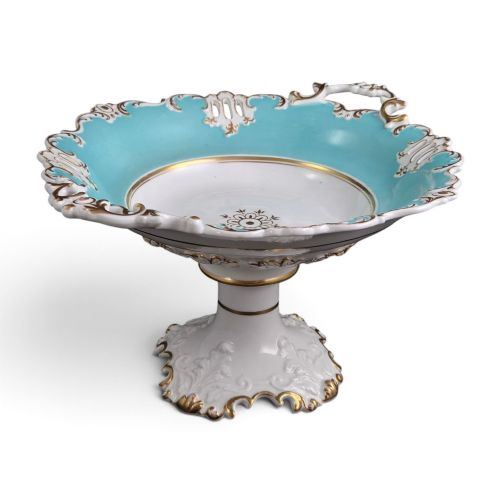
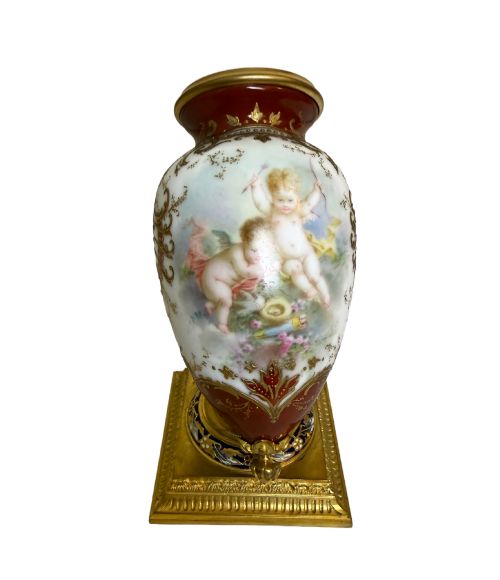
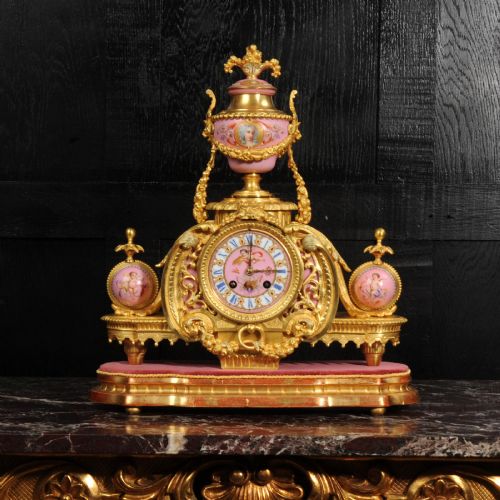
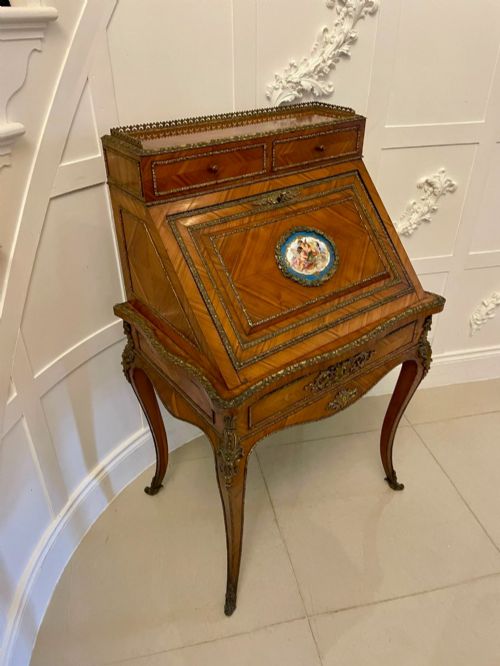
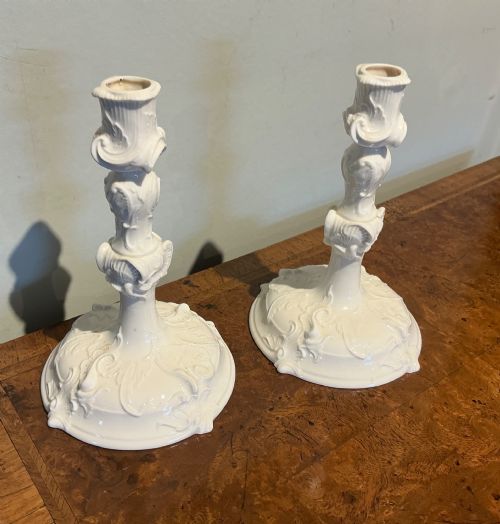
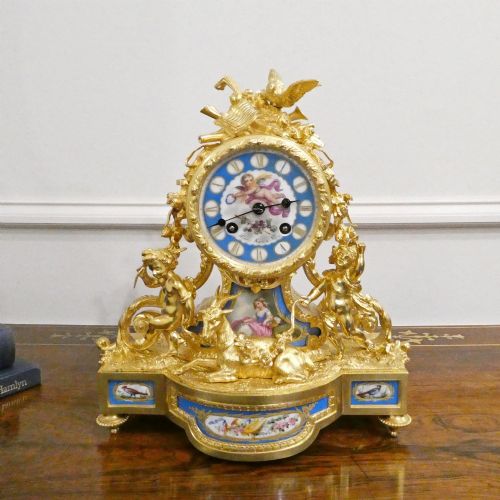
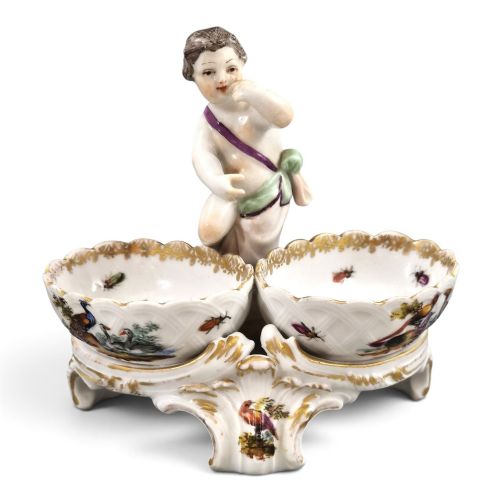
These decorative objects span domestic and ornamental forms, including mantel clocks, candlesticks, centrepieces, vases, and figural groups created in European factories. The versions most commonly met on this page date from the nineteenth century, reflecting a broad Victorian and continental appetite for revivalist excess and asymmetric curves.
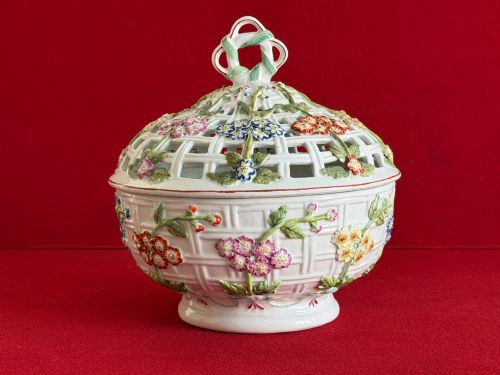
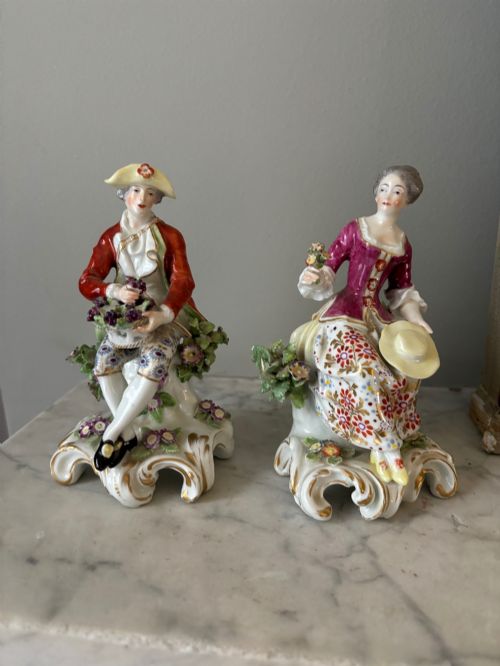
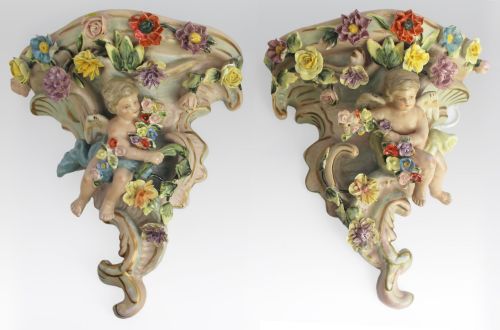
Makers across England, France, and Germany leaned heavily on serpentine outlines, shell motifs, and naturalistic floral additions. Such pieces served as prominent display items in nineteenth-century drawing rooms, signalling taste through elaborate modelling and painted decoration.
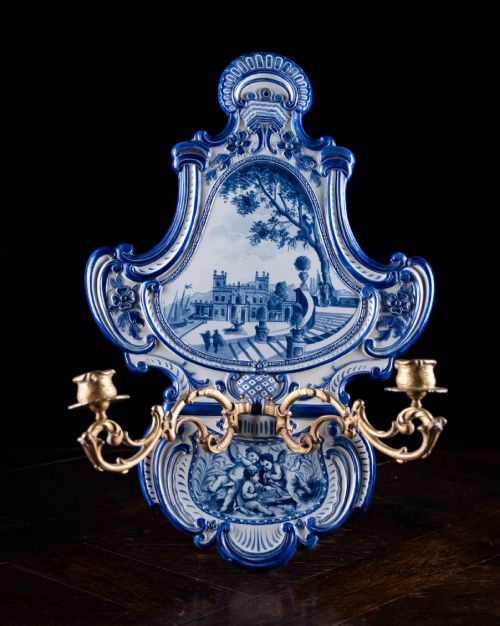
The aesthetic borrows directly from the mid-eighteenth-century French court, translating asymmetrical scrollwork and C-scrolls into hard-paste and bone china bodies. Collectors encounter everything from utility tea wares to architectural wall brackets framed by gilt bronze mounts.
Materials and technique
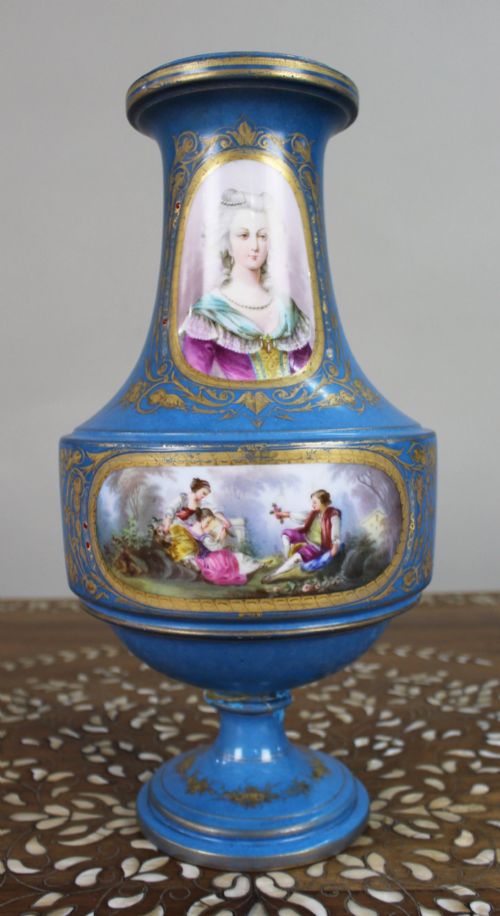
Manufacturers shaped these objects using hard-paste or bone china porcelain bodies, which were hand-painted with cobalt blue, turquoise, or bleu céleste grounds and detailed floral sprays. Enamel pigments were fused to the surface through multiple kiln firings to secure deep hues and gilt highlights.
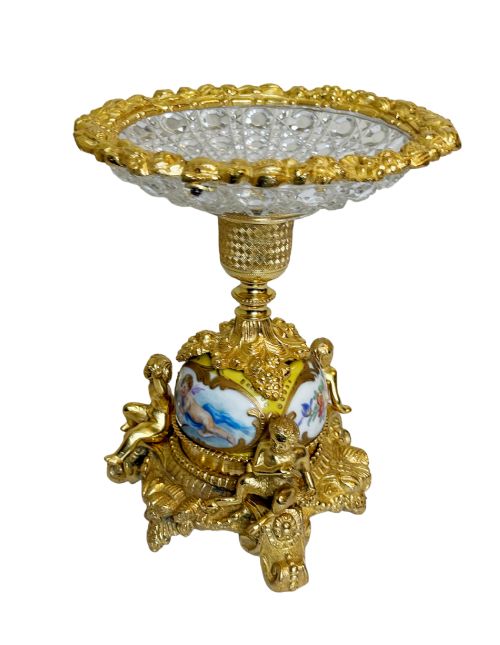
Mounts of ormolu, gilt bronze, and brass frequently encase the ceramic elements, cast with scrolling foliage to complement the organic shapes of the porcelain. Gilt leaf accents and brass fittings were secured mechanically or adhered to anchor the ceramic bodies within heavier metal frames.
Listings feature Victorian and nineteenth-century items alongside Georgian examples, utilising porcelain, ormolu, and gilt bronze across mantel clocks and vases.
Assessing quality and execution
The distinction between ordinary and superior pieces rests on the crispness of the porcelain modelling and the sensitivity of the hand-painted details. Finer examples display delicately formed flower petals, crisp facial expressions on figures, and precise gilding that remains intact across high points.
Metalwork integration also determines merit, where hand-chased ormolu mounts fit the ceramic contours precisely rather than relying on standard commercial castings. Superior items maintain a balanced weight between the bronze chassis and the porcelain vessel, indicating careful workshop assembly.
Achille Brocot·Henry Marc·Villeroy and Boch·KPM Berlin·Samson Paris·Paul Muller Selb·Japy Freres
The Rococo Style Porcelain Glossary
- Ormolu
- Gilded bronze used for decorative furniture mounts, clock cases, and decorative vessel frames. This technique involves applying a gold-mercury amalgam to a bronze base before heating.
- Hard-Paste Porcelain
- A dense, vitrified ceramic composition fired at very high temperatures. It uses kaolin and petuntse to create a durable, bright white body.
- Bleu Céleste
- A rich, bright turquoise-blue ground colour developed at the Sèvres factory. It became popular during the mid-eighteenth century and was widely copied in later revivals.
- Bone China
- A soft-paste porcelain variant incorporating animal bone ash. This addition increases strength and translucency, allowing for thinner walled vessels.
- Cartonnier
- A decorative desk-top cabinet designed to hold papers and documents. These pieces frequently feature leather files and ornamental gilt-bronze mounts in the French style.
Rococo Style Porcelain: Frequently Asked Questions
What defines rococo style porcelain?
These pieces feature asymmetric scrollwork, C-scrolls, shell motifs, and abundant naturalistic floral elements inspired by mid-eighteenth-century French design.
Twentieth and nineteenth-century factories adopted these curving, theatrical forms to satisfy revivalist tastes across Europe.
How were these objects used originally?
Owners displayed these decorative items on mantelpieces, side tables, and desks as markers of status and refinement in domestic interiors.
Certain items, such as salt cellars, teapots, and candelabras, also served functional roles during formal dining and entertaining.
How do I distinguish periods?
Examination of paste consistency, glaze texture, and mark styles helps separate eighteenth-century originals from later nineteenth-century revival interpretations.
Factory marks, where present, provide specific clues regarding production dates and regional workshop origins.
How should I live with them?
Place these delicate ceramics on stable, level surfaces away from direct sunlight and high-traffic areas to protect fragile protruding elements.
Dust them gently with a soft, dry brush and avoid chemical cleaning agents that might damage the gilded highlights.