


Antique Porcelain Mantle Ornaments
Antique porcelain mantle ornaments bring character and period charm to a fireplace, offering sculptural presence from centuries past.
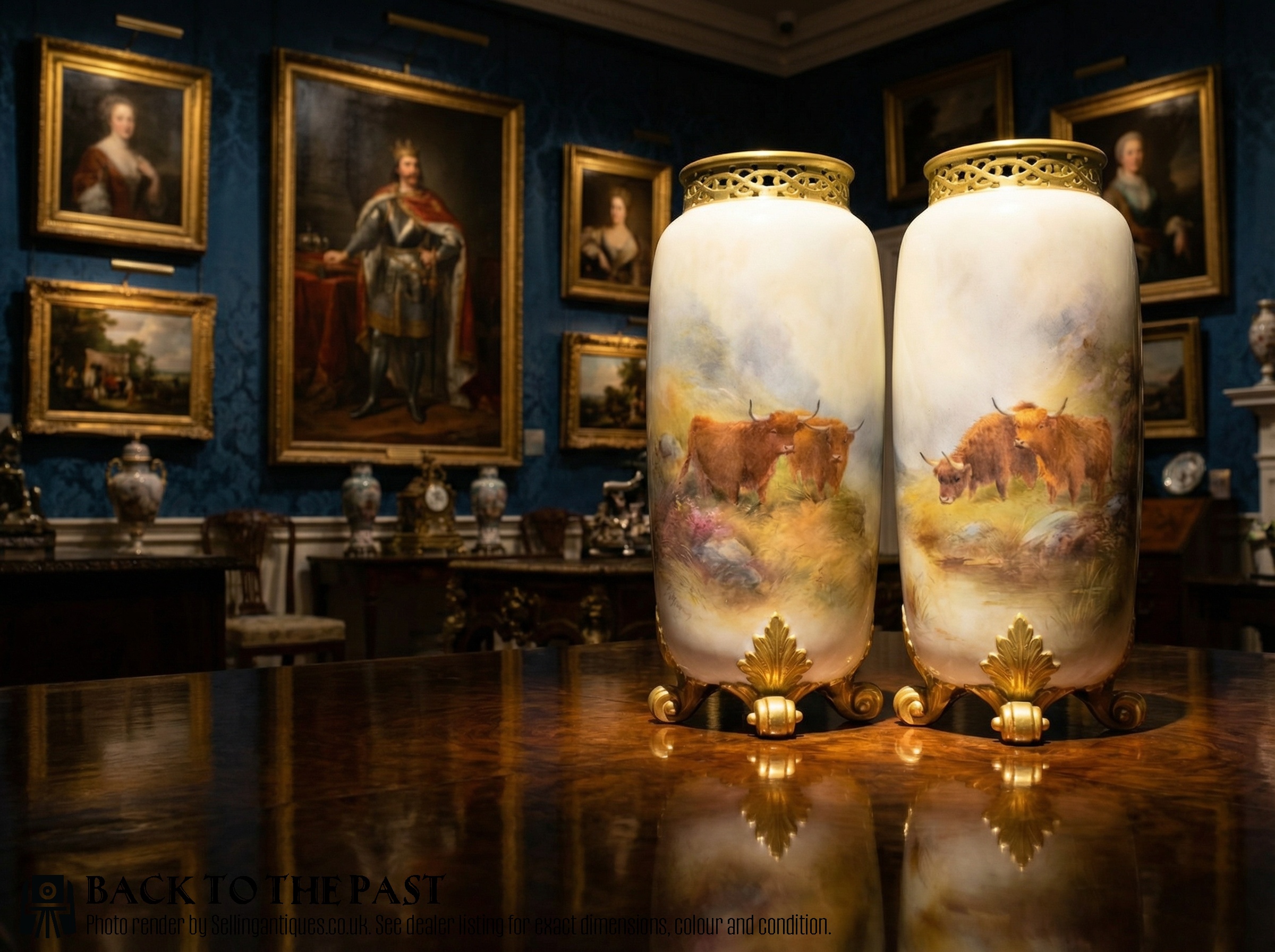
Antique Porcelain Mantle Ornaments
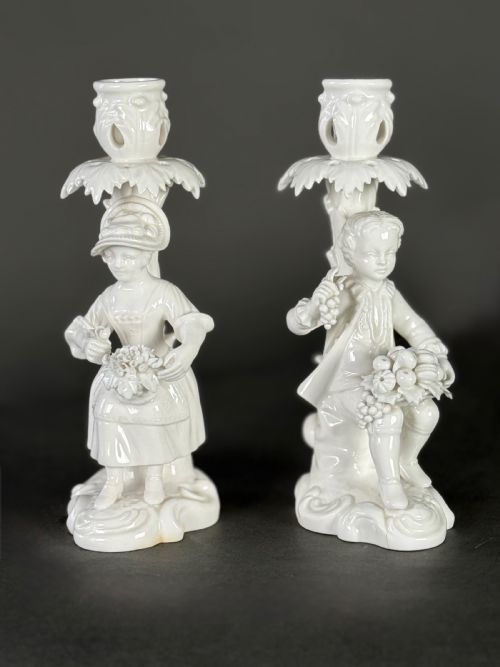
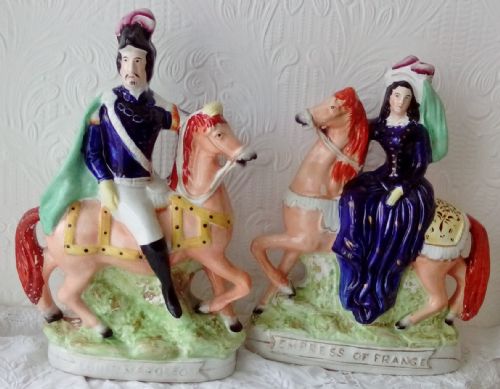
Antique porcelain mantle ornaments comprise a diverse group of decorative objects designed to sit upon a fireplace shelf, including figurines, pairs of dogs, spill vases, and candlesticks. The most common examples met on this page are Staffordshire figures and pairs of porcelain animals dating from the nineteenth century.
The selection spans various historic eras, ranging from eighteenth-century Georgian pieces to Victorian and Edwardian examples. Makers and origins vary from English factories like Derby and Staffordshire to continental French workshops and Royal Worcester.
Forms include single busts and complex sculptural groups depicting human figures, mythological subjects, and domestic animals. Buyers encounter both glazed ceramics and unglazed bisque porcelain finishes across these domestic decorative items.
Materials and Manufacturing Techniques
Makers utilised hard paste and soft paste porcelain, earthenware, and bisque porcelain, often combining ceramic bodies with hand-painted enamel colours and gilding. Biscuit or bisque porcelain provided an unglazed, matt finish favoured for detailed sculptural figurines and busts.
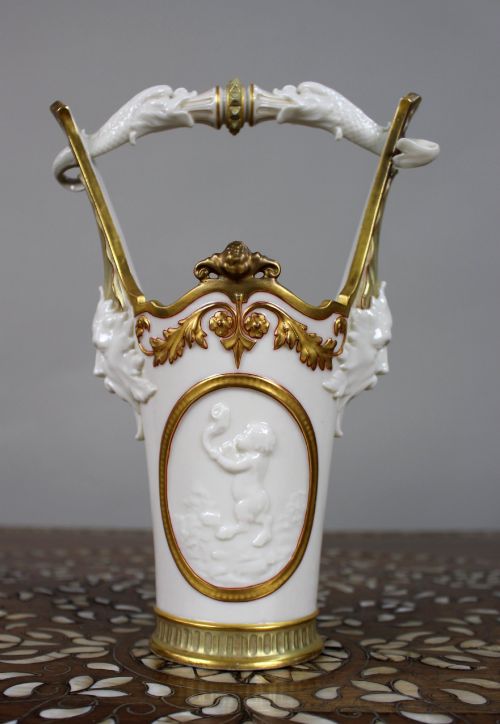
Decoration relied on skilled hand painting, enamelling, and the application of gold leaf or gilt details to highlight sculptural contours. Certain pieces incorporated applied or encrusted ceramic elements to build texture upon the surface of vases and figures.
Antique Porcelain Mantle Ornaments Retail Price Guide 2026
Typical asking prices for porcelain mantle ornaments among the pieces listed under this phrase on Sellingantiques today, from the lower quarter to the upper quarter. They describe what is for sale here now, not the wider market.
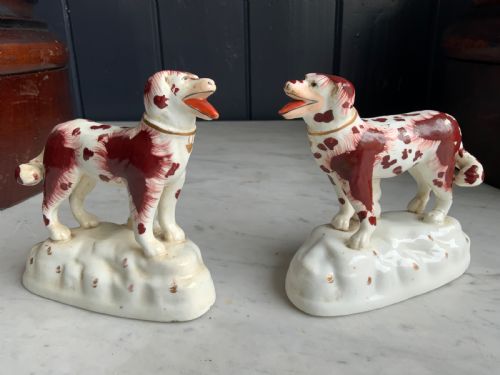
Staffordshire dogs often wear stern expressions, as if taking their job guarding the mantelpiece with the utmost seriousness.
Distinctions in Quality and Execution
Quality rests upon the crispness of the modelling and the finesse of the hand painting, where finely articulated facial expressions and delicate enamel work separate superior items from mass production. The depth and precision of gilding also dictate the visual standard of a piece.
Factory origin heavily influences standing, with established houses such as Derby, Royal Worcester, and Sevres achieving greater refinement in paste preparation and kiln firing than regional earthenware potteries. Pairs that remain together with matching decoration command higher regard than assembled or mismatched sets.
Royal Worcester·Derby·Staffordshire·Sevres·Minton·Ernst Whaliss·Vion et Baury
The Antique Porcelain Mantle Ornaments Glossary
- Bisque porcelain
- Unglazed ceramic fired to a porous, matt state that resembles marble and reveals fine sculptural detail.
- Spill vase
- A hollow cylindrical ceramic vessel designed to hold taper spills used for lighting candles or fires.
- Pate sur pate
- A method of porcelain decoration where liquid white clay is painted in successive layers upon a darker ground to create a cameo relief effect.
- Hard paste
- A true porcelain composed of kaolin and petuntse fired at high temperatures to create a dense, vitrified body.
- Enamel
- Opaque coloured glass fused to the ceramic surface during a secondary low-temperature kiln firing.
Antique Porcelain Mantle Ornaments: Frequently Asked Questions
Were these ornaments meant to be functional?
Many mantle ornaments served a dual purpose, combining decorative sculptural forms with practical functions such as holding candles or storing taper spills.
Others existed purely for visual display on parlour chimney pieces, demonstrating the owner's taste and refinement through subjects drawn from mythology, portraiture, or pastoral life.
How can I tell a genuine nineteenth-century piece from a later copy?
Examine the base and underside for factory marks, stilt marks, and the natural wear associated with age on the foot rim. Hand-painted enamel colours and subtle crazing in the glaze provide further clues to period authenticity.
Weight, paste density, and the crispness of the moulding help separate authentic eighteenth and nineteenth-century production from twentieth-century reproductions.
Why do Staffordshire dogs and figures often come in pairs?
Victorian domestic interior design placed a strong emphasis on symmetry, making pairs of mantle ornaments essential for balancing either side of a fireplace mirror or clock.
Animals like greyhounds, spaniels, and sheep were moulded as mirror-image counterparts to sit facing one another across the hearth.