



18th Century Ceramic Ornaments
These 18th century ceramic ornaments encompass figures, groups, and decorative carvings selected for domestic display.
18th Century Ceramic Ornaments
18th century ceramic ornaments comprise porcelain figures, groups, and animal models originating from English and European factories.
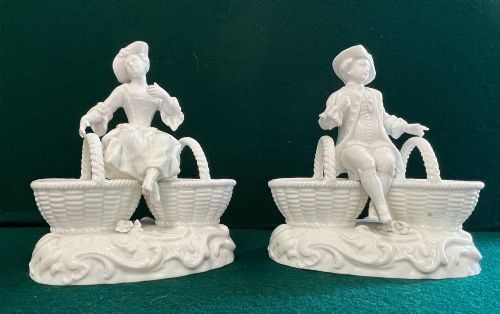
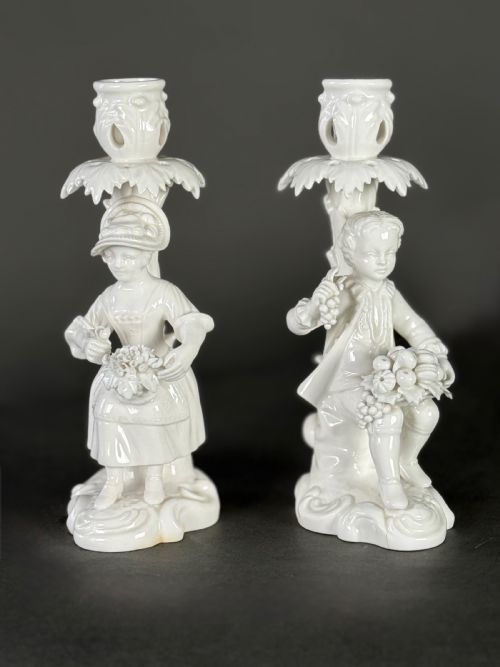
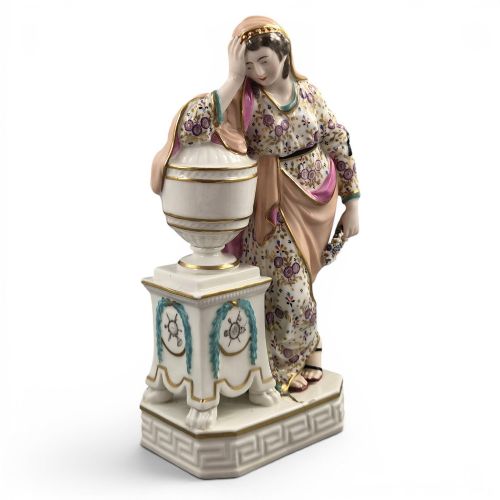
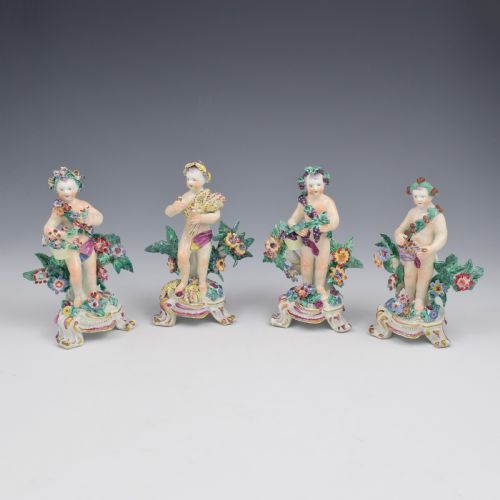
The selections on this page feature figures representing seasonal allegories, street traders, mythological subjects, and pastoral scenes.
Domestic display pieces from this era range from small individual figures to paired animals and elaborate multi-figure groups.
How they were made
Factories utilised soft-paste and hard-paste porcelain alongside tin glazing and pearlware to form sculptural figures.
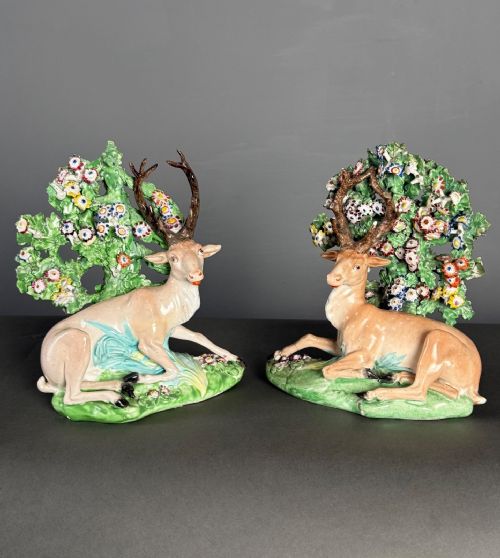
Pieces were shaped through moulding and hand-modelling, frequently incorporating applied floral details known as bocage.
Decoration relied on hand-painted enamels, gilding with gold leaf, and lustre glazes applied before firing.
A Welsh tailor and his wife ride side by side atop two rather disgruntled-looking goats.
What varies in quality
Quality depends upon the crispness of the moulded details and the precision of the hand-painted enamels.
The sophistication of the modelling, particularly in facial expressions and botanical elements like bocage, dictates the standard of the piece.
Completeness of applied elements and the clarity of factory marks distinguish exceptional examples from standard production.
Meissen·Derby·Bow·Longton Hall·Volkstedt
The 18th Century Ceramic Ornaments Glossary
- Soft-paste porcelain
- A vitreous ceramic composition fired at lower temperatures than hard-paste, common in early English factories.
- Hard-paste porcelain
- A true porcelain made from kaolin and petuntse, capable of withstanding high firing temperatures.
- Bocage
- An applied background of ceramic foliage and leaves surrounding a figure or group.
- Pearlware
- A fine-grained earthenware with a slight bluish-grey glaze, developed by Josiah Wedgwood and adopted by other potteries.
- Tin-glazed earthenware
- Pottery coated with a tin-opacified glaze that provides a white surface for painted decoration.
18th Century Ceramic Ornaments: Frequently Asked Questions
What are 18th century ceramic ornaments?
These pieces are glazed ceramic figures and sculptural groups produced by European and English porcelain factories during the seventeen-hundreds. They depict human figures, animals, and allegorical scenes designed for interior decoration.
Makers utilised porcelain, pearlware, and tin-glazed earthenware to construct these decorative objects, often finishing them with hand-painted enamel colours and gilding.
How were these figures used?
Owners placed these ceramic figures on mantelpieces, side tables, and dining room consoles as decorative conversation pieces. Elaborate figure groups served to display the taste and refinement of the household.
Many sets represented seasonal themes, musical subjects, or pastoral narratives that reflected contemporary theatrical and literary interests.
How do I live with porcelain figures?
Display these delicate ceramics in stable environments away from direct sunlight and heavy foot traffic to protect fragile elements like bocage. Ensure shelves or cabinets are secure and level to prevent accidental tipping.
Dust the surfaces gently with a soft, dry brush and avoid using water or chemical cleaners on painted enamel or gilt details.
How do I identify different factory styles?
Different factories developed distinct clay compositions, glaze characteristics, and sculptural styles that help distinguish their output. English manufactories like Bow and Derby often utilised soft-paste porcelain with characteristic glazing traits.
Continental works such as Meissen frequently incorporated precise modelling, detailed facial painting, and underglaze blue factory marks on the base.