



Antique Flower Seller Figures
Antique flower seller figures capture street vendors in porcelain, earthenware, and carved wood, bringing characterful period charm into a room.
Antique Flower Seller Figures
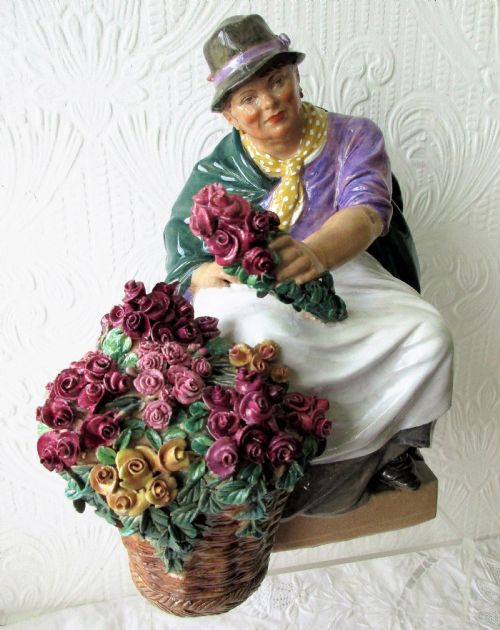
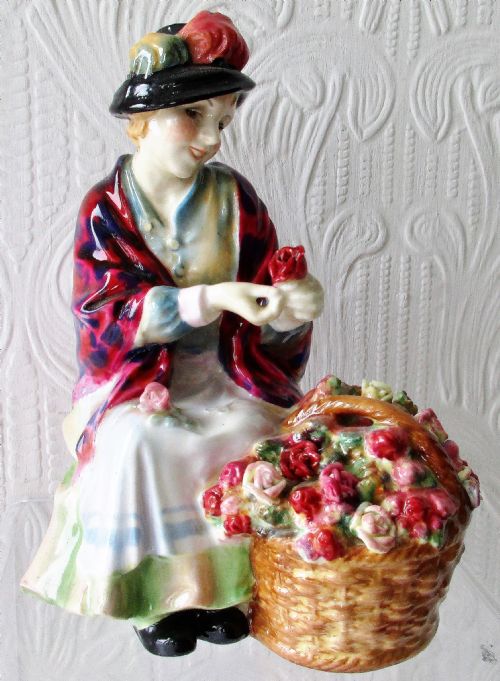
When you search for antique flower seller figures, you are looking at sculpted representations of street vendors modelled across the Georgian, Victorian, and Art Deco periods. These pieces take the form of ceramic figurines, porcelain figurines, and carved wood sculptures depicting everyday traders with their blooms.
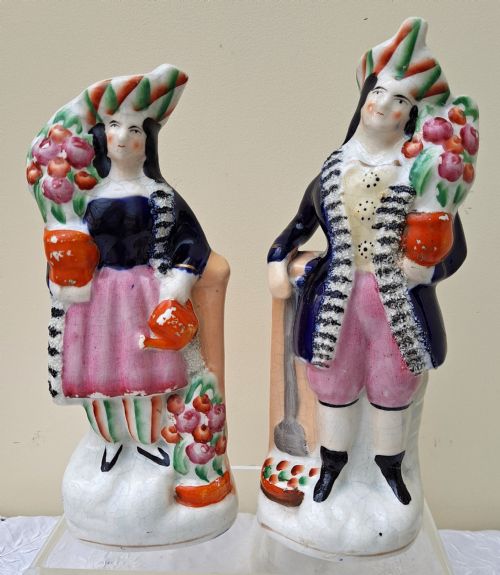
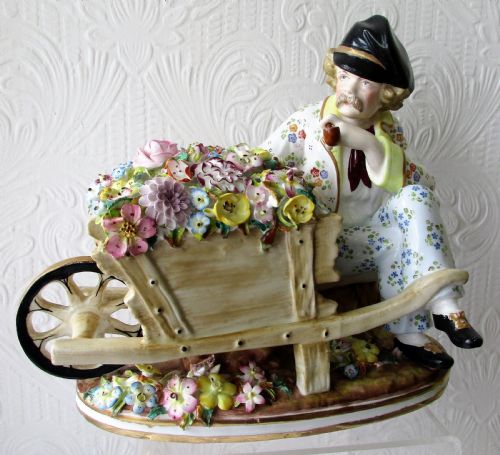
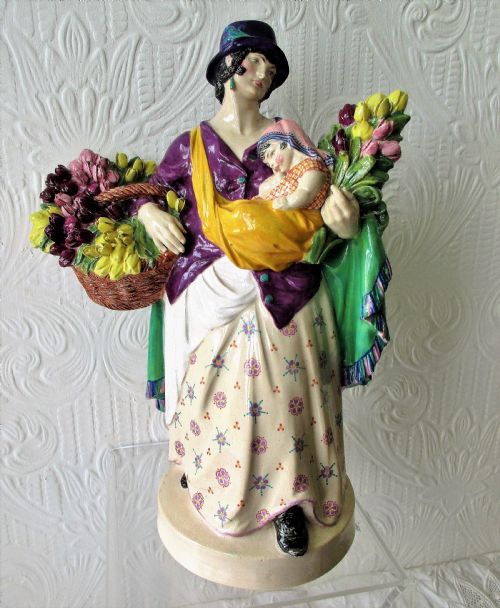
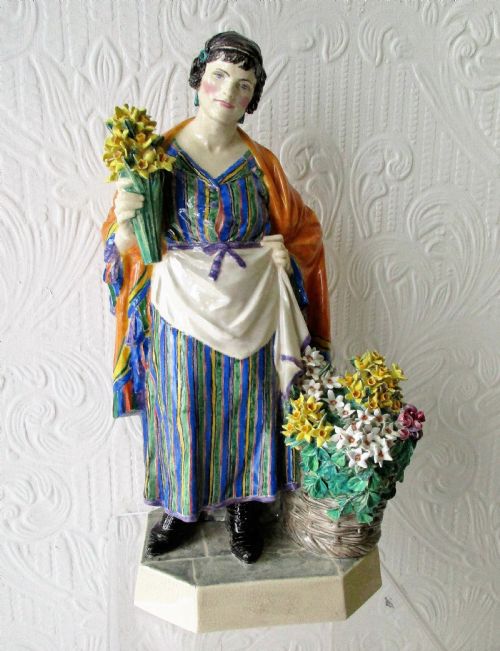
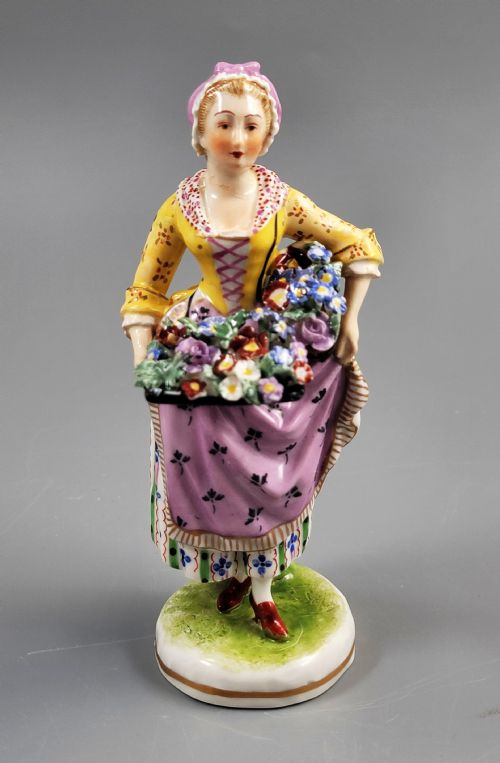
You are most likely to meet Victorian Staffordshire pottery gardeners, John Bevington porcelain pieces, and Charles Vyse studio pottery figures on this page. These works range from grand Georgian Derby models to rustic European folk art interpretations and crisp 1930s Royal Doulton editions.
The subjects usually hold baskets of tulips, roses, or daffodils, reflecting urban street life captured in ceramic glaze or polychrome paint. Each era treats the theme differently, shifting from formal Rococo Revival compositions to expressive studio pottery forms.
How they were made
Makers shaped these figures using porcelain, earthenware, and studio pottery bodies, often finishing the surfaces with a glossy ceramic glaze or overglaze enamel colours. Details such as petals and garments received careful hand-painting, sometimes accented with gold leaf or rich gilding.
Woodcarvers utilised polychrome pigments on carved timber figures, applying paint directly to the grain to render the clothing and market baskets. Potters employed press-moulding and slip-casting techniques before firing the clay in kilns and applying the final decorative layers.
Materials recorded across the selection include porcelain, enamel, earthenware, gold leaf, and carved wood.
What varies in quality
The crispness of the modelling separates average figures from exceptional ones, particularly in the rendering of facial expressions, fingers, and delicate floral petals. Superior examples show confident hand-painting where enamels and gilding are applied with precision rather than broad carelessness.
The sophistication of the glaze and the weight of the clay body dictate the calibre of a piece, with fine porcelain offering a translucency that heavier earthenware lacks. Maker attribution also plays a role, as documented studio pottery and established manufactories command greater artistic interest.
Charles Vyse·Royal Doulton·John Bevington·Dressel Kister And Cie·Derby
The Antique Flower Seller Figures Glossary
- Overglaze enamel
- Pigments painted on top of a fired and glazed ceramic surface, then fixed with a lower temperature second firing. This technique allows for bright, varied colour palettes on porcelain figures.
- Staffordshire pottery
- Earthenware produced in the English county of Staffordshire, known for robust domestic figures and cottage ornaments. These pieces often feature hand-painted details over a moulded base.
- Studio pottery
- Ceramic art created by individual artists working independently, often producing small runs of named subjects. These works focus on distinct glaze effects and expressive individual modelling.
- Polychrome
- Decoration utilising multiple colours applied to the surface of wood, ceramics, or plaster. It brings realism to carved wooden figures and ceramic models alike.
Antique Flower Seller Figures: Frequently Asked Questions
What materials are antique flower seller figures made from?
These figures appear primarily in porcelain and earthenware, alongside occasional carved wood examples. Makers finished these ceramic bodies with colourful overglaze enamels and glossy glazes.
Gold leaf and gilding also accent the garments and bases of finer porcelain pieces. Wood versions rely on polychrome paint layers to define the clothing.
How do I identify a Georgian flower seller figure?
Georgian pieces often display Rococo Revival influences with scrolled bases and delicate, animated modelling. They are typically rendered in fine porcelain rather than heavier earthenware.
Early examples frequently originate from manufactories like Derby and rely on subtle enamel painting. They lack the bold glazes seen on later Victorian Staffordshire items.
Where were these figures displayed originally?
Middle-class and wealthy homes showcased these ceramic figures on mantelpieces, side tables, and in glass cabinets. They served as decorative talking points that brought picturesque pastoral and urban themes indoors.
Victorian and Art Deco examples found places in domestic parlours alongside other mantel ornaments. Their colourful botanical subjects suited parlor and drawing room aesthetics.
Are Charles Vyse flower seller figures different?
Charles Vyse pieces belong to the studio pottery tradition of the 1920s and 1930s. They interpret the flower seller subject through a modern artistic lens rather than factory production.
These figures utilise distinct studio glazes and earthenware bodies. Their titles, such as The Tulip Woman, reflect individual ceramic artistry.