
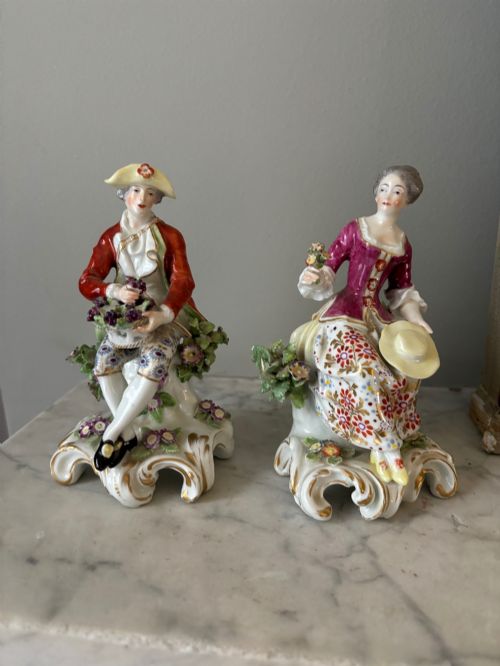


Rococo Style Porcelain Statuettes
Rococo style porcelain statuettes bring animated 18th-century charm, pastoral figures, and cherubs into your home through expressive ceramic modelling.
Rococo Style Porcelain Statuettes
When you search for rococo style porcelain statuettes, you encounter decorative figurines, pastoral groups, and allegorical figures created across the eighteenth, nineteenth, and early twentieth centuries. These pieces typically depict musicians, cherubs, gardeners, and mythological subjects modelled with lively movement and theatrical gestures.
The versions you meet most frequently on this page originate from European centres such as Meissen, Dresden, Paris, and various German and English factories. Many of these examples draw direct inspiration from earlier Chelsea, Derby, or French models, employing revival styles popular during the Victorian era.
How they were made
Potters constructed these statuettes using hard-paste or soft-paste porcelain, often building up complex forms with applied elements like delicate flowers and leafy bocage backgrounds. Artisans then hand-painted the surfaces with detailed enamel colours, frequently adding gold leaf, gilt, or gilding to highlight garments and scrollwork bases.
Many larger compositions required multiple mould parts to cast individual figures, animals, and architectural or natural accessories before assembly and firing. Biscuit porcelain was also utilised for unglazed figures, capturing crisp sculptural detail akin to carved marble.
Listings feature numerous nineteenth-century revival pieces alongside eighteenth-century examples, using materials like hard-paste porcelain, enamel, and gold leaf.
What varies in quality
Quality in these statuettes rests upon the crispness of the moulding and the sensitivity of the hand-painting, particularly in facial expressions and delicate fingers. Superior examples exhibit fine detailing in polychrome enamels and gilding, whereas lesser pieces display heavy modelling and flat application of colour.
The complexity of the composition also distinguishes the range, with intricate multi-figure groups and elaborate floral bocages demanding greater technical skill than single standing figures. Furthermore, the crispness of applied decorative elements indicates the care taken during the workshop production process.
Edme Samson·Meissen·Volkstedt·Helena Wolfsohn·Carl Thieme·Sitzendorf
The Rococo Style Porcelain Statuettes Glossary
- Hard-paste porcelain
- A durable ceramic material composed of kaolin and petuntse fired at high temperatures. It forms the robust base for many continental European figures.
- Bocage
- An open background of modelled leaves and flowers applied behind figures to create a rustic bower. This delicate foliage is a common feature in English and continental porcelain groups.
- Biscuit porcelain
- Unfired-looking, unglazed white ceramic that highlights sculptural contours. It mimics the appearance of classical marble sculpture.
- Gilding
- The application of gold leaf or gold paint to highlights, rims, and bases. It accentuates the ornate scrollwork characteristic of the revival periods.
- Enamel
- Vitreous coloured paints fused to the porcelain surface during a secondary low-temperature firing. These pigments provide the vibrant palette seen on garments and floral details.
Rococo Style Porcelain Statuettes: Frequently Asked Questions
What are rococo style porcelain statuettes?
These decorative ceramic objects represent people, animals, and mythological scenes inspired by the theatricality and asymmetry of eighteenth-century design. They range from single figures of musicians and gardeners to elaborate multi-figure pastoral groups.
Makers across Europe produced these ornamental sculptures to adorn mantelpieces and tables, capturing dramatic narratives in three dimensions.
How were porcelain statuettes used?
Historically, affluent households displayed these figures on dining tables as decorative centrepieces during dessert courses, or arranged them on mantelpieces and brackets in formal rooms. They served as conversation starters and expressions of cultural refinement.
Today, collectors place them within cabinets or on prominent surfaces where their detailed modelling and painted finishes can be admired up close.
How do I live with antique porcelain figures?
Living with these delicate items involves placing them in stable locations away from heavy vibrations, direct sunlight, and high-traffic areas where they might be knocked. Secure shelving or enclosed cabinets protect fragile elements like applied flowers and outstretched fingers from accidental damage.
Gentle dusting with a soft, dry brush keeps the enamels and gilt surfaces bright without introducing moisture or abrasive cleaning agents.
How do I tell periods apart?
Distinguishing between eighteenth-century originals and nineteenth-century revival pieces requires examining paste consistency, factory marks, and the style of the hand-painting. Eighteenth-century examples often show subtle wear and softer enamel palettes, whereas nineteenth-century revival pieces frequently display brighter colours and heavier gilding.
Factory marks, whether impressed, painted, or incised, provide further clues regarding the era of manufacture and the producing workshop.