

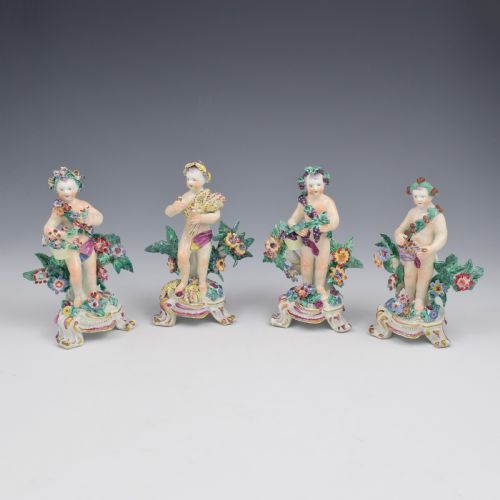


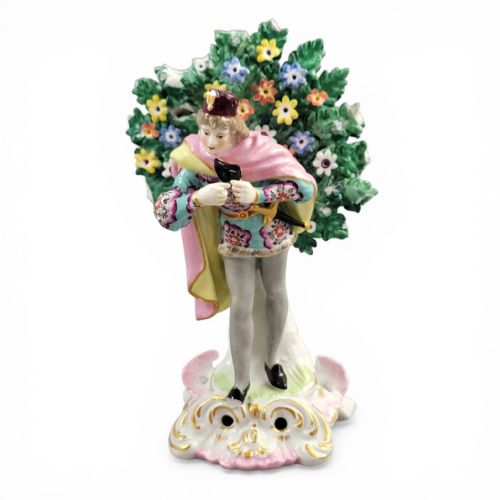

Gilded Porcelain Figurines
These gilded porcelain figurines bring character and period charm to a room, offering the appeal of eighteenth and nineteenth-century ceramic art.
What They Are
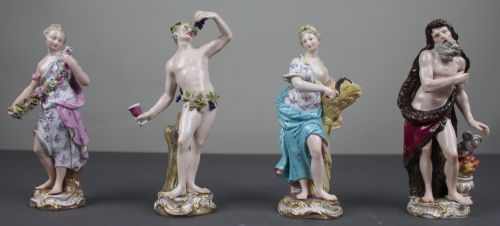
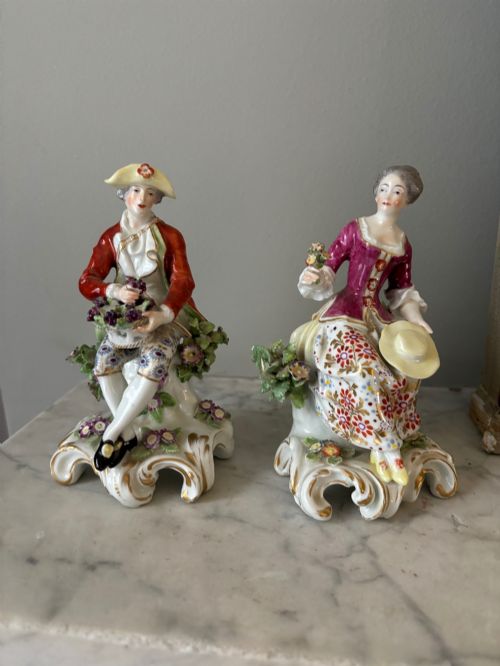
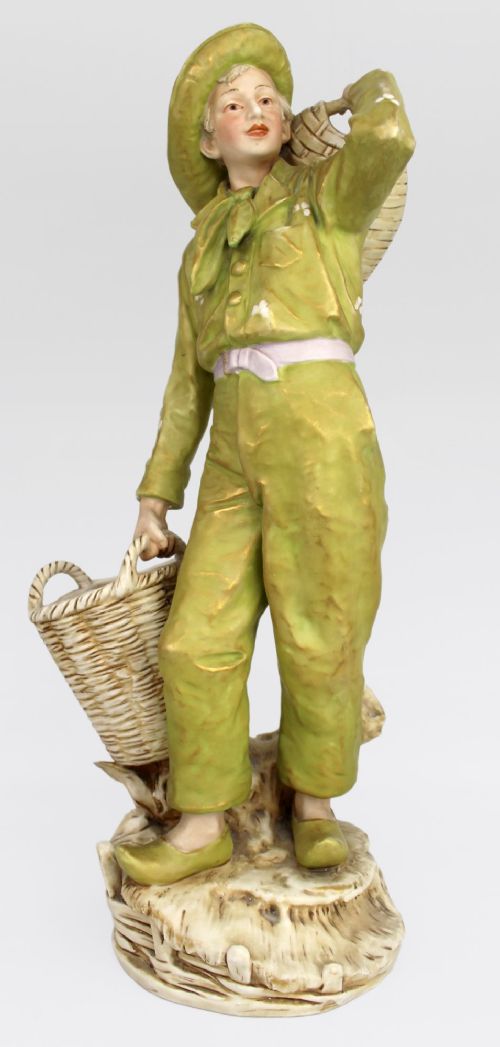
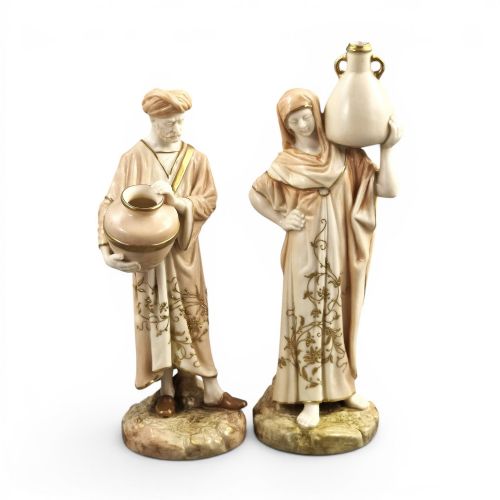
When you search for gilded porcelain figurines, you encounter decorative sculptural pieces created across the eighteenth and nineteenth centuries. These items take the form of figures, pairs of figures, and ceramic animals.
The selections on this page include pairs depicting shepherds, children with pets, and deer such as stags and does. They originate from British and continental European factories, spanning Georgian and later nineteenth-century periods.
Makers represented in these listings include Edme Samson, Bloor Derby, and Sitzendorf. Stylistically, they range from Rococo and Regency to the later Rococo Revival aesthetic.
How They Were Made
These pieces are constructed from porcelain and hard-paste porcelain, moulded and fired to form the structural body of each figure. Artisans then applied detailed enamel colours to paint the surfaces before glazing.
Gold leaf and gilding were applied by hand to accent garments, bases, and decorative flourishes. This meticulous secondary firing process secured the metallic highlights onto the ceramic body.
Retail Price Guide 2026
Typical UK retail prices for gilded porcelain figurines, calculated from the Sellingantiques database of over a million retail prices indexed since 2003. This retail price guide relies exclusively on Sellingantiques data; no external sources or auction records are used, so the figures do not describe the wider market.
Listings span the eighteenth and nineteenth centuries, featuring hard-paste porcelain, enamel, and gold leaf.
What Varies in Quality
The precision and richness of the enamel painting and gold leaf application dictate the visual hierarchy. Skilled hand-painting brings depth to costumes and animal pelts, whereas lesser pieces exhibit heavier, less nuanced brushwork.
Edme Samson·Bloor Derby·Sitzendorf
The Gilded Porcelain Figurines Glossary
- Hard-paste porcelain
- A dense, durable ceramic composed of kaolin and petuntse, fired at very high temperatures. This material forms the durable body of many continental European figures.
- Enamel
- Vitreous pigments applied over the glazed porcelain surface and fired at a lower temperature to fuse the colour. It provides the vibrant palette seen on garments and naturalistic details.
- Gilding
- The application of gold leaf or powdered gold onto the ceramic surface for decorative enrichment. It catches the light and highlights sculptural contours.
- Rococo Revival
- A nineteenth-century design movement that revives the asymmetrical curves, scrollwork, and playful motifs of the earlier eighteenth-century Rococo style.
- Gold Anchor Mark
- A factory signifier associated with specific ceramic reproductions and figures. It helps identify the manufacturing heritage of the piece.
Frequently Asked Questions
What periods do these figurines date from?
The pieces span from the late eighteenth century through the nineteenth century. They include Georgian examples as well as later Victorian continental works.
Specific dates range from the late 1700s up to the late 1800s, encompassing distinct manufacturing eras.
How should I display gilded porcelain?
Place these figures in stable locations away from high foot traffic and direct sunlight. Secure surfaces prevent accidental tipping of delicate porcelain limbs and gilded bases.
Pairing them on mantels or within enclosed cabinets protects the enamel and gold leaf from dust and physical contact.
What subjects do these figures depict?
Common subjects include pastoral scenes, human figures in period dress, and animals. Pairs often feature matching rustic or romantic themes.
Examples on this page specifically portray shepherds, children with lambs, and stags with does.
Where were these porcelain pieces manufactured?
Manufacturing locations include both British potteries and continental European workshops. Germany is a prominent source for several listed pieces.
Factory origins vary from established English ceramic works to German porcelain houses.