




Sitzendorf Porcelain Figures
Sitzendorf porcelain figures are charming German ceramics that bring elaborate 19th-century character to a room.
Sitzendorf Porcelain Figures
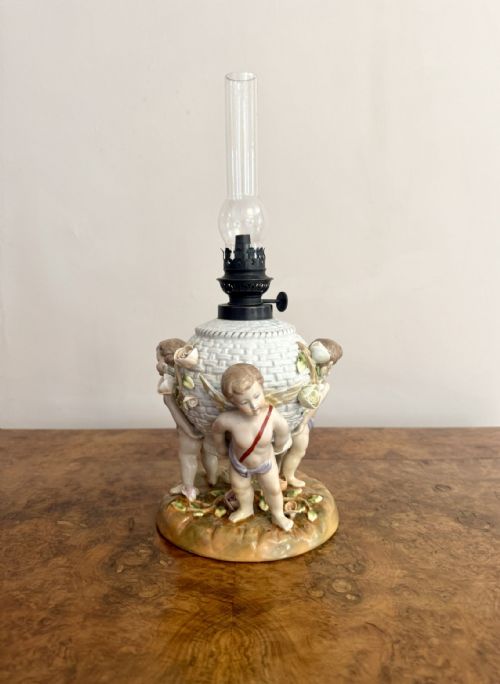
When buyers search for sitzendorf porcelain figures, they encounter sculptural ceramics originating from Germany across the 19th century, including the 1880, 1890, 1900, and 1930 periods. The selections available here commonly take the form of porcelain figurines, figural candlesticks, and oil lamps.
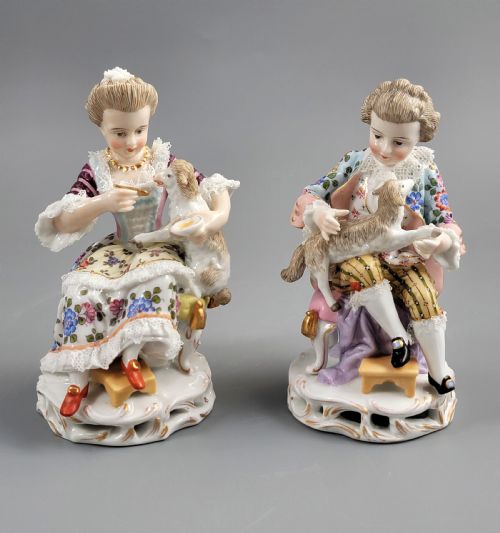
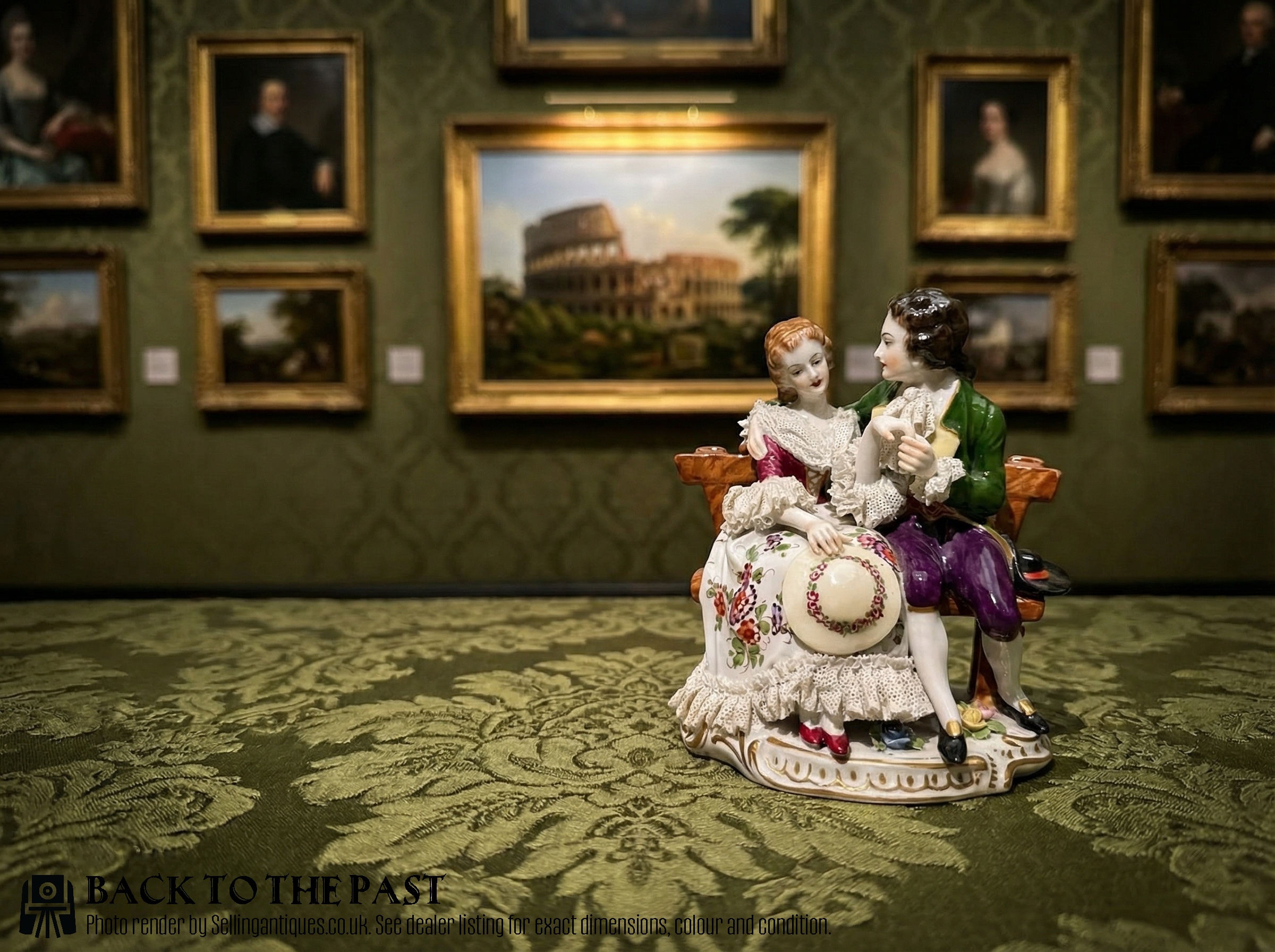
The most frequent pieces met on this page are figural candlesticks and freestanding figures, often depicting children with lambs, gardeners, skaters, or musicians like shepherdesses and lute players. These works frequently draw upon Victorian Rococo Revival styles, featuring ornate floral bases and dynamic poses.
Many of these objects are paired sets, which hold particular appeal for collectors seeking symmetrical decorative items for a mantelpiece or side table. The physical forms range from individual figurines to complex functional lighting pieces combining glass, brass, and hard-paste porcelain.
Materials and production methods
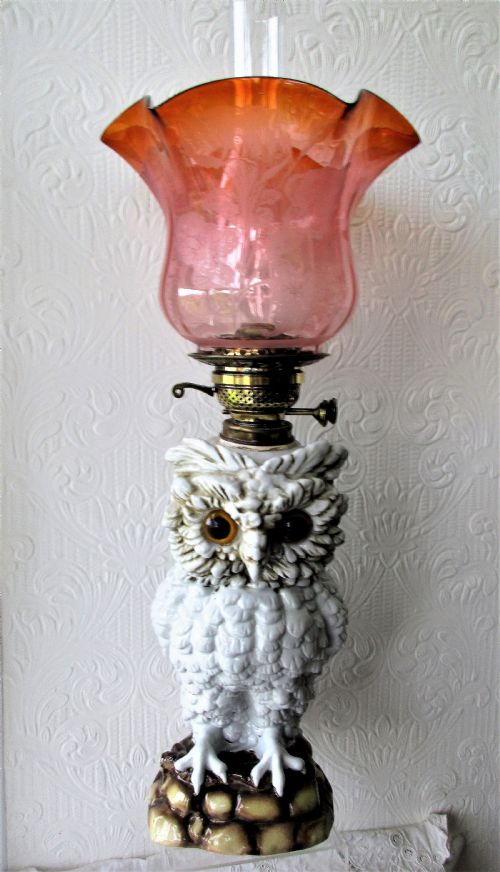
The creation of these objects relies heavily on hard-paste porcelain and standard porcelain, which provides a durable and bright white base for detailed modelling. Artisans shaped these materials by hand to form intricate subjects such as owls, human figures, and decorative floral elements.
Makers applied enamel paints by hand to render clothing, facial expressions, and naturalistic details with high precision. Accents of gold leaf, gilt, and sometimes brass and glass further enriched the surfaces, particularly on functional pieces like oil lamps and candlesticks.
Among the shepherds and musicians, an owl makes a surprise appearance as an oil lamp.
Assessing quality in Sitzendorf pieces
The complexity of the composition also dictates value, with pairs of large figural candlesticks or multi-figure groups representing a higher tier of production than simpler standalone figurines. Preservation of the fragile porcelain elements, including fingers, leaves, and lace, heavily influences the standing of any given piece.
The Sitzendorf Porcelain Figures Glossary
- Hard-paste porcelain
- A durable ceramic material fired at high temperatures, composed of kaolin and petuntse. It forms the robust body of most nineteenth-century German figures.
- Rococo Revival
- A nineteenth-century design style mimicking the asymmetrical curves, scrollwork, and florid ornamentation of the eighteenth century. It defines the aesthetic of many figural candlesticks.
- Figural candlesticks
- Lighting supports incorporating sculpted human or animal figures into the stem or base. They combine utility with decorative sculptural art.
Sitzendorf Porcelain Figures: Frequently Asked Questions
What are Sitzendorf figures?
Sitzendorf figures are porcelain sculptures and functional items like candlesticks produced in Germany. They span the nineteenth century and reflect Victorian and Rococo Revival tastes.
Subjects range from gardeners and skaters to children with animals, all modelled in hard-paste porcelain and painted by hand.
How were figural oil lamps used?
Figural oil lamps served as both practical lighting devices and decorative centrepieces for Victorian homes. They burned oil through a wick housed in a metal burner mounted on a porcelain base.
While their lighting function is rarely utilised today, they remain striking decorative objects for tables and sideboards.
How do I date these porcelain pieces?
Dating relies on stylistic clues such as the presence of Victorian Rococo Revival ornamentation and specific recording of periods in the evidence from the 1880s to the 1930s. Examining the complexity of the hand-painting and the type of porcelain also helps place an item within the nineteenth century.
Comparing known motifs, such as musicians or gardeners, provides further context for the era of manufacture.
How do I care for antique porcelain?
Care for antique porcelain requires gentle handling to protect delicate protruding elements like fingers, flowers, and musical instruments. Dusting should be done softly with a dry cloth without using harsh cleaning agents.
Keep pieces away from direct sunlight and areas subject to knocks or vibrations to preserve the hand-painted enamels and gold leaf.