


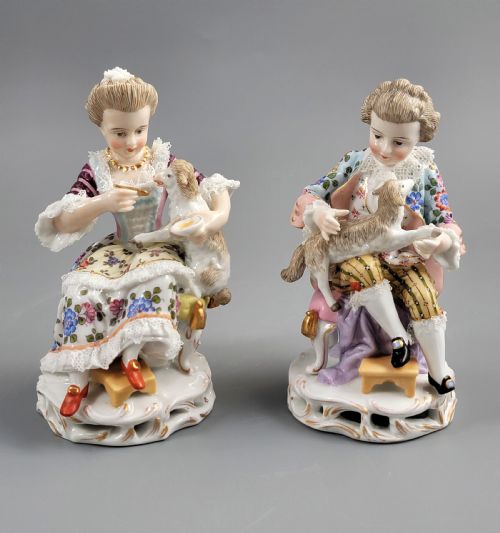


Antique Ceramic Shepherd Figures
These antique ceramic shepherd figures bring pastoral charm to a room, offering pastoral scenes shaped in porcelain and pottery.
Antique Ceramic Shepherd Figures
When you search for antique ceramic shepherd figures, you encounter sculptural groups and pairs depicting pastoral attendants, lambs, and goatherds. The selection on this page centres primarily on nineteenth-century Continental and English porcelain, alongside Georgian examples.
The forms range from large figural candlesticks and statuettes to monumental French bisque sculptures and Staffordshire pottery figures. Makers such as Sitzendorf, Bloor Derby, and Royal Dux dominate the configurations available to collectors.
How they were made
The pieces rely upon hard-paste and bisque porcelain, shaped into intricate figurines and embellished with enamel, polychrome painting, and gold leaf highlights. Workshops utilised moulding techniques to capture the detailed drapery and pastoral animals characteristic of the style.
Terracotta and earthenware also appear, notably in French animalier sculpture and Staffordshire pottery figures. Gilt accents and carefully applied enamel colours complete the surface decoration of these ceramic works.
Listings feature items from the eighteenth century, the Georgian era, and the nineteenth century, executed in porcelain, earthenware, and terracotta.
What varies in quality
Quality rests upon the crispness of the moulding and the sensitivity of the hand-painted polychrome and enamel details. Finer figures display refined facial expressions and delicate rendering of foliage and garments.
The application of gold leaf and the sophistication of the porcelain body also distinguish higher-grade Victorian and Georgian works from simpler production.
Sitzendorf·Bloor Derby·Vion and Baury·Royal Dux
The Antique Ceramic Shepherd Figures Glossary
- Bisque porcelain
- Unglazed white porcelain that has a matte, marble-like texture. It allows sculptural detail to remain sharp without the softening effect of a glossy glaze.
- Hard-paste porcelain
- A durable ceramic composition fired at high temperatures. It provides a crisp base for enamel colours and gilding.
- Polychrome
- Decoration utilising multiple distinct colours on the surface of the ceramic. This technique brings pastoral garments and landscapes to life.
- Figurine
- A small carved or moulded statuette representing a human or animal figure. In this context, they typically form pairs of shepherds and shepherdesses.
Antique Ceramic Shepherd Figures: Frequently Asked Questions
How do I date an antique porcelain figure?
Dating relies upon examining the paste, glaze characteristics, and any underglaze marks or impressed numbers. Stylistic cues such as Rococo Revival or Georgian costume also help establish the era of manufacture.
Comparing the manufacturing techniques to known periods like the patch period or the nineteenth century narrows the timeframe further.
Were these shepherd figures meant for display?
These ceramic figures served primarily as decorative ornaments for mantelpieces, side tables, and cabinets in middle and upper-class homes. Some specific forms, such as figural candlesticks, combined illumination with pastoral decoration.
They reflected an idealized, romanticized view of rural life popular in European drawing rooms.
How should I clean my porcelain figures?
Gentle dusting with a soft, dry brush is generally sufficient to maintain the surface of glazed and bisque porcelain. Avoid harsh cleaning agents or submerging pieces with delicate enamel or gold leaf highlights in water.
Careful handling prevents accidental damage to fragile elements like fingers, staff accessories, and small lambs.
What is the difference between Derby and Sitzendorf figures?
Derby figures originate from English kilns active during the eighteenth and nineteenth centuries, often featuring early patch marks or distinct paste formulations. Sitzendorf figures represent nineteenth-century German porcelain production influenced by earlier styles.
German works frequently utilise vibrant polychrome and gilt details typical of Continental factories of that period.