


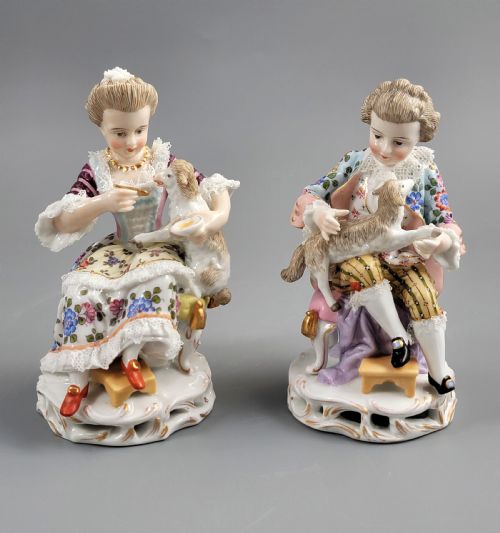


White Porcelain Pastoral Figures
White porcelain pastoral figures capture rural charm through delicate modelling and glazed ceramic forms from eighteenth and nineteenth century European workshops.
White Porcelain Pastoral Figures
White porcelain pastoral figures depict shepherds, shepherdesses, gardeners, and children accompanied by animals such as lambs and cows, often styled as pairs or single figurines. These objects emerge primarily from eighteenth-century and nineteenth-century production centres across Europe, including German, French, and English factories.
The version most commonly encountered on this page is the nineteenth-century German porcelain figure, frequently originating from factories such as Sitzendorf or produced in earlier Chelsea-Derby and Rococo styles. Figurines, porcelain figurines, and figural candlesticks represent the principal object types found in this selection.
Makers span famous European names like Meissen, Derby, Limbach, KPM-School, Samson, and Ludwigsburg, alongside Victorian Staffordshire and continental makers. The subjects draw upon an idealized vision of rural life that fascinated collectors during the Georgian and Victorian eras.
Materials and Manufacture
These pieces utilise soft-paste porcelain and hard-paste porcelain, shaped into intricate figural forms that capture pastoral scenes with considerable anatomical and textural detail. The ceramic body provides a smooth foundation for subsequent surface treatments.
Object forms span individual figurines, matched pairs, and figural candlesticks decorated with enamel and gold leaf.
Assessing Quality and Execution
Quality rests upon the crispness of the porcelain modelling and the delicacy with which the facial expressions, fingers, and drapery folds are rendered. Superior examples display precise hand-modelling where botanical elements and animal fleece retain sharp definition.
The application of enamel and gilding further separates standard production from finer output, with meticulous brushwork and secure firing indicating superior factory standards. The depth of the glaze and the preservation of the original body contribute significantly to the visual presence of each figure.
Meissen·Derby·Limbach·Sitzendorf·Samson·Ludwigsburg
The White Porcelain Pastoral Figures Glossary
- Hard-Paste Porcelain
- A vitrified ceramic composed of kaolin and petuntse, fired at high temperatures to produce a dense, impermeable body. This material forms the durable white foundation for many continental figures.
- Soft-Paste Porcelain
- An artificial porcelain compound containing glass frit and white clay, fired at lower temperatures than hard paste. It exhibits a softer texture and a slightly warmer glaze appearance.
- Enamel
- Opaque vitreous paint applied over the glaze and fired again to fuse with the ceramic surface. It provides the vibrant colours found on garments and natural elements.
- Gilt
- A thin layer of gold applied to the porcelain surface for decorative enhancement. This metallic finish often highlights bases, scrolls, and garment edges.
- Rococo Revival
- A nineteenth-century design movement resurrecting the asymmetrical scrolls, C-curves, and playful ornamentation of the mid-eighteenth century. Figures from this period frequently adopt these elaborate bases.
White Porcelain Pastoral Figures: Frequently Asked Questions
What are white porcelain pastoral figures?
These objects are ceramic sculptures depicting rural characters such as shepherds, shepherdesses, and gardeners, often modelled alongside animals like lambs and cows.
Originating from European porcelain factories, they reflect an idealized aesthetic popular during the eighteenth and nineteenth centuries.
How were these figures used originally?
Wealthy patrons displayed these porcelain figures upon dining tables as decorative centrepieces or arranged them on mantelpieces and cabinets within formal rooms.
Some examples also served functional roles as figural candlesticks, combining illumination with sculptural decoration.
How do I distinguish eighteenth-century pieces?
Eighteenth-century examples often exhibit softer glaze characteristics, lighter potting, and distinct modelling styles associated with early factory output.
Examining the base, paste composition, and underglaze marks helps differentiate original Georgian periods from later nineteenth-century revival pieces.
How do I care for antique porcelain?
Keep these fragile figures away from direct sunlight and areas subject to sudden temperature fluctuations to protect the enamel and glaze.
Dust them gently with a soft, dry brush and avoid submerging pieces that feature delicate gilt or enamel work.