





Rococo Revival Porcelain Figures
These rococo revival porcelain figures combine elaborate scrollwork and delicate moulding to bring theatrical charm to nineteenth-century interiors.
Rococo Revival Porcelain Figures
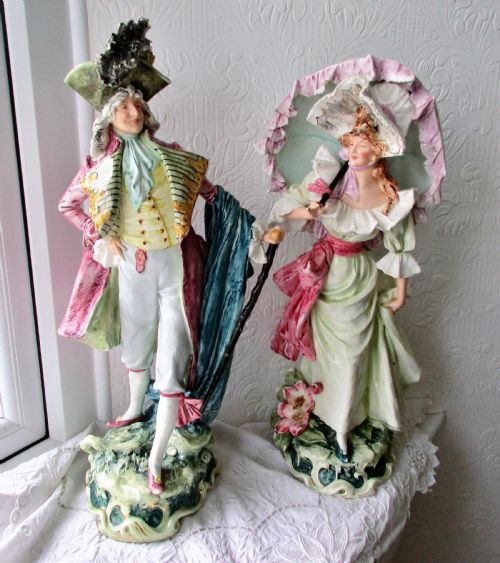
When you examine rococo revival porcelain figures, you encounter a distinct nineteenth-century fascination with eighteenth-century French and English theatrical aesthetics. These pieces typically take the form of painted figurines, figural groups, candlesticks, and mantle clocks featuring gallants, musicians, shepherds, and allegorical subjects.
The items listed here span the Victorian era, reaching from the middle decades of the nineteenth century into the early twentieth century. German factories such as Volkstedt, Sitzendorf, and Dresden dominate the selection, alongside French makers and English interpretations of Chelsea and Derby models.
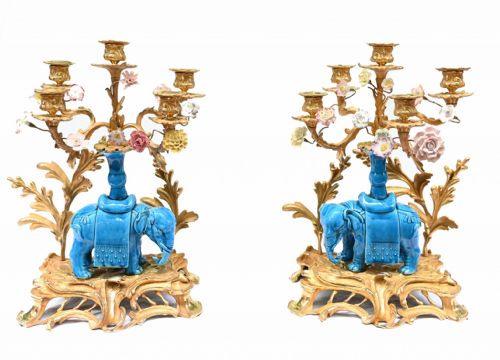
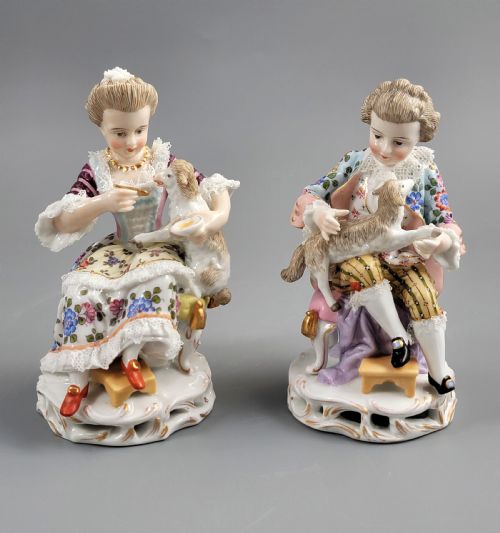
Buyers will find both single decorative figures and symmetrical pairs designed to flank a centrepiece. Many incorporate functional elements like candelabra arms or clock movements housed within porcelain and gilt bronze mounts.
What Varies in Quality
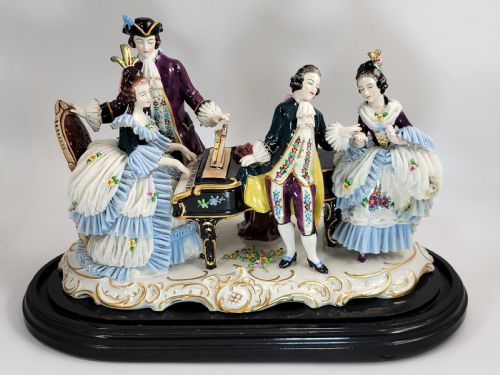
Painting execution also marks the distinction between grades, as finely brushed enamels and precise gilding require steady artistry. The integration of complex elements, such as applied ceramic lace and elaborate bocage backgrounds, demands advanced technical mastery from the kiln workers.
Several figures hold tiny instruments and wear porcelain lace so fine it looks woven from actual thread.
Volkstedt·Samson·Sitzendorf·Vion et Baury·Minton·Ernst Bohne Sohne·Helena Wolfsohn
The Rococo Revival Porcelain Figures Glossary
- Hard-paste porcelain
- A dense, durable ceramic composed of kaolin and petuntse fired at very high temperatures. It forms the robust structural body of most nineteenth-century continental European figures.
- Ormolu
- Finely ground gold applied in a mercury amalgam to bronze mounts. This technique provides the rich metallic lustre seen on clock bases and candelabra arms.
- Bocage
- An ornamental background of carved or moulded leaves and foliage framing a ceramic figure. It draws inspiration from eighteenth-century English porcelain traditions.
- Bisque porcelain
- Unglazed white ceramic with a matte texture resembling marble. Vion et Baury frequently utilised this finish for sculptural purity.
Rococo Revival Porcelain Figures: Frequently Asked Questions
What are rococo revival porcelain figures?
These decorative objects are nineteenth-century ceramic sculptures inspired by the elaborate, asymmetrical scrollwork of the eighteenth-century Rococo movement. They depict theatrical scenes, pastoral figures, and allegorical characters created primarily in European factories.
Makers drew upon earlier Chelsea, Meissen, and Derby traditions while incorporating Victorian manufacturing techniques. The resulting pieces served as fashionable ornaments for nineteenth-century salons and drawing rooms.
How were figural candlesticks used?
Figural candlesticks combined sculpture with illumination, holding wax candles to light dinner tables and mantelpieces. The porcelain figures often represented shepherds, musicians, or putti entwined with floral branches.
When paired symmetrically, they acted as decorative garnitures framing clocks or mirrors. Their dual purpose allowed households to display artistic taste alongside practical lighting.
How do I identify German porcelain figures?
German factories such as Sitzendorf and Volkstedt frequently marked their wares with factory stamps or painted symbols underneath the glaze. Examining the paste, glaze thickness, and base construction helps determine the origin.
Stylistic cues like applied lace, pastel enamel palettes, and naturalistic flower-encrusted bases also point toward specific nineteenth-century German workshops.
How should I clean porcelain figures?
Maintenance requires gentle dusting with a soft, dry brush to prevent dirt accumulation within intricate moulded details. Avoid submerging pieces with metallic mounts or applied lace in water.
Harsh cleaning agents can damage fragile enamel paints and delicate gilding. Professional consultation is advisable for pieces requiring deeper restoration.