
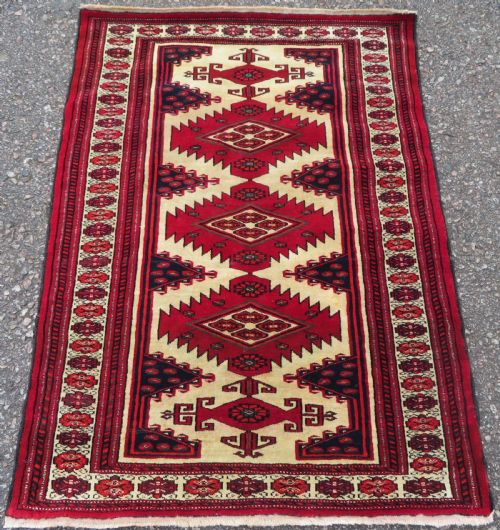
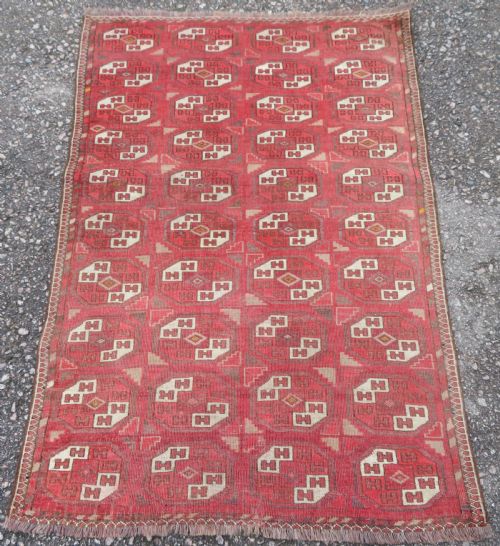
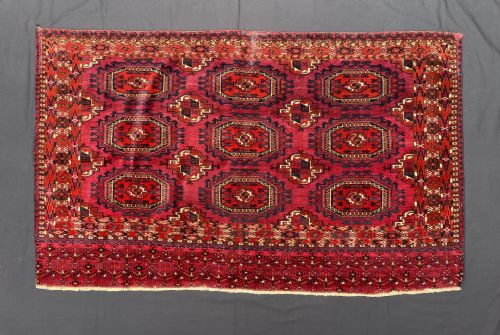


Small Turkmen Rug
These small turkmen rug examples are tribal and nomadic wool floor coverings woven across Central Asia for domestic and dowry use.
Small Turkmen Rug
When searching for a small turkmen rug, buyers encounter portable nomadic weavings that include floor rugs, prayer rugs, tent door hangings, and functional storage bags. These pieces originate from various tribes across Central Asia, including the Tekke, Yomut, Saryk, Ersari, and Kizil Ayak groups.
The format most frequently met on this page is the compact dowry rug or bag face, traditionally woven in small dimensions for domestic use or personal milestones. Examples range from nineteenth-century tribal work to early twentieth-century village productions featuring characteristic geometric motifs.
Makers utilised standard formats such as torbas, chuvals, and mafrashes alongside standard floor rugs to furnish nomadic tents and permanent dwellings. Each tribal group expressed its distinct heritage through repeated structural patterns and regional wool handling.
How They Were Made
Weavers constructed these textiles primarily from wool foundations and pile, occasionally incorporating cotton or silk for structural contrast and detail. Natural dyes provided the characteristic rich red, brown, and ivory colour palettes observed across the pieces.
Tightly knotted pile techniques created dense, durable surfaces designed to withstand heavy daily use inside tents and homes. Artisans balanced structural warp and weft threads to achieve the fine weaves seen in traditional dowry pieces.
Several bags retain their original wool backs, proving that some nomadic storage items survived centuries without losing their bottoms.
What Varies in Quality
The density of the knotting and the fineness of the weave distinguish standard utility items from exceptional dowry weavings. Superior examples exhibit precise geometric execution and delicate handling of secondary structural elements.
The purity and depth of the natural dyes significantly influence the visual impact of the piece. Subtle variations in tone and soft wool texture elevate the overall presence of the weaving.
The Small Turkmen Rug Glossary
- Gul
- A primary octagonal or repeating medallion motif used across tribal weavings to identify specific groups. These motifs form the central structural backbone of many traditional designs.
- Torba
- A small storage bag face produced by nomadic tribes for household organisation and domestic display. These rectangular panels are frequently mounted or collected as independent textiles.
- Chuval
- A large storage bag used for bedding and household possessions within the tent. Surviving fragments and complete faces display characteristic tribal gul arrangements.
- Mihrab
- An arch-shaped design element derived from Islamic architecture and utilised in prayer rugs. This motif points toward Mecca during daily worship.
- Asmalyk
- A large pentagonal trapping traditionally hung inside the bridal camel tent during wedding processions. These decorative textiles represent some of the most intricate tribal handiwork.
Small Turkmen Rug: Frequently Asked Questions
How were these rugs used?
Nomadic communities utilised these compact weavings as floor coverings, prayer mats, and decorative wall hangings inside their dwellings. Many examples originated as functional storage bags or bridal trappings.
Over time, these utilitarian objects gained appreciation for their artistic merit and cultural symbolism, leading to their preservation as collector items.
How do I live with one?
These resilient wool textiles suit areas of moderate foot traffic where their dense pile can withstand daily use. Placing a suitable underlay beneath the rug prevents slipping and reduces fibre wear.
Regular gentle vacuuming without a rotating brush helps maintain the wool, while keeping the textile away from direct sunlight protects the natural dyes.
How are different tribes identified?
Tribal origin is determined by analysing the specific gul medallions, border arrangements, and structural colour palettes unique to each group. Groups such as the Tekke, Yomut, and Saryk employed distinct design vocabularies.
Structural traits like knot density and end finish further assist in distinguishing the weaving traditions of various Central Asian populations.