



Burgundy Turkmen Rug
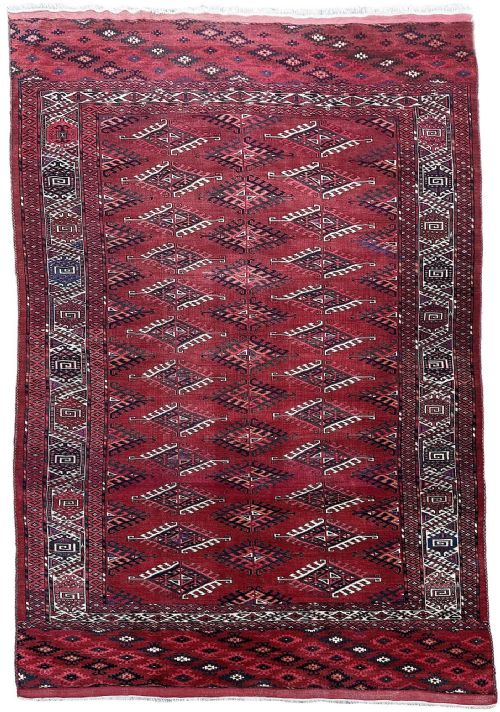
A burgundy turkmen rug brings rich tribal geometry and deep madder tones into a room, offering centuries of Central Asian weaving tradition.
Burgundy Turkmen Rug
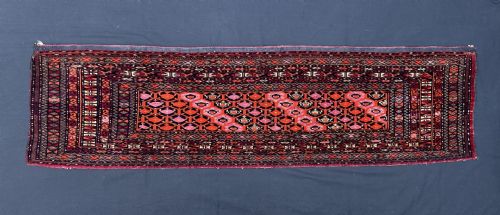
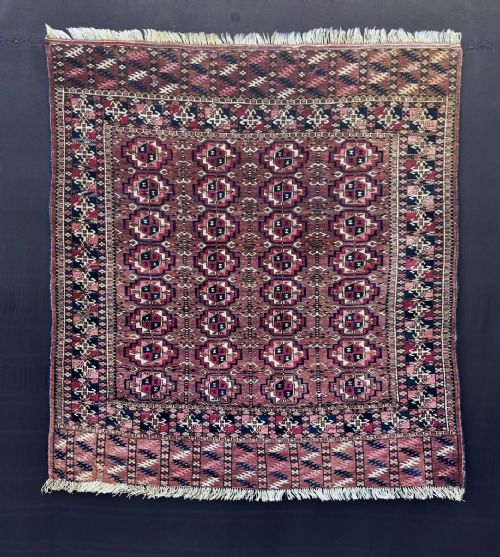
A burgundy turkmen rug encompasses tribal carpets, tent bands, and smaller trapping textiles woven by various Central Asian groups such as the Yomut, Tekke, Saryk, and Ersari. These pieces date from the nineteenth and early twentieth centuries, spanning periods from eighteen fifty to nineteen twenty.
Buyers will encounter diverse formats ranging from large carpets and wedding rugs to specific utilitarian forms like torbas, chuvals, jollars, and asmalyks. Many examples derive from the Trans-Caspian steppes, the Merv oasis, and the Amu Darya region.
The dominant visual structure relies on repeating guls, or primary medallion motifs, rendered in deep red and burgundy wool palettes often highlighted with secondary shades like ivory, navy, and gold.
Materials and construction
The foundation relies principally on hand-spun wool and cotton, utilised across pile rugs and flatweave kilims. Natural dyes provide the deep burgundy and red ground colours characteristic of these textiles.
Weavers employed wool or cotton for warps andwefts, sometimes incorporating silk highlights to accentuate specific tribal patterns and border details within the weave.
The listings span eight distinct decades of production, incorporating wool, cotton, silk, and natural dyes across Turkmen tribal forms.
Judging quality and execution
Quality rests upon knot density, handle flexibility, and the crispness of the geometric gul drawing across the field. Finer weaves display intricate precision in motifs such as the curled leaf or kedjebe design.
The depth and saturation of natural dye variations enhance the visual movement of the burgundy ground, distinguishing superior tribal weaving from simpler village productions.
The Burgundy Turkmen Rug Glossary
- Gul
- A primary medallion motif repeated across tribal carpets. These octagonal or principal shapes identify the specific weaving group.
- Torba
- A small storage bag face produced by nomadic tribes. These pieces typically hung inside the yurt for household storage.
- Chuval
- A large tent storage bag face woven with multiple primary guls. They served functional domestic purposes in nomadic settlements.
- Asmalyk
- A pentagonal trapping piece mounted on camel flanks during wedding processions. These decorative textiles display distinctive tribal geometry.
- Ensi
- A tribal door hanging featuring a cruciform division of the field. These textiles marked the entranceway of the nomadic yurt.
Burgundy Turkmen Rug: Frequently Asked Questions
How were these rugs used originally?
Nomadic families utilised these textiles for floor coverings, bedding storage, tent decoration, and camel trappings during ceremonies.
Specific formats like torbas and chuvals held household goods inside portable dwellings, while wedding rugs marked significant tribal celebrations.
How do I distinguish different tribal styles?
Tribal attributions rely on the specific shape and drawing of the primary guls, along with the border ornaments and palette.
Groups such as the Yomut, Tekke, and Ersari each employed distinct geometric arrangements and structural nuances that separate their work.
Where should I place a textile in my home?
Smaller trappings and torba faces work effectively as wall hangings or tabletop mats to display intricate tribal details safely.
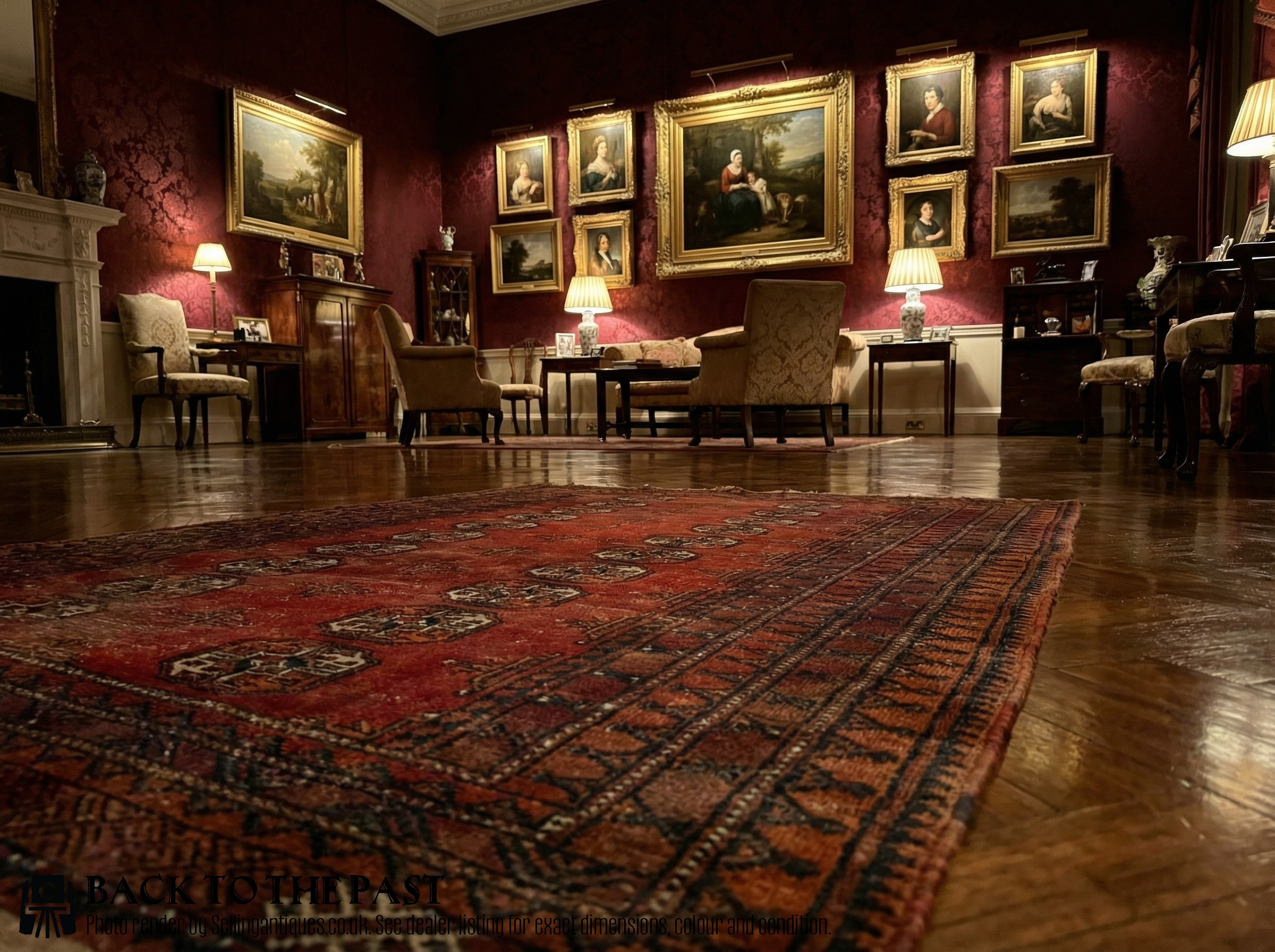
Larger formats function well as floor rugs in low-traffic areas where the wool pile and natural dyes can be appreciated.
What maintenance do antique wool rugs require?
Gentle regular vacuuming without a rotating brush bar keeps surface dust from settling deep into the wool pile.
Professional textile conservators should handle any deep cleaning or structural repairs to preserve the original hand-spun foundations.