


Silver Table Salt Cellars
Silver table salt cellars bring domestic craft to the dining room, offering small vessels shaped for everyday hospitality across centuries.
Silver Table Salt Cellars
Silver table salt cellars are small open vessels or covered pots designed to hold salt at the dining table, appearing in forms from simple round bowls to boat shapes and animal figures. When you search for silver table salt cellars, you encounter pieces spanning the Georgian, Victorian, and Edwardian eras, alongside later twentieth-century examples.
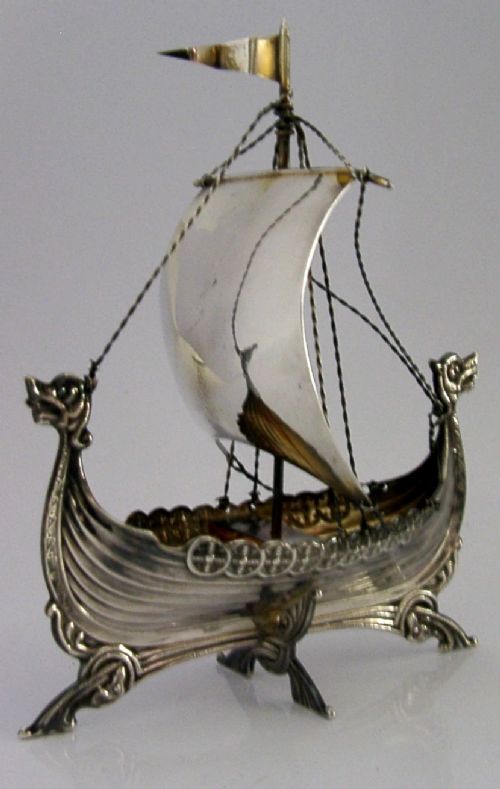
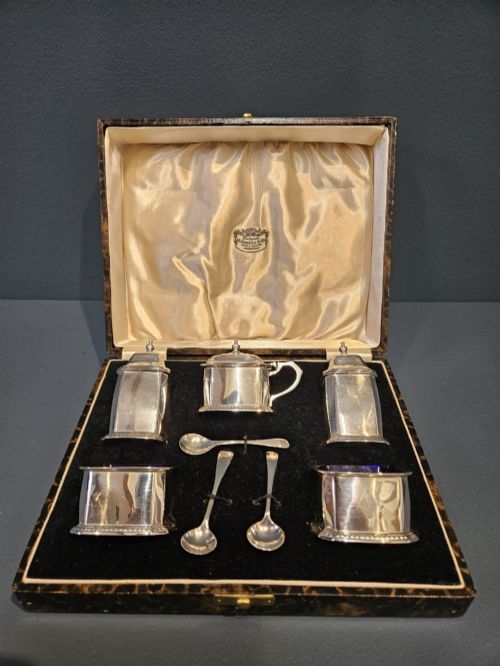
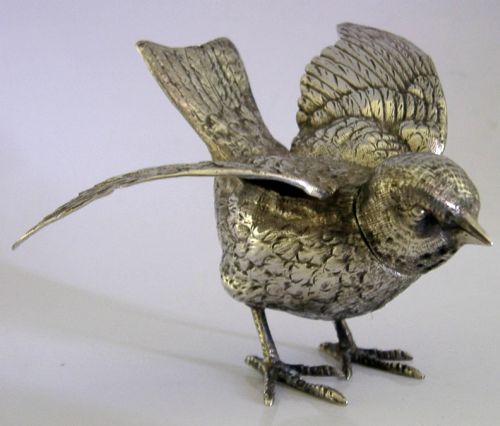
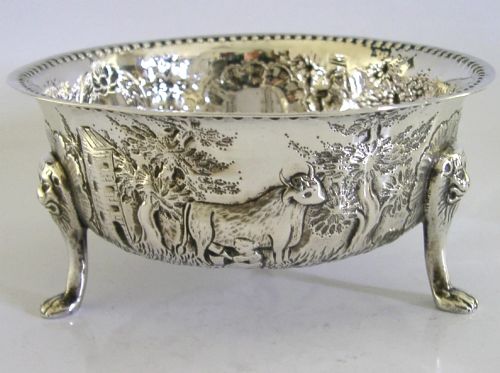
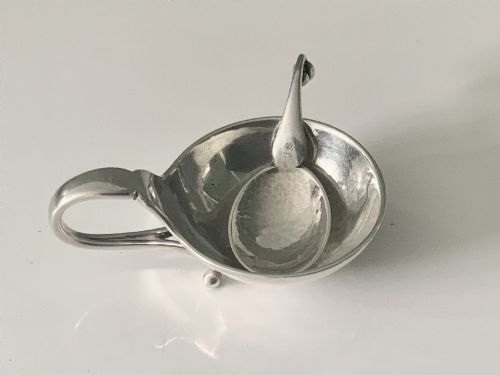
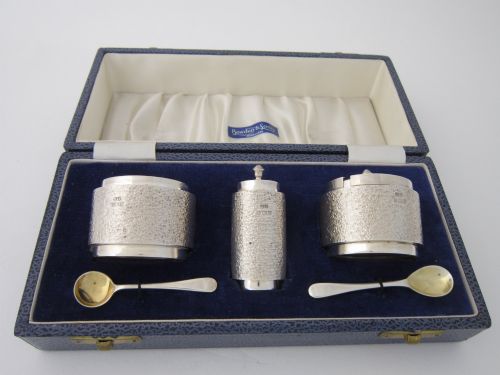
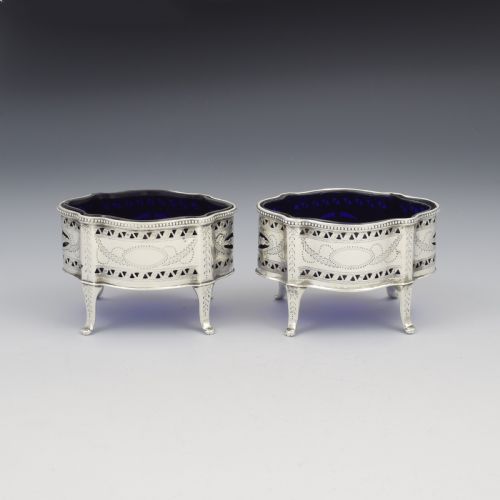
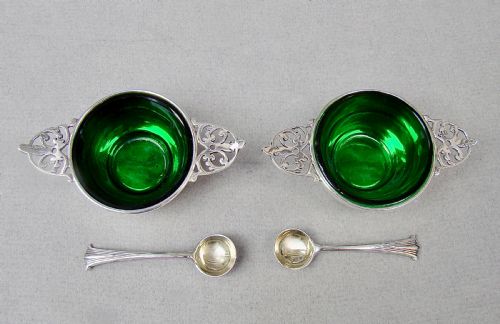
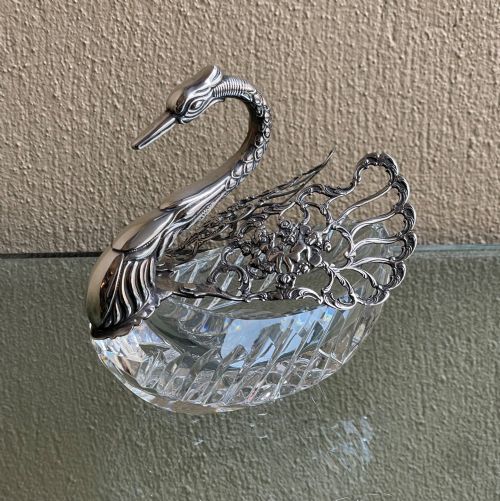
The versions most frequently met on this page include open cauldron salts, often resting on tiny feet, and paired sets accompanied by matching spoons or glass liners. Makers also shaped these table wares into novelty designs such as birds, swans, and longships, reflecting the ornamental tastes of specific periods.
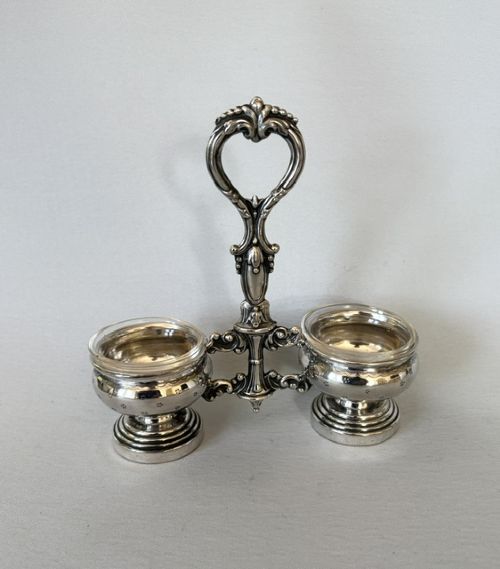
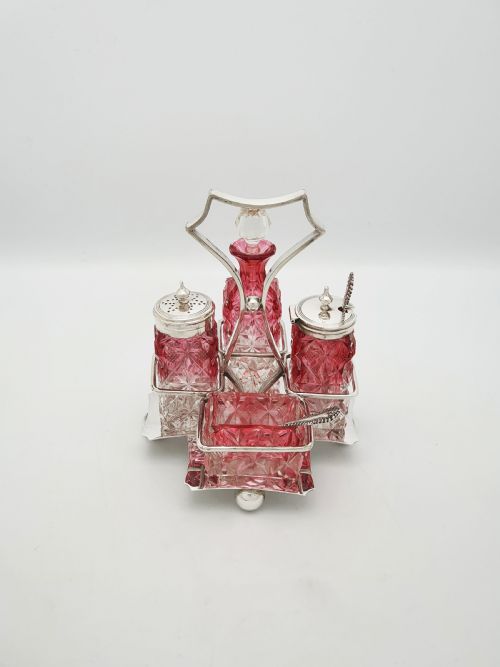
Beyond standard open dishes, the category encompasses broader condiment sets and cruet frames that group salt cellars alongside mustard pots and pepper shakers. These pieces range from restrained classical pedestals to pierced serpentine designs and Rococo shell motifs.
Materials and technique
Silversmiths utilised sterling silver and silver plate to shape the bodies of these cellars, employing techniques like casting, hammering, and piercing to achieve openwork patterns. Many examples incorporate liners made from cobalt glass, cranberry flashed glass, or plain cut glass, held securely within the metal framework.
Interiors often received a gold gilt wash to protect the silver from the corrosive nature of salt, a practical measure that also provided a warm visual contrast. Artisans applied naturalistic flower details, chased motifs, and carved horn mounts to enrich the surfaces of these functional objects.
Dining tables of the past gained character from novelty salt cellars shaped as farmyard animals, birds, and Viking longships.
What varies in quality
Quality in these table wares rests upon the crispness of the chasing, the weight of the metal, and the harmony of the overall design. Heavier sterling silver pieces with well-defined cast feet and intact original glass liners demonstrate superior craftsmanship.
The presence of matching spoons, crisp hallmarks, and retained gilt interiors elevates an example above standard production. Novelty and figural pieces derive their distinction from anatomical detail and the clever integration of the container within the sculpted form.
David Hennell·William Bateman·Paul Storr·Edward Farrell·Thomas Smily·Sampson Mordan·Josiah Williams & Co·Georg Jensen
The Silver Table Salt Cellars Glossary
- Cruet set
- A collection of small bottles or pots for condiments, held together in a metal frame for table service. These sets frequently include salt cellars alongside mustard pots and pepper shakers.
- Cauldron salt
- A small round cellar shaped like a cooking pot, typically raised on three short feet. This form remains common in Georgian and Victorian silver service.
- Trencher salt
- An early form of salt cellar designed to sit beside a diner's wooden trencher. These pieces are usually heavy and geometric, dating back to the eighteenth century or earlier.
- Gilt interior
- A thin layer of gold applied to the inside of a silver vessel. This process prevents salt from tarnishing or pitting the silver surface.
- Blue glass liner
- A removable insert of cobalt glass placed inside open silver salts. It protects the metal and holds the salt safely within pierced or openwork designs.
Silver Table Salt Cellars: Frequently Asked Questions
How do I use antique salt cellars today?
These open vessels work well on a modern dining table for serving flaky sea salt or individual pinches of seasoning to guests. They also function nicely on dressing tables as small ring dishes.
Because original spoons are often missing, small mustard or salt spoons make suitable modern pairings. Avoid leaving damp salt sitting in unlined silver for long periods to preserve the metal.
Are glass liners original to the salt cellars?
Many Victorian and Edwardian pieces retain their original cobalt or clear glass inserts, which were mouth-blown and ground to fit the specific metal frame. Replacements are common since glass is fragile and easily dropped.
An original liner fits snugly without wobbling and matches the colour and wear patterns associated with the period. Look closely at the rim to see if it sits evenly within the silver collar.
How do I tell Georgian salts from Victorian pieces?
Georgian examples often favour clean neoclassical lines, cast cauldron shapes, or heavy architectural pedestals with crisp hand-engraved crests. Makers from this era relied on heavier gauge silver and simpler silhouettes.
Victorian pieces introduced heavier ornamentation, including Rococo revival scrolls, naturalistic floral chased work, and elaborate novelty designs shaped like animals or boats. Hallmarks stamped inside the base provide the exact year of manufacture.
What is the difference between sterling silver and silver plate?
Sterling silver contains a guaranteed purity standard of silver throughout the entire object, making it durable and capable of lasting for centuries through frequent polishing. Pieces bear standard town and maker hallmarks to prove their composition.
Silver plate consists of a base metal coated with a thin layer of silver. Over decades of cleaning, the underlying metal may show through at the high points of the design.