


Salt Glazed Stoneware Jug
A salt glazed stoneware jug brings robust utility and distinctive surface texture to the table, spanning centuries of skilled potting from German kilns to British workshops.
Salt Glazed Stoneware Jug
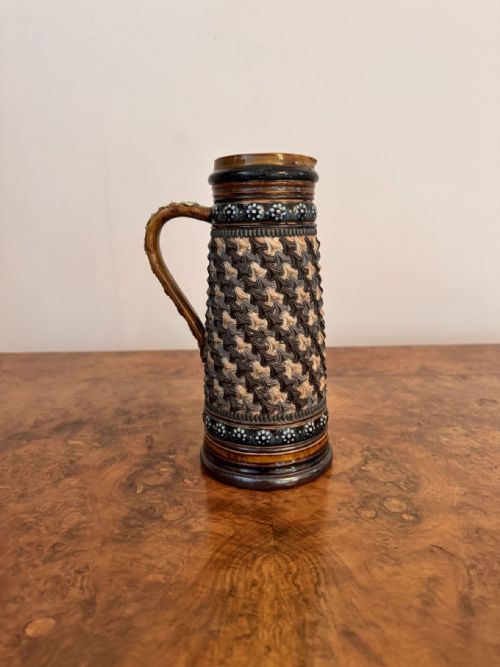
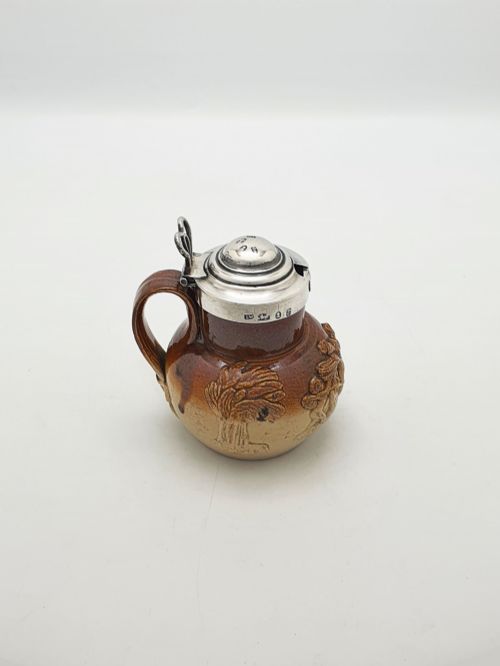
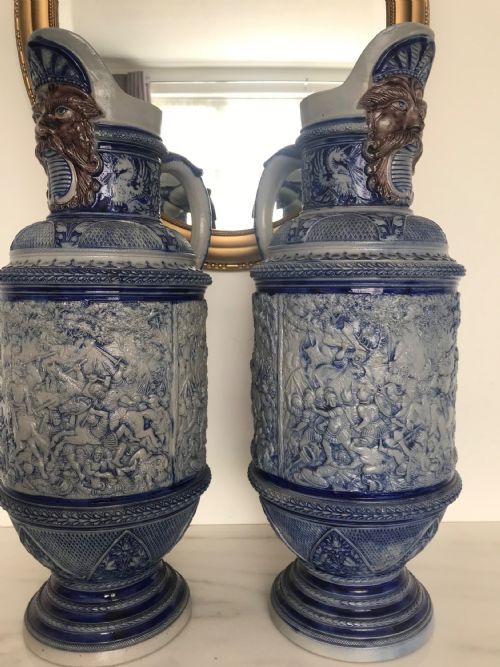
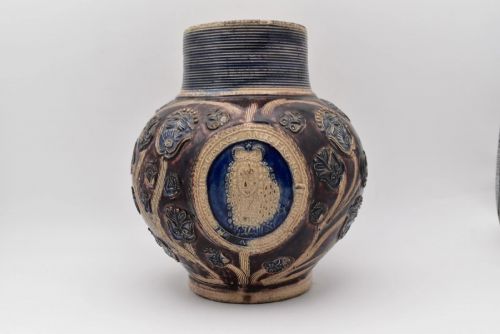
Forms vary from utilitarian harvest jugs and puzzle jugs to decorative ewers and pitchers. Early examples include 16th and 17th-century Bellarmine bottles and royal portrait pieces, while 19th-century works often incorporate sterling silver rims, collars, or hinged lids.
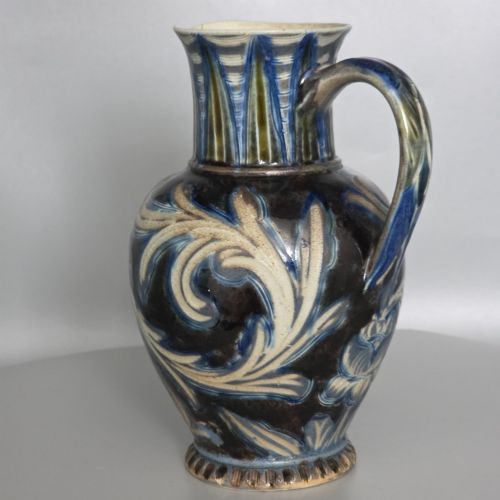
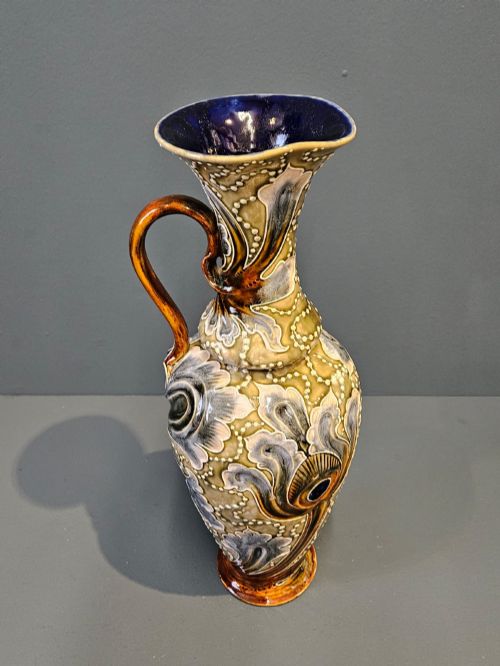
English salt glazed stoneware jug items frequently display harvest motifs, jubilee commemorations, and Art Nouveau or Arts and Crafts styling. Continental examples commonly present cobalt blue decoration and moulded relief scenes.
How they were made
Potters shaped dense clay on the wheel before throwing salt into the kiln during the high-temperature firing process. The vaporized salt reacted with the silica in the clay body to produce a characteristic pitted, orange-peel texture known as salt glaze.
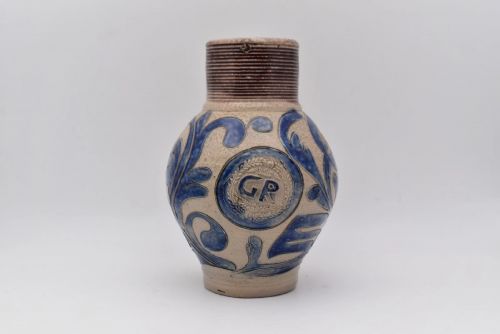
Many vessels received applied sprigged reliefs, incised patterns, or cobalt blue pigment brushed onto the raw clay before firing. Finishing touches frequently included fitted sterling silver rims or hinged lids added by silversmiths to reinforce the sturdy ceramic bodies.
Listings span multiple centuries, uniting 16th-century German Bellarmine bottles with Victorian Doulton Lambeth harvest jugs and Art Nouveau ceramics.
What varies in quality
Quality rests upon the crispness of the moulded or incised decoration and the evenness of the salt glaze finish across the stoneware body. Pieces featuring named artists, detailed relief work, or precious metal mounts stand apart from standard utilitarian ware.
The clarity of cobalt blue pigment application and the historical significance of commemorative ciphers or portraits elevate certain vessels. Condition of the ceramic body and any integrated silver hardware also dictate desirability among collectors.
Doulton Lambeth·Emma Shute·Simon Peter Gerz·Royal Doulton·Brampton
The Salt Glazed Stoneware Jug Glossary
- Salt Glaze
- A glossy, translucent ceramic finish with a textured, pebble-dash appearance created by introducing common salt into the kiln at peak temperature.
- Stoneware
- A heavy, durable pottery fired at high temperatures until vitrified, making the clay body impervious to liquids without additional interior glazing.
- Sprigged
- A ceramic decoration technique where moulded clay motifs are separately formed and applied to the wet body of a vessel before firing.
- Puzzle Jug
- A traditional drinking vessel featuring perforated necks and deceptive spouts that challenge the drinker to consume the contents without spilling.
- Westerwald
- A historic German ceramic region known for producing salt glazed stoneware featuring cobalt blue incised designs and royal ciphers.
- Bartmann
- A historic German stoneware jug featuring a bearded mask moulded on the neck, commonly referred to as a Bellarmine in England.
Salt Glazed Stoneware Jug: Frequently Asked Questions
What is a salt glazed stoneware jug?
A salt glazed stoneware jug is a durable ceramic container fired with salt to create a pitted, impervious surface texture.
These vessels were historically used for storing and serving liquids such as ale, wine, and water in domestic and tavern settings.
How old are these antique jugs?
The available pieces span from the 16th century through the 17th, 18th, and 19th centuries into the Victorian era.
Dates are determined by stylistic markers, royal ciphers, stamped maker marks, and historical production periods.
How were these jugs used historically?
They served primarily as functional containers for holding beverages, including wine, ale, and water, as well as dry goods.
Some specialised forms like puzzle jugs were used as tavern novelties to test the drinkers ingenuity.
Why do some jugs have silver mounts?
Silver rims, collars, and hinged lids were added by silversmiths to reinforce vulnerable ceramic rims and enhance the status of the vessel.
These precious metal additions often indicate higher quality production or later presentation pieces.