



Grey Pewter Lidded Pitcher
A grey pewter lidded pitcher brings substance and historical weight to a table, offering a tangible link to centuries of drinking vessels and church silver alternatives.
Grey Pewter Lidded Pitcher
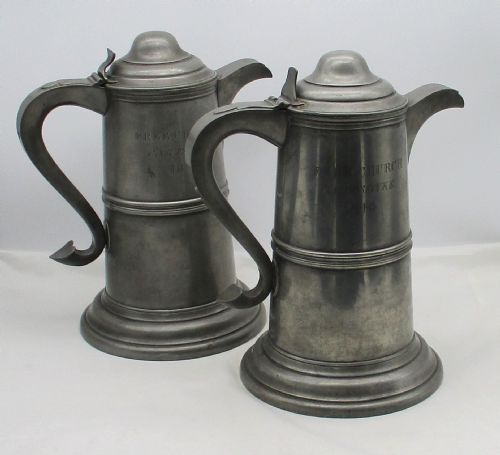
A grey pewter lidded pitcher encompasses substantial drinking vessels, church flagons, and capacious measures, often associated with specific regions like England, Scotland, Ireland, and Germany. These items span periods from the early eighteenth century through to the art nouveau output around nineteen hundred.
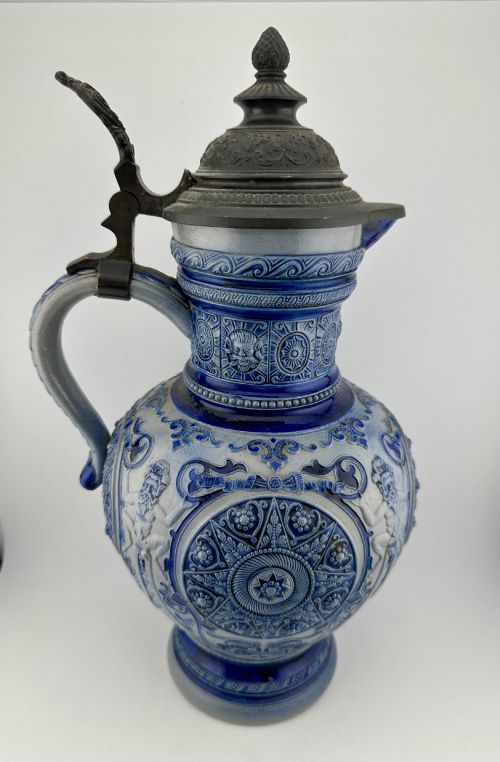
The objects listed range from George II flat-lid flagons and crested tappit hens to Westerwald salt-glazed stoneware jugs fitted with metal lids. Most examples function as pouring vessels or liturgical flagons, combining utilitarian forms with hinged metal covers.
Materials and construction methods
Pewter forms the primary metal body of these flagons and pitchers, shaped through casting and hammering to achieve durable walls. Lids are typically hinged directly to the handle or thumbpiece, ensuring a secure closure.
Stoneware variants incorporate salt-glazing techniques, decorated with cobalt oxide pigments to create the characteristic blue and grey coloration before receiving their pewter mounts and lids.
Grey Pewter Lidded Pitcher Retail Price Guide 2026
Typical asking prices for grey pewter lidded pitcher among the pieces listed under this phrase on Sellingantiques today, from the lower quarter to the upper quarter. They describe what is for sale here now, not the wider market.
Some lidded vessels were built so heavily they doubled as formidable instruments for settling tavern arguments.
Distinguishing finer examples
Quality rests upon the crispness of maker touchmarks, the integrity of original hinges, and the balance of the vessel's proportions. Heavier gauge metal and clear regional markings elevate an individual piece.
Condition involves the preservation of the soft grey metal surface without aggressive cleaning, alongside intact lids and handles that reflect original workshop standards.
John Heaney·Robert Iles·John De St Croix
The Grey Pewter Lidded Pitcher Glossary
- Flagon
- A large drinking vessel with a handle and lid, frequently utilised for church communion or communal drinking. These pieces often display substantial capacity and solid thumbpieces.
- Tappit hen
- A traditional Scottish form of pewter measure characterised by a distinctively shaped lid and a tapered body. This specific silhouette holds a precise historical liquid volume.
- Salt-glazed stoneware
- Pottery fired at high temperatures with salt thrown into the kiln, producing a durable, pitted surface finish. Cobalt oxide is often applied beneath this glaze for decoration.
- Touchmark
- An identifying stamp or hallmark struck into the metal by the maker or guild to guarantee standard composition. These marks help locate the workshop origin.
Grey Pewter Lidded Pitcher: Frequently Asked Questions
What were grey pewter lidded pitchers used for?
These vessels served primarily for serving ale, beer, or wine at large gatherings, as well as holding sacramental wine during church services. Their lidded design kept contents covered and protected from dust.
Capacity measures were also employed in public houses and domestic settings to portion liquids accurately before service.
How do I date a pewter flagon?
Dating relies heavily on the overall form, handle design, and the presence of touchmarks stamped into the metal surface. Changes in lid styles, from flat covers to domed or spire profiles, provide strong chronological indicators.
Regional variations and specific capacity stamps also help narrow down the decade of production.
How should I clean pewter?
Pewter requires minimal intervention, and gentle washing with mild soap and warm water is usually sufficient. Avoid harsh metal polishes that strip away the historical patina and soft grey surface.
Dry the vessel thoroughly with a soft cloth to prevent water spots from forming on the metal.
What is a tappit hen?
A tappit hen is a traditional Scottish pewter measuring jug featuring a specific lid shape and tapered body. These pieces were made in defined liquid capacities, such as the Scots pint.
Their sturdy construction and distinctive silhouette make them sought-after examples of early metalware.