


Rustic Earthenware Jar
These rustic earthenware jar examples are heavy utilitarian vessels of French, Italian, and Mediterranean origin, prized for honest shapes and aged surface patinas.
Rustic Earthenware Jar
When you search for rustic earthenware jar, you are looking at utilitarian vessels made for storage, oil, wine, and food preservation across rural Europe. The selection on this page draws heavily from French confit pots, Italian terracotta wine jars, and Turkish olive vessels dating from the eighteenth century through the early twentieth century.
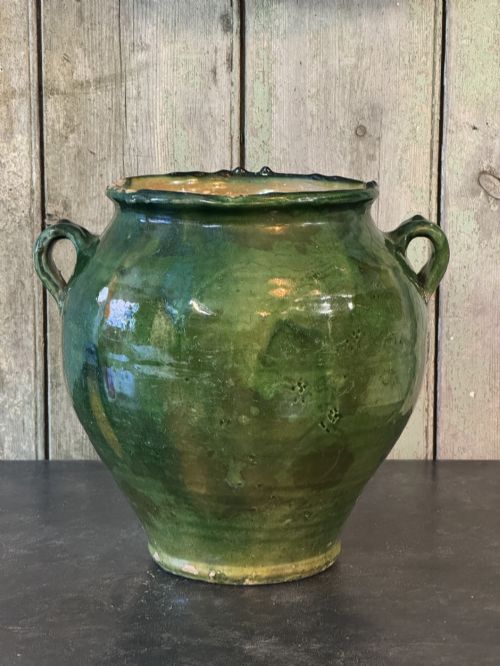
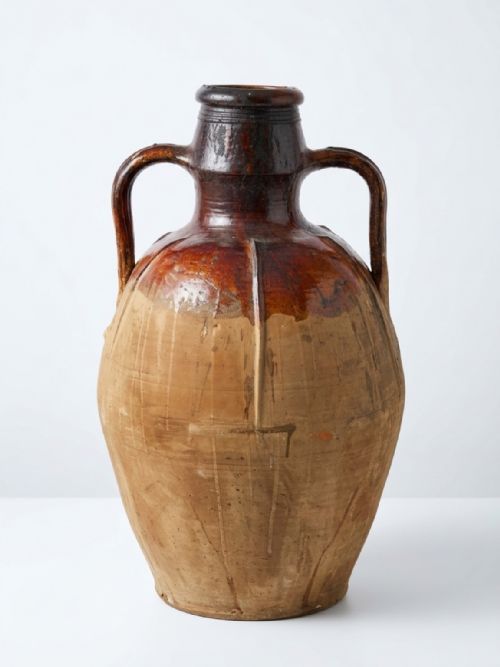
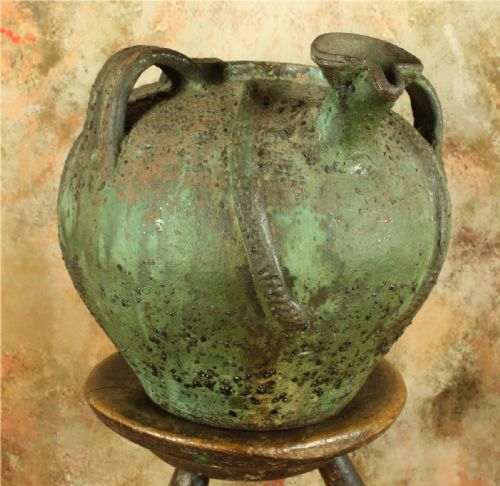
Most pieces you meet here display traditional forms designed for practical country use rather than formal display. These include multi-handled oil pots, storage jars with lids, amphorae, and green-glazed confit pots originating from French provincial workshops and Mediterranean folk traditions.
The aesthetic is defined by regional styles such as French country, rustic Mediterranean, and country Italian. Form follows function entirely, resulting in robust profiles with generous bellies, sturdy rims, and sometimes iron mounts or handles to assist with heavy lifting.
How they were made
Potters shaped native clay by hand or on simple wheels, forming thick walls capable of withstanding heavy agricultural use and long-term storage of liquids like walnut oil and wine. The resulting bodies are dense and heavy, showing the tool marks and minor irregularities characteristic of traditional village pottery.
Surfaces were frequently finished with lead or alkaline glazes, particularly around the interior and upper rims, to prevent seepage of stored contents. Many examples exhibit characteristic green, amber, or brown glaze runs that pooled organically during firing in traditional kilns.
Listings feature French country, Italian, and Mediterranean folk art styles spanning the eighteenth, nineteenth, and early twentieth centuries.
What varies in quality
Quality rests primarily in the integrity of the form and the character of the surface patina accumulated over centuries of use. Vessels that retain their original glazes, untouched surfaces, and structural soundness stand at the upper end of the range.
Proportion and scale also dictate desirability, particularly in large oil jars and confit pots where balanced potting is harder to achieve. Evidence of genuine utilitarian wear, such as historic chips and age-related weathering, adds to the authenticity without detracting from the sculptural presence.
The Rustic Earthenware Jar Glossary
- Confit pot
- A traditional French earthenware vessel used originally for cooking and preserving meat, typically featuring a glazed interior and upper body. They are easily identified by one or two side handles and rich earth-toned glazes.
- Terracotta
- Fired unglazed or partially glazed clay ranging in colour from pale buff to deep reddish-brown. This porous material was widely utilised across the Mediterranean for wine and oil storage.
- Amphora
- A two-handled ancient vessel form with a narrow neck, adapted by regional potters into large storage jars for olive oil and water. Their classical silhouette remains a staple of Mediterranean rustic design.
- Glaze
- A vitreous coating fused to the clay body through firing to render the vessel waterproof. On these pieces, glazes often display crazing, bubbling, and uneven coverage from primitive kiln environments.
- Olive jar
- A large, bulbous storage vessel designed in the Mediterranean for holding pressed oil, often set upon an iron stand. These pots frequently show heavy weathering and painted surface traces.
Rustic Earthenware Jar: Frequently Asked Questions
What were rustic earthenware jars used for?
These vessels served essential domestic and agricultural roles in rural European households. They stored bulk commodities like olive oil, wine, grain, and confit meats.
Larger specimens acted as stationary storage crocks or bread pots, while smaller handled versions transported liquids around the farm and kitchen.
How do I date a confit pot?
Dating relies on observing clay density, glaze characteristics, and potting irregularities. Eighteenth-century examples often display heavier, hand-moulded bodies with deeper iron-rich tones.
Nineteenth-century pieces tend toward more standardised wheel-throwing, brighter green lead glazes, and distinct rim profiles characteristic of regional French potteries.
Can these jars be used outdoors?
Many terracotta and earthenware jars adapt well to garden display, particularly sturdy olive jars and large planters. Porous clay requires caution during freezing weather, as retained moisture can expand and crack the historic body.
Placing them on pot feet or bringing them indoors during winter protects the antique material from frost damage.
How do I clean an antique earthenware jar?
Gentle dusting with a dry or slightly damp cloth preserves the aged patina and dry surfaces of unglazed areas. Avoid harsh chemical detergents or abrasive scouring pads that might strip historic glazes.
Interior cleaning should be minimal, as old oil residues and mineral deposits form part of the vessel's authentic history.