
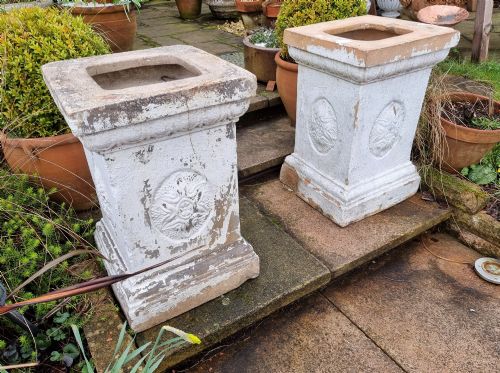


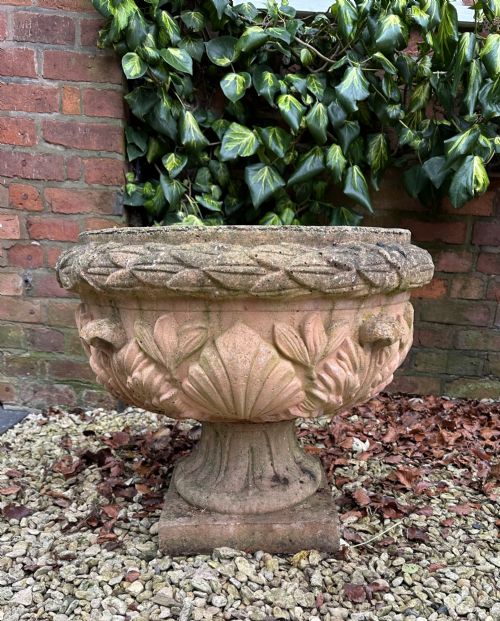


Weathered Clay Urn
These weathered clay urn pieces bring immediate character to a garden or interior, offering genuine historic form and time-softened surfaces.
Weathered Clay Urn
A weathered clay urn search brings up robust garden planters, vessels, and architectural salvage spanning from the nineteenth century into the early twentieth century. You will frequently encounter substantial terracotta oil jars, rustic Mediterranean olive vessels, and traditional garden pots alongside architectural pieces like chimney pots.
The selections reflect diverse origins including Portuguese and Turkish forms, alongside British regional works influenced by the Arts and Crafts movement and Victorian garden tastes. These pieces range from grand pedestals and monumental jars down to smaller planters and poppy pots.
Most examples show the marks of age, utility, and weather exposure, which defines their appeal for traditional and rustic settings. Buyers find both matching pairs and singular statement vessels suited to outdoor display or interior architectural placement.
How they were made
Potters shaped these items from terracotta, buff clay, and earthenware, often using traditional throwing and moulding techniques suited to large utilitarian vessels. The resulting bodies provide the necessary weight and porosity required for garden use and long-term weathering.
Surfaces were frequently finished with lime wash, paint, or subtle glazes that soften over decades of exposure to the elements. These topical layers interact with the underlying clay, creating the characteristic patinated finishes seen on older olive jars and garden pots.
What varies in quality
Quality rests in the balance of proportion, the strength of the thrown or moulded profile, and the integrity of the clay body. Better examples display confident modelling in decorative elements like scroll handles or crisp architectural detailing.
The character of the surface evolution also distinguishes superior pieces, where organic weathering, remaining paint, and lime wash layers accumulate naturally rather than appearing uniform or manufactured.
Dunfermline Clay Company·Compton Pottery
The Weathered Clay Urn Glossary
- Terracotta
- A porous fired earthenware clay ranging in colour from orange-red to buff. It is traditionally used for garden pots, oil jars, and architectural ornaments due to its frost-resistant qualities when properly fired.
- Amphora
- A tall ancient style of storage vessel featuring two opposing handles and a tapered base. Later nineteenth-century iterations adapt this classic Mediterranean form for estate gardens and utilitarian storage.
- Lime wash
- A traditional coating made from slaked lime and water, sometimes tinted with pigments. It was frequently applied to exterior clay and masonry surfaces, weathering over time into a powdery, textured finish.
- Jardinaire
- A large decorative pot or receptacle designed to hold growing plants or flowers. These items often feature more ornate modelling than utilitarian storage jars.
- Buff clay
- A pale, yellowish-cream firing clay body distinct from standard reddish terracotta. It provides a lighter neutral tone popular in certain Arts and Crafts and regional British garden wares.
Weathered Clay Urn: Frequently Asked Questions
Can weathered clay urn pieces stay outside all winter?
Most historic terracotta and earthenware vessels tolerate cold weather well, provided they are raised off the ground on pot feet to ensure proper drainage. Trapped water that freezes inside the clay body can cause cracking over time.
Moving exceptionally delicate or porous glazed pieces into a sheltered porch or shed during severe frost helps preserve their historic surfaces.
How do I clean a weathered clay urn without ruining the patina?
Gentle brushing with a soft-bristled brush and plain water is usually sufficient to remove loose dirt and debris. Avoid harsh chemical cleaners or pressure washers, which strip away the historic lime wash, paint layers, and lichen.
Allowing the natural surface ageing to remain intact maintains the visual character that collectors value in nineteenth-century garden pottery.
What is the difference between an oil jar and a garden planter?
Traditional oil jars were originally fashioned for storing and transporting olive oil across the Mediterranean, featuring deep bodies and small openings designed to keep contents cool. Garden planters are typically proportioned specifically for housing growing plants with wider tops.
Many antique oil jars are repurposed as statement garden planters because their robust walls and classic silhouettes suit outdoor settings.
How do I date an old terracotta garden pot?
Dating relies on observing manufacturing marks, the composition of the clay body, and the style of any handles or decorative moulding. Nineteenth-century pieces often display heavier thrown walls and distinct regional forming characteristics compared to later mass-produced items.
The presence of original lime wash or early paint layers also provides clues regarding the era of its use.