


Terracotta Oil Jar
These terracotta oil jar pieces are robust agricultural vessels that bring tactile Mediterranean warmth and substantial garden presence to any interior.
Terracotta Oil Jar
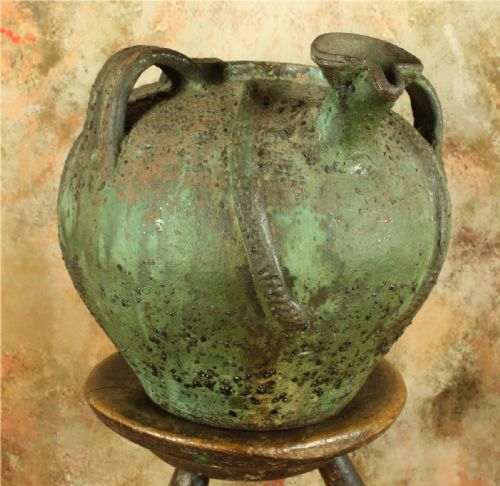
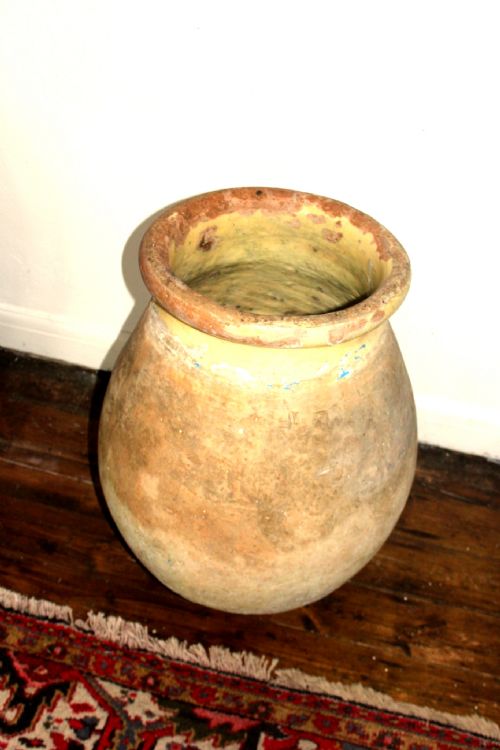
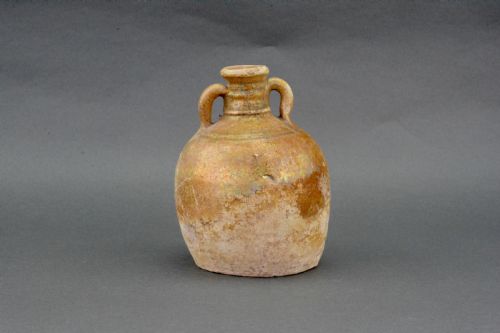
When you search for a terracotta oil jar, you encounter heavy agricultural vessels originally built for storing and transporting provisions like oil and olives across Mediterranean landscapes. The selections on this page range from early French walnut oil pots and large Biot jars to Greek urns and modest Roman flasks.
Most examples you meet here date from the eighteenth and nineteenth centuries, carrying the distinct styles of French provincial and rustic Mediterranean folk art. These containers typically manifest as large urns, jugs, and amphorae designed for utilitarian use rather than delicate display.
Forms vary from stout three-handled pots to tall amphora vessels, some resting on associated wrought iron stands while others stand independently. You also find painted or lime-washed finishes alongside plain earthenware surfaces showing deep historical patination.
How they were made
Maker hands shaped these pieces primarily from local clay, earthenware, and terracotta, relying on traditional throwing and moulding techniques suited for large-scale agricultural storage. The resulting bodies possess a dense, porous structure designed to withstand the weight of liquid contents.
Surface treatments recorded in the evidence include partial glazes, lime wash, and paint applied over the raw terracotta body. Some vessels feature added wrought iron components, such as stands or handles, which reinforced the structure for heavy lifting and transport.
Some antique jars still carry the faint, stubborn scent of centuries-old olive oil locked deep within their porous clay walls.
What varies in quality
Quality in these pieces rests in the integrity of the form, the depth of historical patination, and the character of the surface finish. An exceptional jar displays honest wear, stable surfaces, and harmonious proportions derived from its functional origins.
The Terracotta Oil Jar Glossary
- Terracotta
- A fired clay earthenware material that ranges in colour from pale orange to deep red-brown. It forms the primary structural body for nearly all the vessels on this page.
- Amphora
- A two-handled jar with a narrow neck used in antiquity for the storage and transport of oil or wine. These vessels often feature a pointed base or sit within a supportive stand.
- Patina
- The surface appearance of age, wear, and weathering accumulated on a material over centuries. In these pieces, it manifests as faded paint, lime wash residue, and softened clay textures.
- Biot Jar
- A large glazed or unglazed terracotta storage jar originating from the French Provençal town of Biot. These heavy vessels were traditionally utilised for storing olive oil.
Terracotta Oil Jar: Frequently Asked Questions
How were these jars used originally?
These vessels served primarily as heavy agricultural containers for storing and transporting valuable commodities like olive oil, walnut oil, and wine. Their thick terracotta walls kept contents cool and protected from light during long storage periods.
In daily use, they stood in farmhouses, courtyards, and mills across the Mediterranean. Their robust construction and multiple handles made them practical for lifting, tipping, and securing ropes during transport.
Can I use these jars in the garden?
Many of these vessels function well as garden urns and planters, echoing their long history of outdoor use in Mediterranean landscapes. Their substantial scale makes them striking focal points on terraces or lawns.
Buyers should consider the climate and the porosity of the earthenware before leaving unglazed pieces exposed to freezing winter conditions. Ensuring proper drainage prevents moisture from cracking the historic clay body.
What causes the different surface finishes?
Surface variations arise from a mix of original manufacture, subsequent utilitarian treatments, and centuries of weathering. Some jars received partial glazes to seal the porous interior, while others were painted or lime-washed for protection and decoration.
Over time, exposure to elements creates the aged patina seen today, where layers of historic paint and lime wash flake gently away from the raw terracotta beneath.
How do I care for an antique jar indoors?
Living with these pieces indoors requires minimal effort, as their durable earthenware bodies need little more than occasional dusting with a dry cloth. Placing felt pads underneath heavy bases protects interior flooring.
If used to hold dried branches or botanicals, placing a secondary waterproof container inside the vessel prevents moisture from interacting with the historic clay. This preserves the internal walls from mineral deposits.