




Antique Olive Jar
These heavy earthenware vessels handle estate oils and provisions with robust Mediterranean utility.
Antique Olive Jar
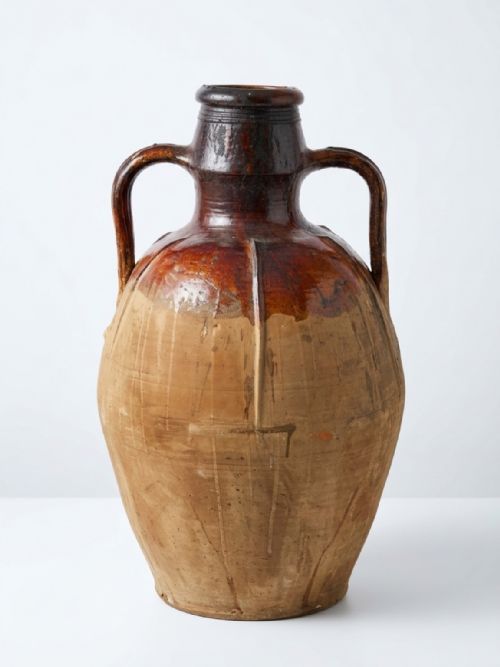
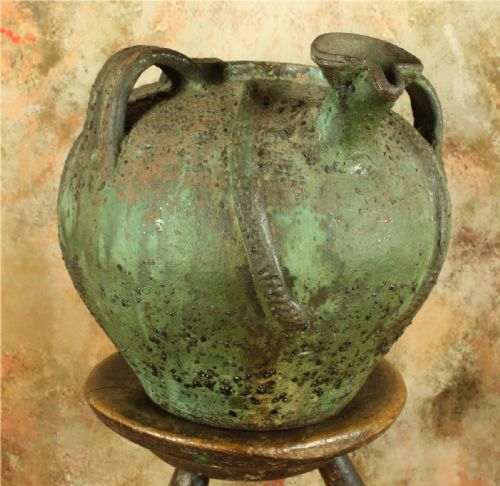
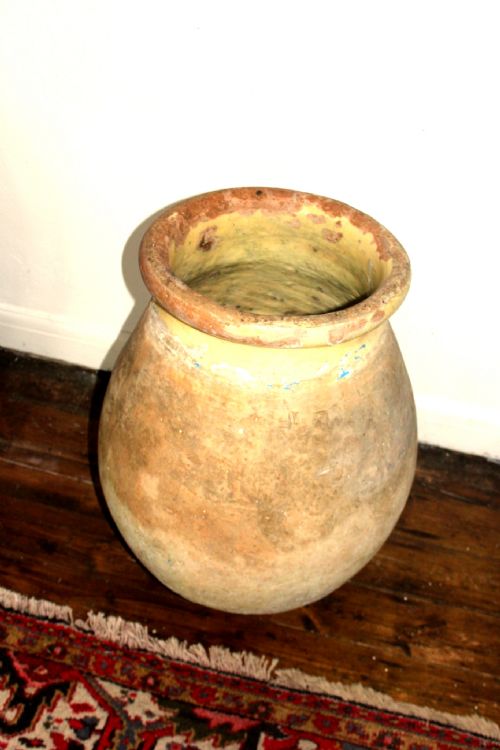
When you search for an antique olive jar, you look at large utilitarian storage vessels shaped for grain, oil, and wine across southern Europe and the Mediterranean. The selections here include French Provincial confit pots, Italian garden planters, and Turkish water vessels.
Most examples date from the nineteenth century, with earlier eighteenth-century French walnut oil jugs and walnut oil pots appearing occasionally. Forms range from three-handled storage vessels and amphorae to large terracotta garden urns mounted on wrought iron stands.
Origins span France, Italy, Portugal, Turkey, and Persia, reflecting regional agricultural needs. You will encounter glazed green finishes, lime wash coatings, and weathered terracotta bodies bearing aged patinas from generations of outdoor use.
Materials and construction
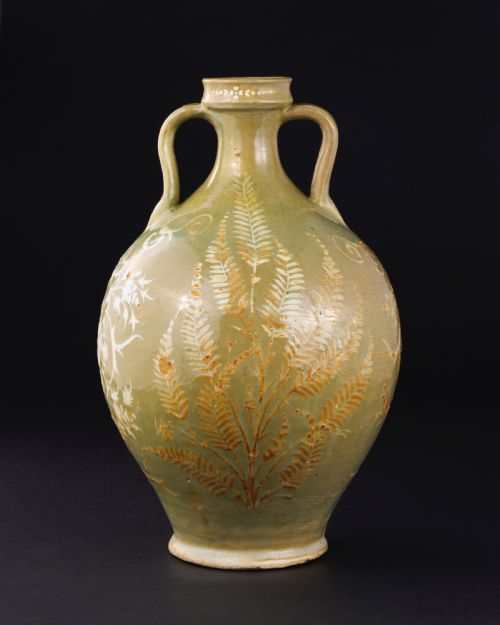
Potters built these vessels using heavy terracotta, earthenware, and clay, often shaping large forms by hand or on heavy wheels before kiln firing. Surfaces frequently received a partial or full glaze, celadon glaze, tea dust glaze, or protective lime wash coatings.
Many utilitarian pots bear functional additions such as multiple strap handles for lifting and pouring heavy contents. Selected pieces incorporate wrought iron stands to support round-bottomed amphora forms on flat ground.
Forms across the inventory span garden planters, confit jars, carboys, amphorae, and three-handled oil jugs.
Assessing quality and character
Quality rests in the balance between structural weight, potting symmetry, and the organic accumulation of surface patination. Superior examples display harmonious proportions across large bodies and stable, well-fired clay bodies.
The character of the glaze or lime wash greatly influences desirability, with uneven firing marks and weathered surfaces adding visual depth. Intact handles and sound rims distinguish vessels that survived heavy agricultural service intact.
The Antique Olive Jar Glossary
- Terracotta
- Fired brownish-red clay used extensively for utilitarian storage and garden pots. Porous material that absorbs moisture and develops characteristic patination over time.
- Amphora
- A two-handled ancient vessel shape with a narrow neck, utilised for transporting and storing liquids like oil and wine. These later nineteenth-century adaptations serve primarily decorative garden roles.
- Confit jar
- A traditional French earthenware pot featuring glazed upper sections, designed originally for preserving meats and fats. They typically display robust side handles for cellar storage.
- Celadon glaze
- A pale green jade-like ceramic coating applied before firing, originating in Asian traditions. It produces subtle variations in tone across large pottery surfaces.
- Patina
- The surface texture, wear, and colour acquired by clay, glaze, and lime wash through age and exposure. This weathered skin provides evidence of prolonged utilitarian service.
Antique Olive Jar: Frequently Asked Questions
How were antique olive jars used?
These large vessels served agricultural estates for storing, fermenting, and transporting bulk provisions such as olive oil, grain, wine, and preserved foods.
Their heavy earthenware walls protected contents from temperature fluctuations in cellars, courtyards, and packing sheds before retirement into gardens.
Can antique olive jars stay outside?
Most heavy terracotta and earthenware vessels withstand outdoor placement during milder seasons when positioned on well-drained ground.
Subfreezing temperatures risk cracking damp porous clay, so vulnerable glazed or unglazed pots benefit from winter shelter under cover.
How do you date an olive jar?
Dating relies on observing clay consistency, tool marks, glaze chemistry, and the specific form of the rim and strap handles.
Eighteenth-century examples often show distinct hand-thrown irregularities and specific regional French or Mediterranean potting traditions compared to later nineteenth-century production.
What is lime wash on pots?
Lime wash is a traditional mineral coating applied to the exterior of terracotta storage vessels for hygiene and reflection.
Over decades, this white or pale coating weathers unevenly, leaving a chalky residue that contributes significantly to the aged surface aesthetic.